Clear Sky Science · en
Hormone variation in Robinia pseudoacacia L. (Fabaceae) leaves during gall formation by Oblongoides robiniae (Haldeman) (Diptera: Cecidomyiidae)
When a tiny insect rewires a tree leaf
On city streets and forest edges across Europe, the black locust tree is both a valued timber source and a controversial invader. Look more closely at its leaves in summer, and you may spot strange little rolls along the edges. Inside those curled leaf margins lives a tiny fly larva that has persuaded the tree to build it a custom home. This study asks a deceptively simple question with big implications for plant–insect interactions: how does that insect coax the leaf to change its growth program, and what happens to the plant’s own chemical signals along the way?
A tree, an unwelcome guest, and a living shelter
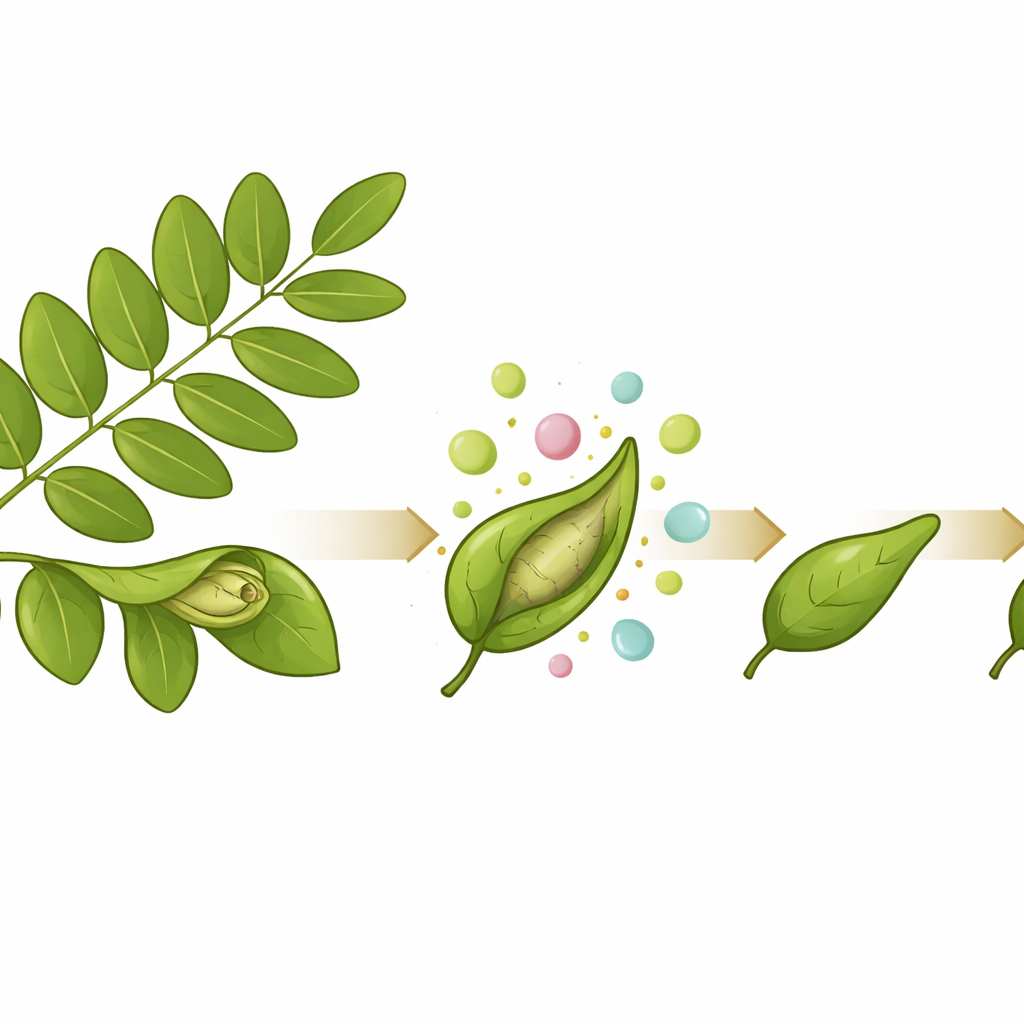
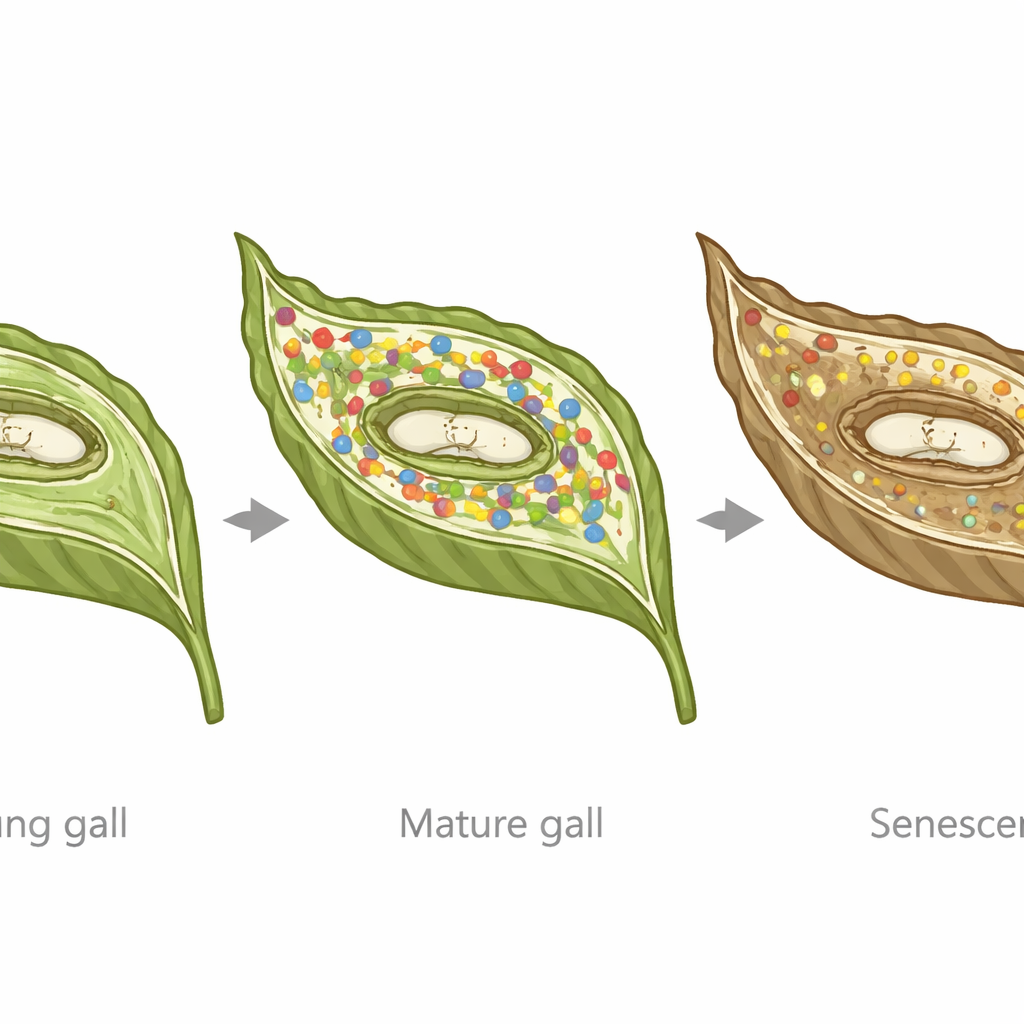
The black locust gall midge, Oblongoides robiniae, lays its eggs along the edges of black locust leaflets. As the larvae develop, the leaflet margin curls downward, forming a “marginal rolling gall” that shelters and feeds them. Because black locust leaves are divided into many small leaflets, each one can potentially respond differently to attack. The authors focused on five kinds of leaflet tissue: healthy leaflets on healthy leaves, healthy-looking leaflets on infested leaves, and galls themselves at three stages—young, fully formed, and aging. This setup allowed them to see not only what happens inside the gall, but also how the presence of galls reshapes the chemistry of nearby, apparently untouched tissue.
Tracking the leaf’s internal signals
Plants rely on tiny amounts of hormone-like molecules to coordinate growth and defense, much as animals use hormones in blood. Using sensitive mass spectrometry, the researchers measured a broad suite of these compounds in each tissue type. They examined classic growth regulators such as auxins and cytokinins, stress-related signals like abscisic acid and salicylic acid, and a group called brassinosteroids that influence both growth and stress tolerance. By applying statistical tools that group similar samples and compress complex data, they could see overall patterns rather than focusing on any single hormone in isolation.
From quiet beginnings to a chemical hotspot
The young gall looked, hormonally speaking, surprisingly similar to normal leaflets. In contrast, mature and aging galls formed a separate cluster with much higher overall levels of most measured hormones. As the gall swelled and then began to senesce, concentrations of many growth-promoting and defense-related compounds rose sharply. Two patterns stood out. First, cytokinins—signals strongly linked to cell division and delayed aging—were consistently higher in gall tissue than in either type of non-galled leaflet, suggesting that the insect or the plant, or both in partnership, maintain a youthful, actively growing micro-environment for the larva. Second, one brassinosteroid, 28-homobrassinolide, behaved differently from the rest: it was abundant in normal leaflets but fell to about half its level in young galls and stayed low, hinting that suppressing this particular regulator might be important for reshaping leaf tissue into a gall.
Ripples beyond the visible damage
Intriguingly, leaflets on an infested leaf that did not themselves carry galls still showed altered hormone patterns. In these “bystander” leaflets, certain stored forms of cytokinins were especially elevated, and the mix of brassinosteroids shifted. Previous work on the same system had shown that these apparently healthy leaflets also changed their antioxidant and defense chemistry. Taken together, the picture is of an insect that does more than carve out a single niche: its presence appears to reprogram the entire compound leaf, dampening some defenses inside the gall while possibly priming other parts of the leaf for further gall formation.
What this means for plants, pests, and ecosystems
To a lay observer, those curled black locust leaf edges may just look like minor blemishes. This study reveals that they are in fact the visible tip of a deep, carefully staged shift in the tree’s internal signaling network. As the gall develops, hormone levels do not simply rise or fall at once; they change in sequence, creating an environment that supports rapid cell division, altered defenses, and ultimately an effective shelter for the insect. Understanding this hormonal choreography could help biologists explain why some trees tolerate certain pests, how invasive insects adapt to new regions, and whether interfering with specific hormone pathways might one day offer more targeted ways to manage tree health without broad chemical treatments.
Citation: Staszak, A.M., Kostro-Ambroziak, A., Sienkiewicz, A. et al. Hormone variation in Robinia pseudoacacia L. (Fabaceae) leaves during gall formation by Oblongoides robiniae (Haldeman) (Diptera: Cecidomyiidae). Sci Rep 16, 8815 (2026). https://doi.org/10.1038/s41598-026-38156-9
Keywords: plant galls, plant hormones, insect–plant interactions, black locust, tree defenses