Clear Sky Science · en
Sunscreen use and adherence to traditional masculinity ideologies among young adult males: a cross-sectional study
Why Men and Sunscreen Matter
Skin cancer is one of the most common cancers worldwide, yet a simple habit—putting on sunscreen every day—can prevent much of the damage that leads to it. Around the globe, men are diagnosed with skin cancer more often than women, but are less likely to reach for a bottle of sunscreen. This study asks a timely question: could traditional ideas about what it means to be a “real man” be part of the reason many young men skip this basic form of protection?
Sun, Skin, and Everyday Risk
Ultraviolet (UV) rays from the sun can damage the DNA in our skin cells, setting the stage for both premature aging and cancer. Health agencies in the United States, Canada, Australia, and elsewhere recommend avoiding peak sun hours, seeking shade, wearing protective clothing, and using sunscreen daily. In Palestine, where sunshine is plentiful all year, men typically have moderately light to medium skin tones that are not as vulnerable as very fair skin, but still face meaningful risk from long-term sun exposure. Despite this, earlier local research suggested that most Palestinian men rarely or never use sunscreen, and often see it as a cosmetic product meant for women rather than a health tool for everyone.
Looking at Masculinity and Daily Habits
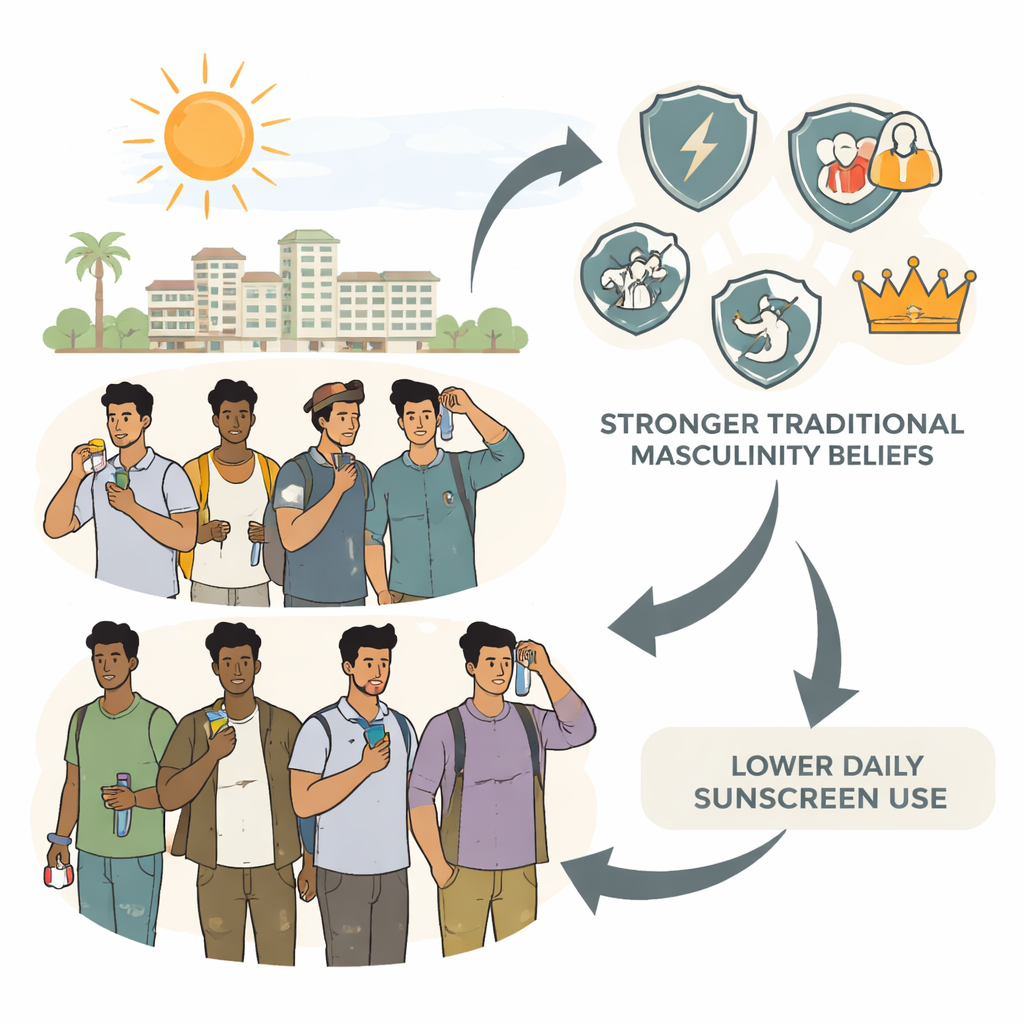
To explore how beliefs about manhood might influence sunscreen use, researchers surveyed 485 male university students at An-Najah National University in Palestine. The average age was just over 20 years. Students filled out a detailed questionnaire that included an Arabic version of a well-known scale measuring traditional masculinity beliefs, such as toughness, emotional restraint, dominance, avoidance of anything seen as feminine, confidence in mechanical skills, and focus on sex. They also reported how often they used sunscreen: every day (routine use), less than daily (occasional use), or not at all.
What the Students Actually Do
The results showed that daily sunscreen use was rare: only 18.8% of the young men said they applied sunscreen every day. Most either never used it (58.1%) or used it only once in a while (23.1%). Many students knew that sunscreen could help prevent skin cancer and that tanning can be harmful, and most said they cared at least somewhat about keeping their skin looking youthful. Still, knowledge and concern did not translate into consistent action. Students in health-related majors were more likely to use sunscreen than those in other fields, suggesting that extra exposure to health information may help—but not enough to overcome deeper social pressures.
When “Being Tough” Gets in the Way
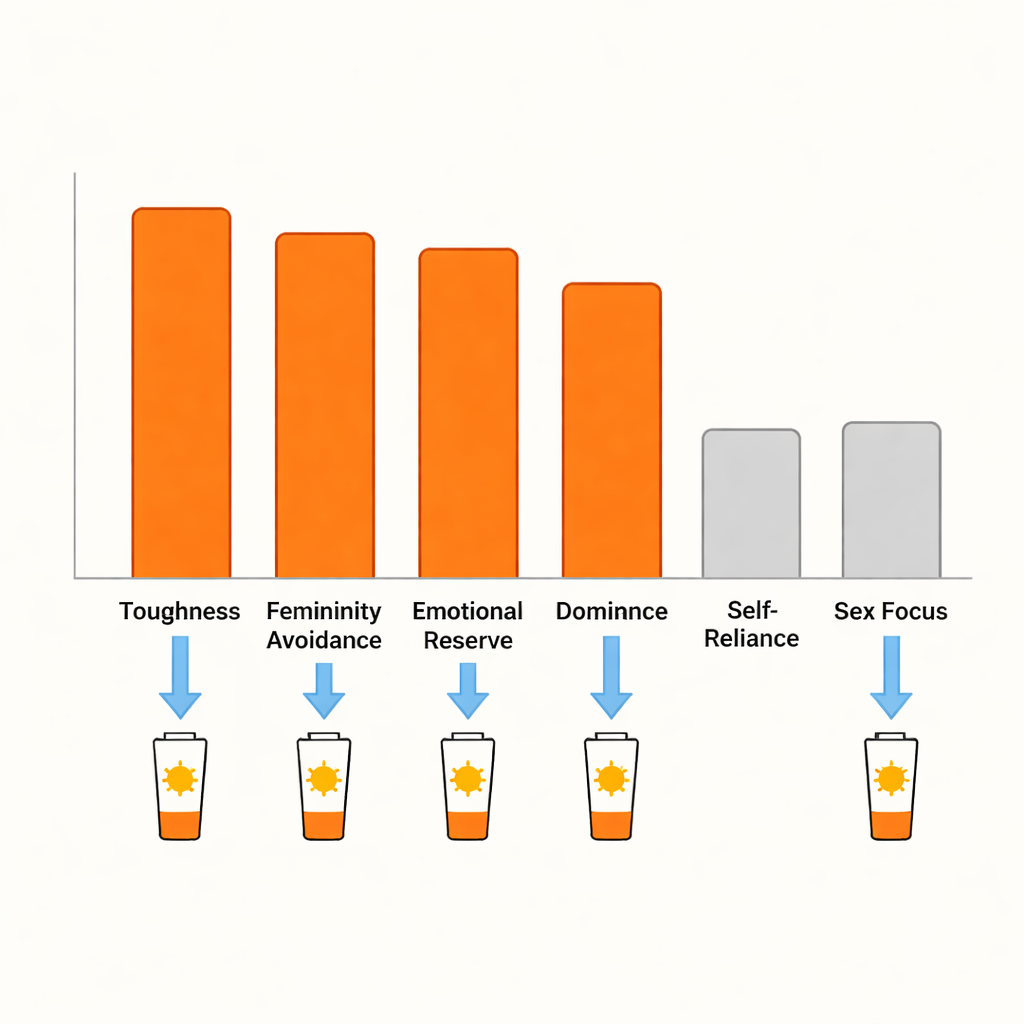
On average, the students strongly endorsed several traditional masculinity ideas, especially toughness, dominance, and the belief that men should not openly show emotions. When the researchers analyzed the data, they found a clear pattern: the stronger a student’s agreement with traditional masculinity overall, the less likely he was to use sunscreen every day. Certain specific beliefs stood out. Seeing oneself as tough, wanting to avoid anything coded as feminine, keeping emotions tightly controlled, and valuing dominance over others were all linked to lower odds of routine sunscreen use, even after taking age and field of study into account. By contrast, valuing mechanical self-reliance and placing high importance on sex did not show a meaningful connection to sunscreen habits.
Changing the Story Around Sunscreen
The study suggests that for many young men, skipping sunscreen is not just forgetfulness—it can be a way of signaling toughness or distancing themselves from products viewed as feminine. In Palestine, sunscreen is commonly marketed as a beauty item for women, and social media content about skin care often centers on cosmetics rather than health. The authors argue that to close the gender gap in sun protection, companies and public health campaigns need to present sunscreen as a simple, practical tool for staying healthy, not as an optional beauty accessory. That could mean more gender-neutral packaging, straightforward designs and scents, and targeted messages delivered by male role models and influencers.
What This Means for Everyday Life
For a layperson, the takeaway is straightforward: wearing sunscreen daily is a basic act of self-care, not a threat to anyone’s masculinity. This study of Palestinian university students shows that deeply rooted ideas about what men should be like—tough, unemotional, and distant from “feminine” products—can discourage even health-aware young men from protecting their skin. By reshaping how sunscreen is talked about and marketed, especially on social media, societies can help men see sunscreen as part of a smart, health-conscious lifestyle. In the long run, that cultural shift could lower skin cancer risk and keep more people, regardless of gender, safer under the sun.
Citation: Taha, S., Hamad, S., Hanani, A. et al. Sunscreen use and adherence to traditional masculinity ideologies among young adult males: a cross-sectional study. Sci Rep 16, 7788 (2026). https://doi.org/10.1038/s41598-026-38144-z
Keywords: sunscreen use, masculinity norms, skin cancer prevention, young men, Palestine