Clear Sky Science · en
Esketamine attenuates bone cancer pain by suppressing MAPK signaling and glial activation in the spinal dorsal horn of rats
Why easing bone cancer pain matters
For many people with advanced cancer, the worst part is not the tumor itself, but the relentless bone pain that robs them of sleep, movement, and independence. Standard painkillers such as opioids and anti-inflammatory drugs often fail to provide lasting relief and can bring serious side effects. This study explores whether esketamine—a drug already used in anesthesia and depression care—could offer a new way to dial down bone cancer pain by quieting inflammation inside the spinal cord rather than simply numbing pain signals.
A closer look at bone pain in cancer
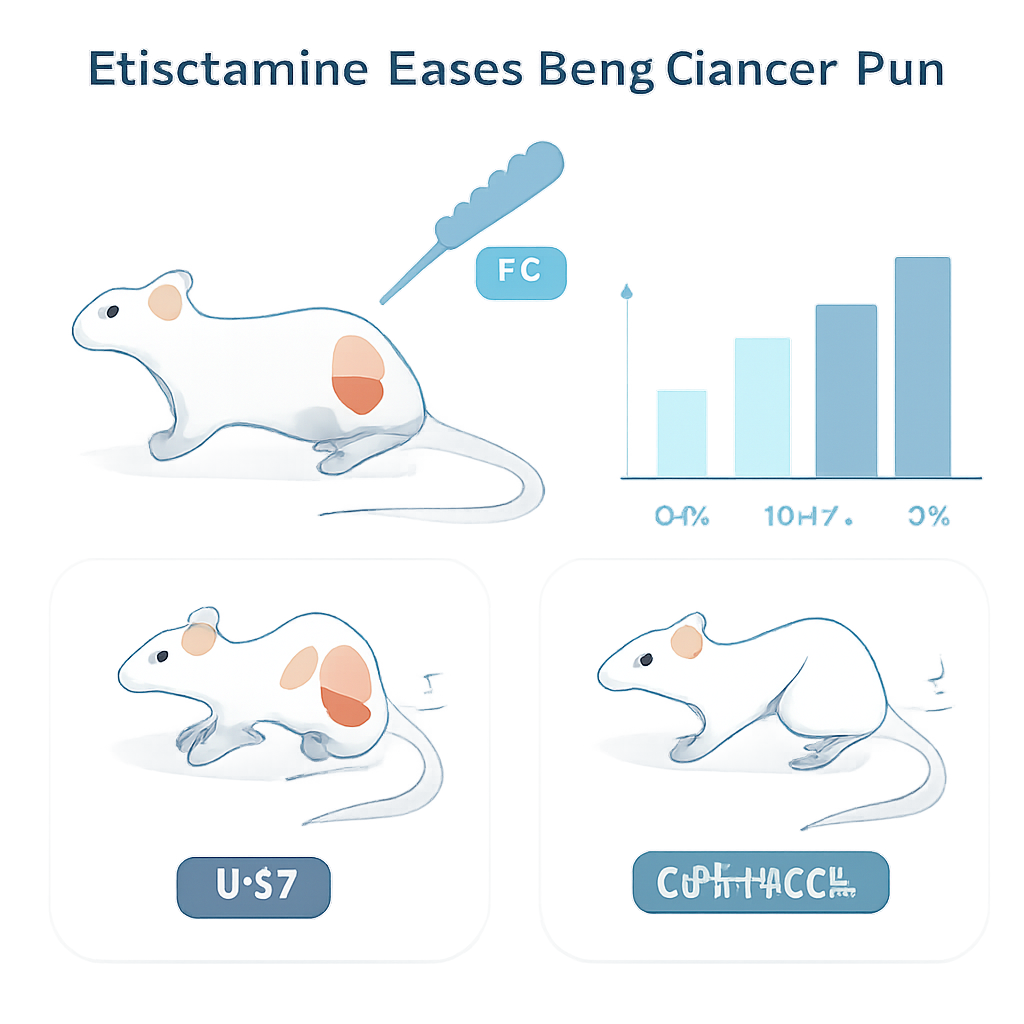
Bone cancer pain is unusually complex. It combines the sharp warning signals of injury, the constant burn of inflammation, and damage to nerves themselves. In this study, researchers mimicked this condition in female rats by placing cancer cells into a leg bone, which led to bone destruction and strong pain responses. The animals became extremely sensitive to touch and heat, walked unevenly to avoid using the sore leg, and showed anxiety-like behavior in an open arena. These changes mirror what many patients describe: every step hurts, and the constant pain feeds fear and distress.
Testing esketamine as a pain reliever
After the bone tumors were established, the team delivered esketamine directly around the spinal cord in three different doses. They then measured how much pressure or heat it took before the animals pulled their paw away, tracked their footprints as they walked, and monitored their willingness to explore. Esketamine did not stop the cancer from eating away at the bone, but it did make a clear difference in how much pain the rats felt. With increasing doses, the animals tolerated more touch and heat, walked more evenly on the affected leg, and moved more freely in the open field. Importantly, even at the highest dose, their basic motor coordination stayed normal, suggesting that the pain relief was not simply due to sedation or clumsiness.
Quieting overactive support cells in the spine
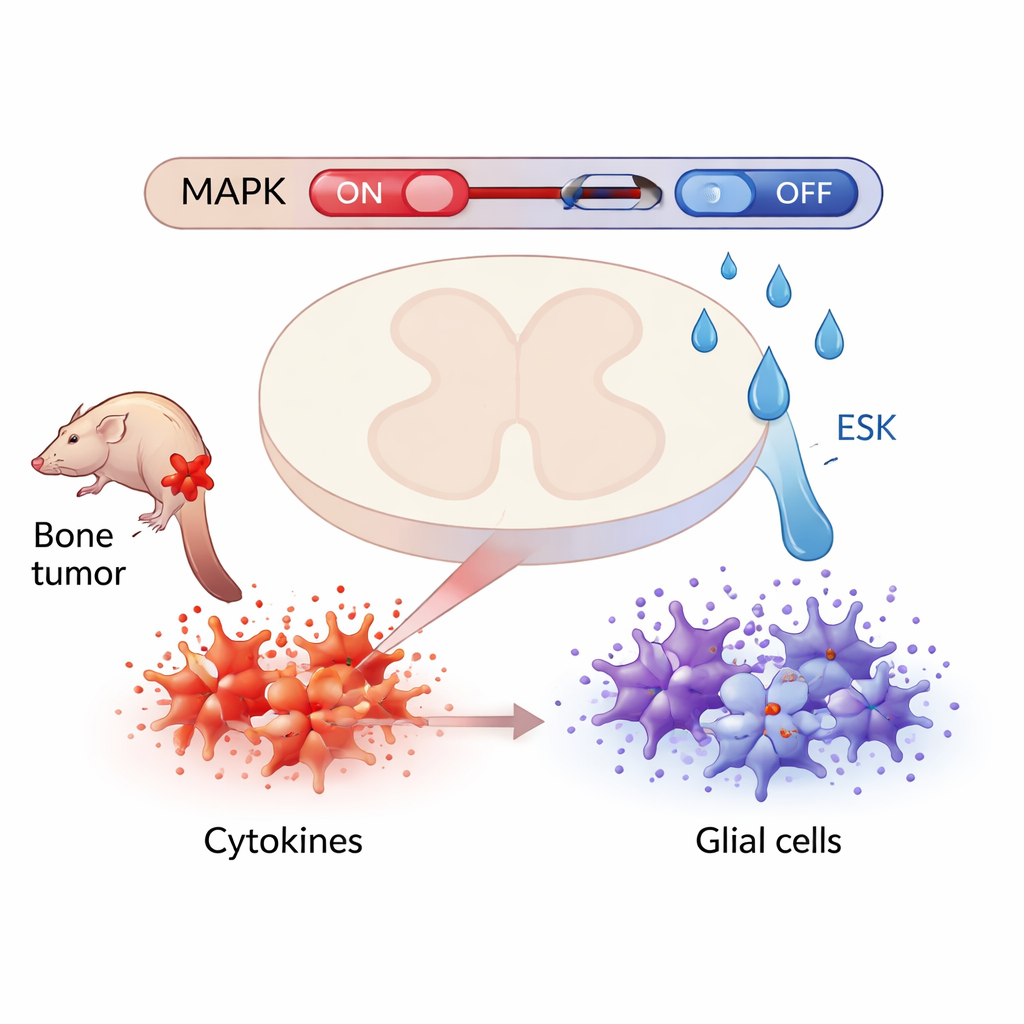
Deep in the spinal cord, pain signals from the body are processed and amplified before they reach the brain. This is not done by nerve cells alone. Two types of support cells—microglia and astrocytes—can switch into an activated, inflammatory state and release chemical messengers that make pain pathways hypersensitive. The researchers found that bone cancer strongly activated these glial cells in the region where leg pain signals enter the spinal cord. Esketamine dialed this activation down in a dose-dependent fashion: higher doses led to fewer activated glial cells and calmer cell shapes. When the team separately blocked microglia or astrocytes with other drugs, the rats also hurt less, supporting the idea that glial overactivity is a key driver of bone cancer pain.
Turning down inflammatory signals and a key switch
The activated glial cells in bone cancer released high levels of inflammatory proteins such as IL-1β, IL-6, and TNF-α, which are known to crank up pain pathways. Esketamine reduced these substances in the spinal cord, again in a clear dose–response pattern. The study also focused on an internal signaling chain inside cells called the MAPK pathway, which behaves like a master switch for inflammation. In the bone cancer rats, this switch was stuck in the “on” position. Esketamine shifted it toward “off” by lowering the activated forms of several MAPK proteins. When the researchers used specific drugs to block parts of this pathway, the rats’ pain and spinal inflammation improved in much the same way as with esketamine, and combining these blockers with esketamine brought little extra benefit. This suggests that much of esketamine’s power in this setting comes from calming this inflammatory switch.
What this could mean for people with cancer
Taken together, the findings show that esketamine eased bone cancer pain in rats not by fixing the bone damage, but by soothing an overexcited inflammatory network in the spinal cord. By quieting glial cells, reducing inflammatory chemicals, and dimming a key signaling pathway, esketamine lessened both physical pain behaviors and anxiety-like signs. While this work was done in animals and used spinal injections that are not routine in the clinic, it points to esketamine as a promising “multimodal” pain reliever that acts on both nerve signaling and inflammation. Future human studies will need to test safer delivery methods, long-term safety, and ideal dosing, but the results hint at a potential new tool for managing some of the most stubborn and life-altering cancer pain.
Citation: Cheng, L., Wang, D., Zhang, Z. et al. Esketamine attenuates bone cancer pain by suppressing MAPK signaling and glial activation in the spinal dorsal horn of rats. Sci Rep 16, 6989 (2026). https://doi.org/10.1038/s41598-026-38137-y
Keywords: bone cancer pain, esketamine, spinal cord inflammation, glial cells, MAPK signaling