Clear Sky Science · en
Altered functional connectivity density in the prefrontal-limbic-visual networks of vestibular migraine
When Headaches Make the World Spin
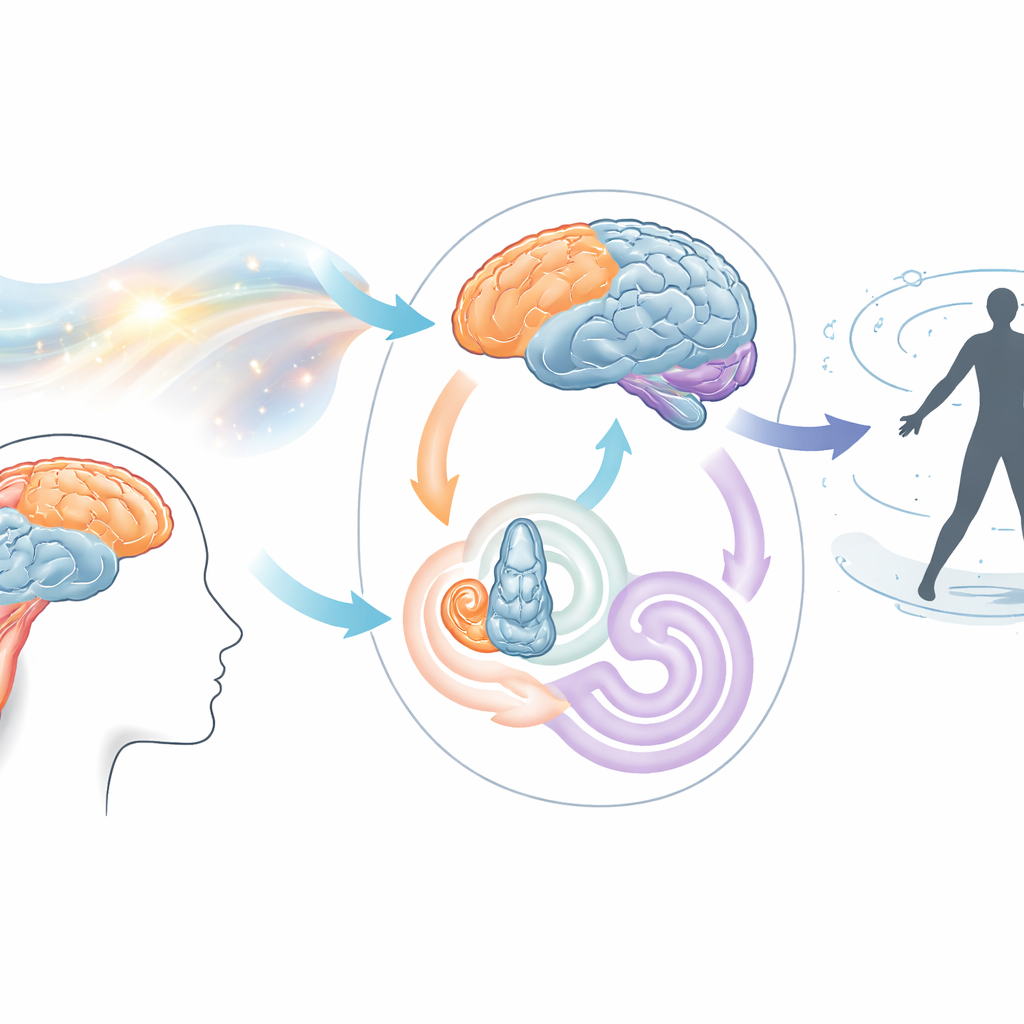
For some people, migraine is not just a pounding headache—it also makes the room seem to tilt, sway, or spin. This condition, called vestibular migraine, can turn simple tasks like walking in a supermarket aisle or driving a car into exhausting ordeals. The study described here looked inside the resting brain of people with vestibular migraine to see how communication between key brain areas differs from that of healthy individuals, and how these changes might help explain disabling dizziness and visual discomfort.
Looking at the Resting Brain
Instead of scanning people while they perform tasks, the researchers used resting-state functional MRI, which tracks natural brain activity while participants lie still with their eyes closed. They compared 49 people with vestibular migraine to 61 healthy volunteers matched in age and sex. By focusing on how strongly tiny regions in the brain "talk" to one another over time, the team could map the main hubs of communication—areas that act like traffic junctions for signals related to balance, vision, pain, and self-awareness.
Finding the Brain’s Busy Hubs
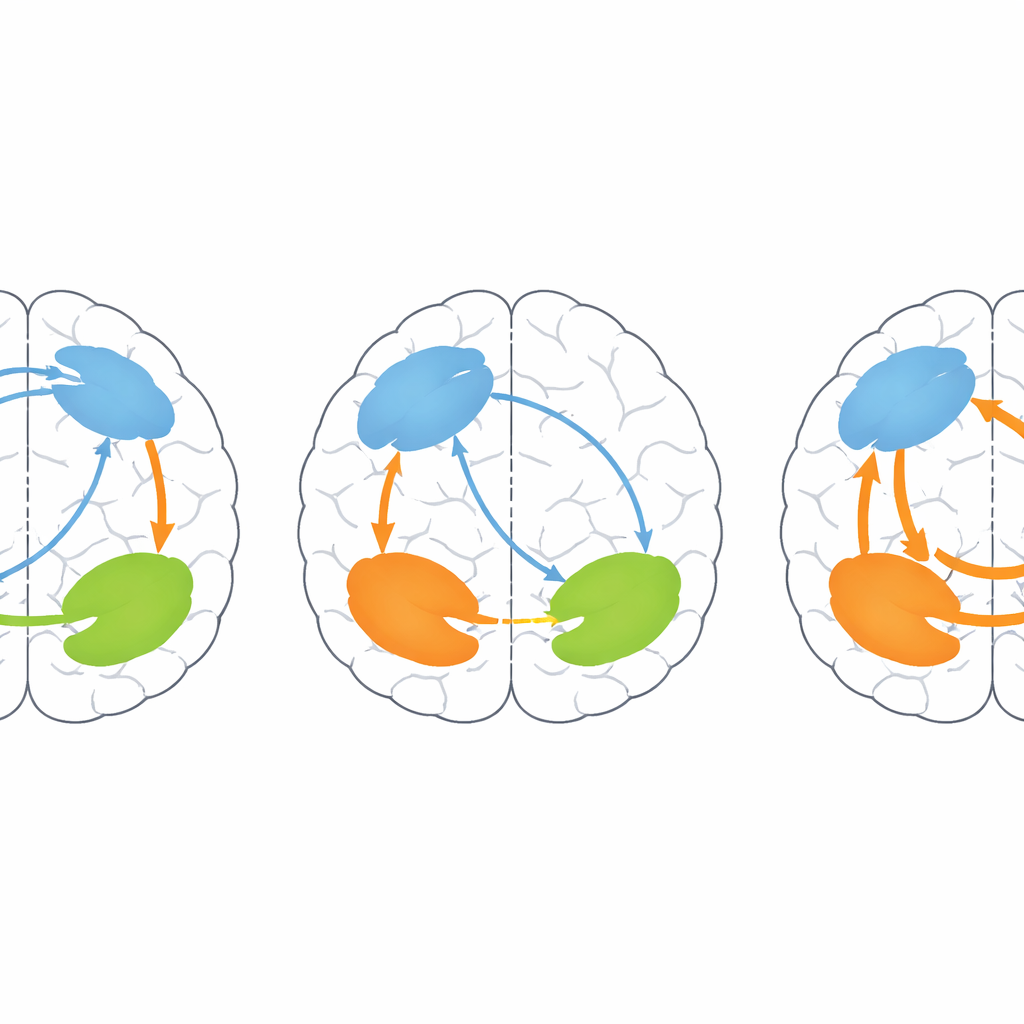
The researchers used a method called functional connectivity density, which counts how many other regions each spot in the brain is strongly connected to. In people with vestibular migraine, a major control center at the front of the brain—the medial prefrontal cortex—showed fewer connections, both locally and with distant areas. In contrast, regions farther back that help process visual scenes and spatial information, such as parts of the occipital lobe and a midline area called the precuneus, showed more connections than in healthy volunteers. Another region involved in attention and the emotional tone of pain, the middle cingulate cortex, also appeared unusually linked to distant brain areas.
Broken Lines Between Control and Senses
To understand how these hubs interact, the team next examined direct communication lines starting from the medial prefrontal cortex. In vestibular migraine, this frontal region had weaker connections to several key partners: the precuneus and nearby areas that help build our sense of where we are in space, the hippocampus and parahippocampus that support memory and context, and another core resting-state area called the posterior cingulate cortex. Connections to a primary visual region were also reduced. Together, these findings suggest that top-down control from the frontal brain over visual, balance-related, and memory systems is blunted, even when patients are not actively having an attack.
When Visual and Inner Maps Take Over
Interestingly, the very regions that gained extra connections—especially the precuneus—are deeply involved in building an inner map of the body and surrounding space. The study found that people whose precuneus showed more widespread connectivity tended to report worse dizziness and life disruption on a standard questionnaire. Although this link explained only part of the variation in symptoms, it hints that an overactive internal mapping system could amplify the sense of imbalance. At the same time, stronger wiring in visual areas may reflect a shift toward relying more heavily on what the eyes see when the balance organs are not trusted, a strategy that can backfire in busy, visually complex environments.
What This Means for Patients
Overall, the results paint a picture of vestibular migraine as a problem of network imbalance rather than damage in a single spot. Frontal regions that normally help filter and reinterpret signals from the inner ear and eyes appear less engaged, while visual and midline areas that build our sense of self in space seem to work overtime. This combination may make the brain more sensitive to motion and visual clutter, and less able to calm those signals down. By identifying which brain circuits are over- or under-connected, the study offers clues for future treatments—from targeted brain stimulation to tailored rehabilitation exercises—that might rebalance the network and help steady the world for people living with vestibular migraine.
Citation: Zhe, X., Zhang, X., Cheng, M. et al. Altered functional connectivity density in the prefrontal-limbic-visual networks of vestibular migraine. Sci Rep 16, 8203 (2026). https://doi.org/10.1038/s41598-026-38116-3
Keywords: vestibular migraine, brain connectivity, dizziness, functional MRI, visual balance