Clear Sky Science · en
Phytochemical analysis of green-branch bark extract and the brown gum exudates “kinos” from Eucalyptus camaldulensis by HPLC and GC–MS with their antifungal activity
Turning Tree Waste into a Protective Shield
Eucalyptus trees are best known for their scent and soothing cough drops, but much of the tree—especially its branches and sticky gums—is treated as industrial waste. This study explores an intriguing idea: can the leftover bark and dark brown gum from Eucalyptus camaldulensis be turned into a natural, eco-friendly coating that protects pine wood from destructive molds and rots? As concerns about chemical fungicides and drug-resistant microbes grow, finding powerful defenses hiding in common trees could matter to anyone who cares about safer homes, healthier forests, and more sustainable products.
From River Red Gum to Lab Bench
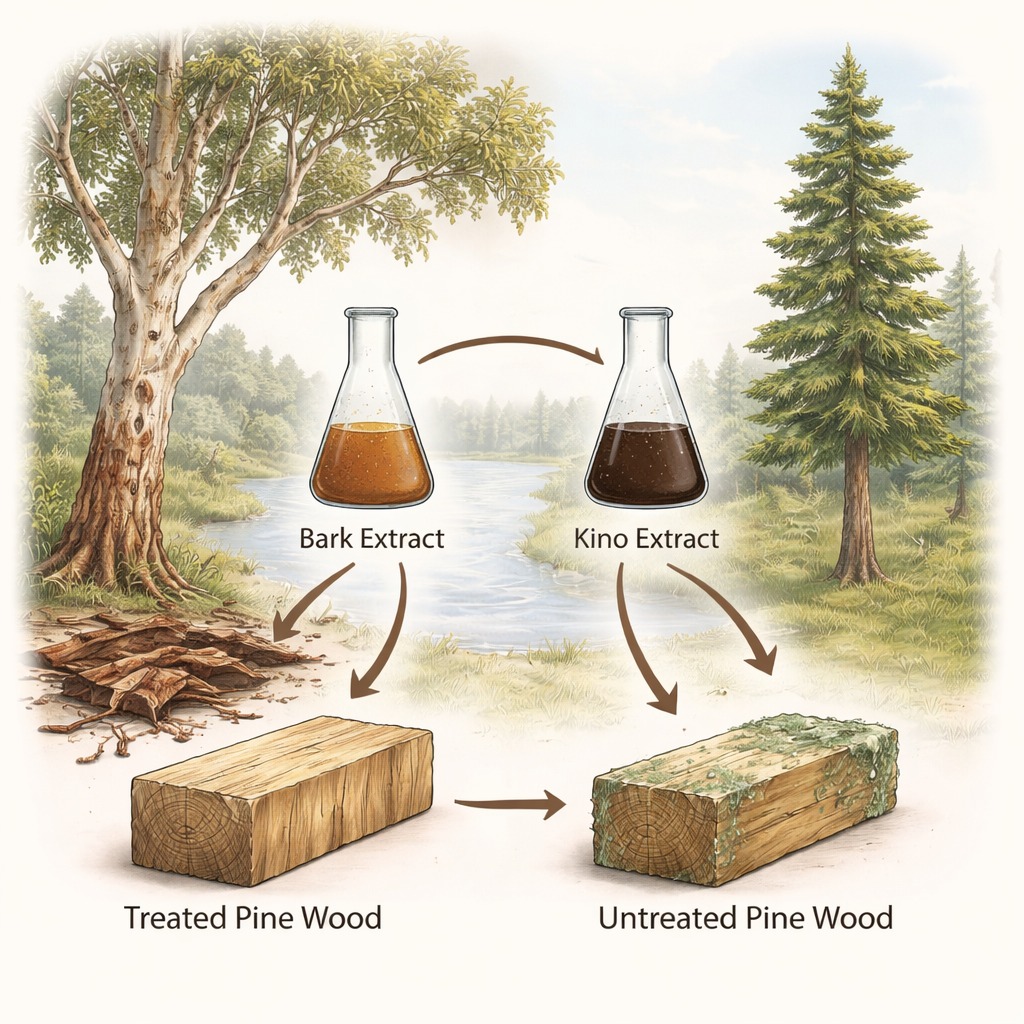
Eucalyptus camaldulensis, also called river red gum, is widely planted in dry regions for timber, paper, and charcoal. In the process, huge amounts of branches and bark, plus thick brown gum exudates known as “kinos,” are discarded. Traditionally, different parts of eucalyptus trees have been used in folk medicine to treat infections and wounds, hinting that these materials are rich in biologically active chemicals. The researchers collected green branch bark and kino gum from trees growing in Egypt and prepared concentrated extracts using methanol, a common laboratory solvent, to pull out the key components.
Peeking Inside the Plant’s Chemical Arsenal
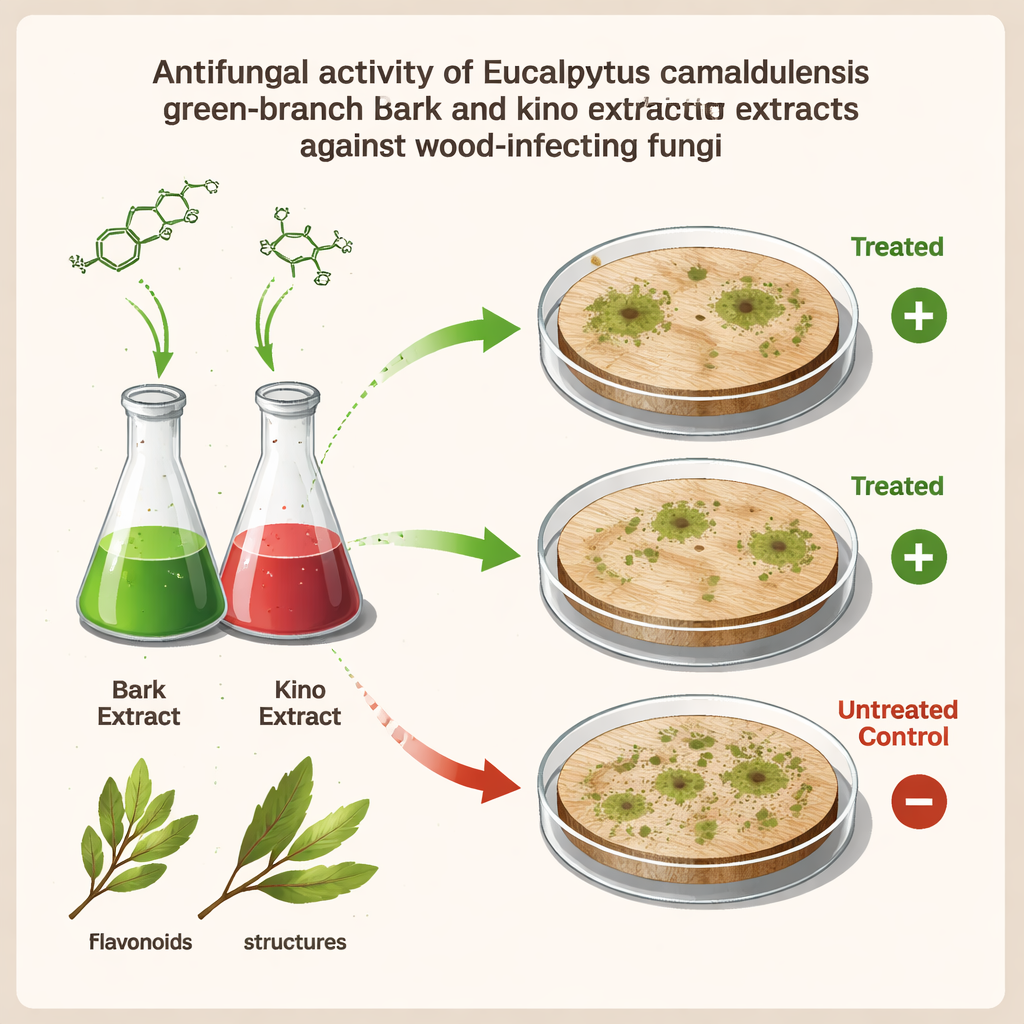
To find out what exactly is in these extracts, the team used two powerful analytical techniques that act like chemical fingerprint scanners. One, called HPLC, separates and measures small, non-volatile molecules. It revealed high levels of plant compounds known as phenolics and flavonoids in both bark and kino. In the bark extract, the standout ingredients included kaempferol, gallic acid, and ellagic acid, all of which are known from other studies to have antimicrobial and antioxidant properties. The kino gum was also rich in gallic and ellagic acids, along with chlorogenic acid and rutin, forming a dense cocktail of molecules often linked to disease resistance in plants.
Tracking the Scents and Vapors
The second technique, GC–MS, focuses on volatile and semi-volatile molecules, many of which contribute to essential oils and aromas. Here, the bark extract was dominated by compounds such as p-cymene, spathulenol, and crypton, while the kino contained spathulenol, isoaromadendrene epoxide, and several other complex terpenes and fatty derivatives. These substances are not just fragrant; previous research has shown that some of them can disrupt microbial cell membranes or interfere with fungal growth. Together, the two analyses paint a picture of bark and kino as densely packed reservoirs of chemicals that plants themselves use as a defensive shield.
Putting Tree Chemistry to the Test on Pine Wood
The real-world question, however, is whether these extracts can actually protect wood. To test this, the scientists applied different concentrations of the eucalyptus bark and kino extracts to small blocks of pine wood (Pinus halepensis), then exposed them to two notorious fungi: Fusarium circinatum, which causes a damaging disease called pitch canker, and Pythium tardicrescens, responsible for seedling damping-off. At the highest tested level (1000 micrograms per milliliter), both bark and kino extracts suppressed the growth of F. circinatum by about 71 percent—similar to or better than a commercial fungicide under the same conditions. Against Pythium, the bark extract was clearly stronger than the kino but still slightly weaker than the synthetic control, suggesting that these natural treatments are promising but not yet perfect replacements.
What This Means for Wood, Forests, and Everyday Products
In plain terms, this study shows that what we often view as tree waste—green branch bark and sticky gum—actually contains a rich mix of natural chemicals that can significantly slow the growth of harmful fungi on wood. While the extracts may not yet match commercial fungicides in every case, they come close enough to be considered serious candidates for future “green” wood preservatives. With further refinement and better formulations, eucalyptus-based coatings could help protect timber, extend the life of wood products, and reduce reliance on harsher synthetic chemicals, all while making better use of a resilient tree that already plays a big role in forestry and traditional medicine.
Citation: Salem, M.Z.M., Elshaer, M.A.A., Mohamed, A.A. et al. Phytochemical analysis of green-branch bark extract and the brown gum exudates “kinos” from Eucalyptus camaldulensis by HPLC and GC–MS with their antifungal activity. Sci Rep 16, 7480 (2026). https://doi.org/10.1038/s41598-026-38109-2
Keywords: eucalyptus extracts, natural antifungal, wood protection, plant phenolics, eco-friendly biofungicide