Clear Sky Science · en
Machine learning-based assessment of soil organic carbon dynamics in soybean–wheat rotations in eastern China
Why the Ground Beneath Our Feet Matters
When we talk about climate change and feeding a growing population, we often look to the sky—carbon dioxide in the air, shifting weather, rising temperatures. But a huge part of the story is hidden underground. Farmland soils quietly store enormous amounts of carbon and help determine how well crops grow. This study explores how a common crop rotation—soybeans followed by wheat—in one of China’s most important farming regions changes the amount of carbon stored in the soil, and how advanced computer models can map those changes across the landscape.
Farms on the Front Line of Climate and Food
Eastern China is a powerhouse of grain and oilseed production, supplying wheat and soybeans that are central to food security and the economy. At the same time, the region faces pressure from intensive farming, soil degradation, and a warming climate. Soil organic carbon—the dark, organic material in soil—is crucial because it improves fertility, helps soil hold water, and locks away carbon that would otherwise contribute to greenhouse gases. Understanding how different crops and management choices affect this underground carbon bank can guide farming practices that both sustain yields and help slow climate change.
Digging In: How the Study Was Done
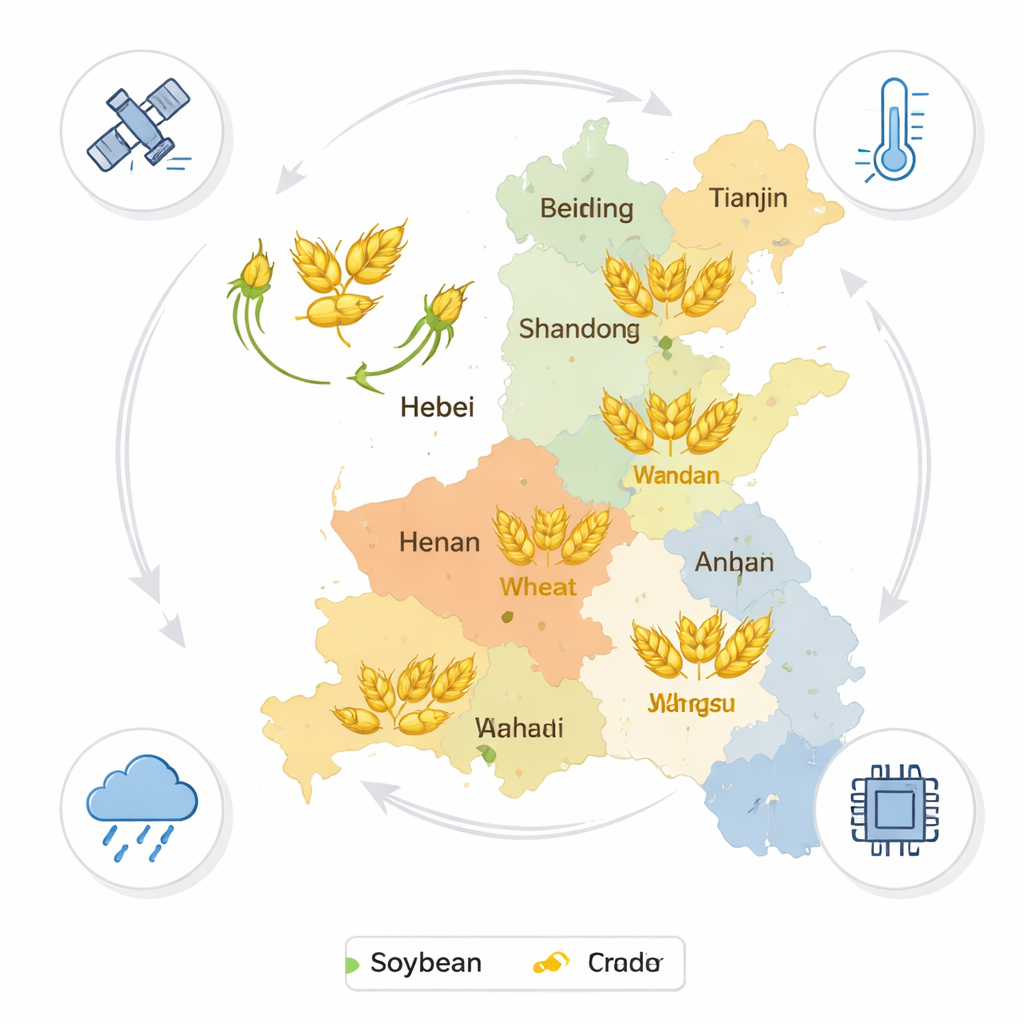
Researchers sampled soils in nearly a thousand soybean–wheat fields across seven provinces and cities, from Anhui to Beijing. They collected soil at two depths, the plow layer (0–15 centimeters) and the layer just below (15–30 centimeters), at four key moments in the rotation: before soybean planting, after soybean harvest, after preparing land for wheat, and after wheat harvest. Importantly, crop residues from both soybean and wheat were left on the fields and mixed into the soil using conventional tillage. The team paired these measurements with satellite images, digital elevation data, and climate information that describe vegetation, rainfall, temperature swings, and the shape of the land.
Teaching Computers to Read the Soil
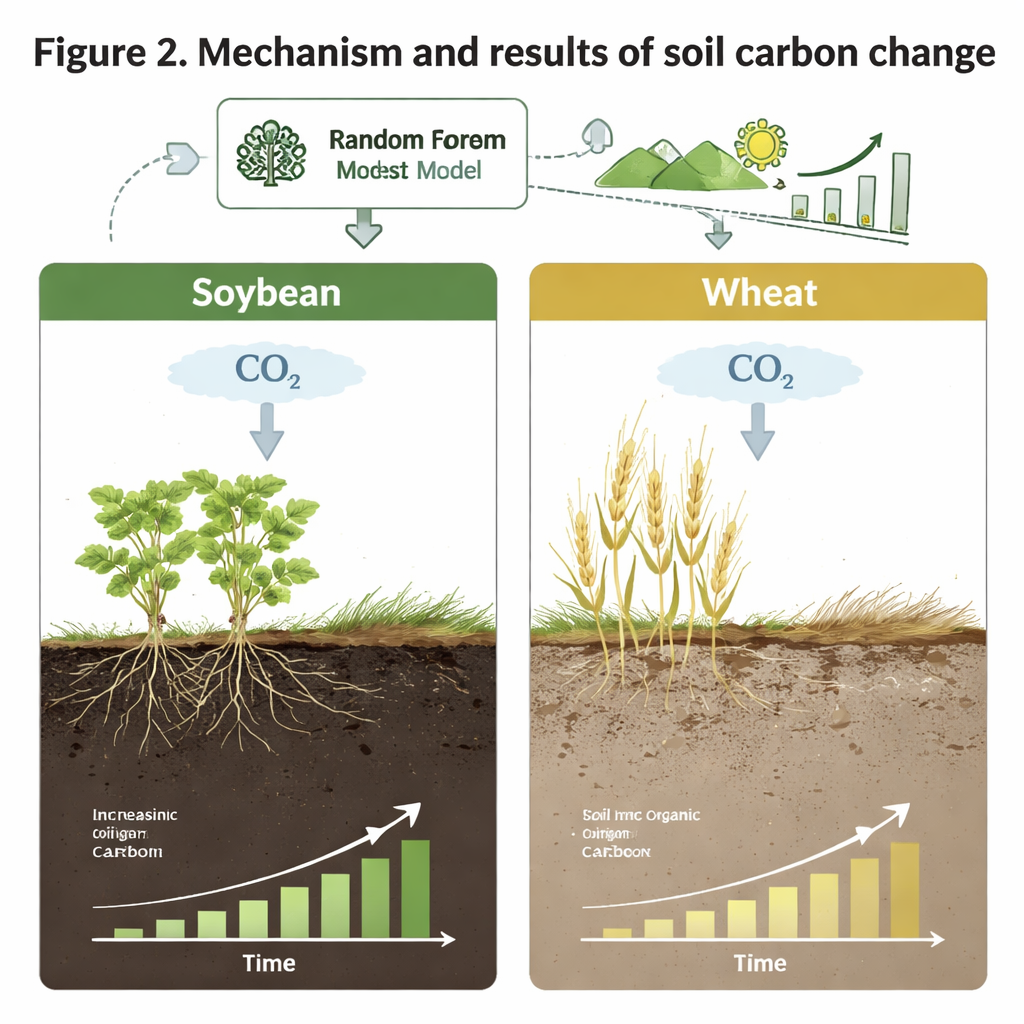
Instead of relying on a few soil profiles, the study used machine learning—computer methods that learn patterns from data—to predict soil carbon across the whole region. The scientists trained and tested three types of models and found that one, called Random Forest, gave the most accurate estimates, especially for the topsoil. This model handled the complex, non‑linear relationships between soil carbon and many environmental factors. It showed that features such as standardized height on the landscape, a satellite-based green vegetation index (NDVI), how strongly temperatures vary through the year, and slope were especially important in explaining where soil carbon was high or low.
Soybeans Build Carbon, Wheat Draws It Down
The soil measurements revealed a clear pattern. After soybean cultivation, soil organic carbon increased in both the top layer and the layer below. After wheat, the opposite happened: soil carbon declined at both depths. Spatial maps showed that northern and southern parts of the region tended to hold more carbon, but everywhere, soybeans acted as net builders and wheat as net spenders of the soil carbon bank. The study links this contrast to the crops’ growth habits and residues. Soybeans produce more above‑ground biomass and have deeper, more extensive roots, both of which feed organic matter into the soil. Wheat, with its grass-like form and lower biomass, contributes less fresh material, and in some areas soil carbon was actually being depleted over time.
What Shapes the Underground Carbon Map
By combining field data with environmental layers, the researchers showed that where you are on the landscape matters. Fields higher on slopes or in certain topographic positions experienced more erosion and movement of soil carbon. Areas with greener, denser vegetation, as seen from satellites, tended to store more carbon. Seasonal temperature swings influenced both plant growth and how quickly microbes break down plant residues. All of these factors interacted with crop choice: soybean fields gained carbon more where conditions supported lush growth, while wheat fields in fragile positions were more prone to carbon losses.
What This Means for Farmers and the Climate
For non-specialists, the takeaway is simple: not all crops treat the soil the same way. In this soybean–wheat rotation, soybeans help refill the underground carbon bank, while wheat tends to withdraw from it. The study shows that adding or keeping soybeans in rotations can improve soil health, increase the soil’s ability to store carbon, and reduce the release of carbon back into the atmosphere. Using machine learning to map these changes allows planners and farmers to see where soils are gaining or losing carbon and to target better practices. In a warming world that must also stay well-fed, these insights suggest that smarter rotations and data‑driven soil management can turn ordinary fields into more effective climate allies.
Citation: Yu, Z. Machine learning-based assessment of soil organic carbon dynamics in soybean–wheat rotations in eastern China. Sci Rep 16, 7250 (2026). https://doi.org/10.1038/s41598-026-38105-6
Keywords: soil carbon, soybean–wheat rotation, crop rotation, machine learning, climate-smart agriculture