Clear Sky Science · en
Pharmacological investigation of bergapten isolated from Glehnia littoralis against periodontitis
Why a tooth problem matters for whole-body health
Bleeding gums and loose teeth might seem like small annoyances, but they are signs of periodontitis, a chronic infection of the tissues that hold our teeth in place. This disease is not only a leading cause of tooth loss; it is also linked with diabetes, heart disease, and other systemic conditions. The study described here explores whether a natural compound called bergapten, derived from the coastal herb Glehnia littoralis long used in East Asian medicine, can calm the inflammation that erodes gum tissue and bone—and even help those tissues rebuild.
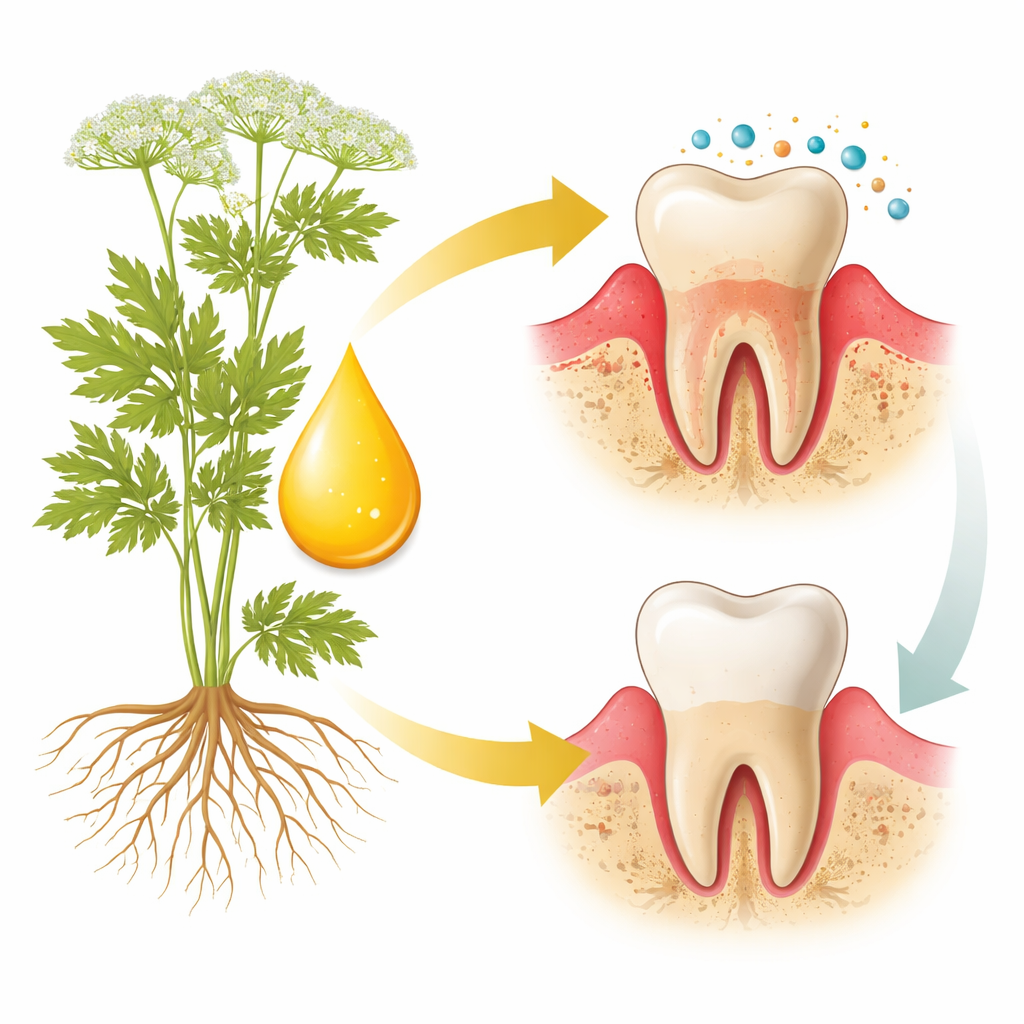
From seaside plant to potential gum protector
Glehnia littoralis is a hardy plant that grows along temperate seashores and has been used traditionally to soothe inflammation. One of its key ingredients is bergapten, a small molecule already known for anti-cancer, anti-inflammatory, and antioxidant properties. The researchers began by using large biological databases and computer modeling to see whether bergapten might influence genes and proteins involved in periodontitis. They found dozens of overlapping targets between bergapten and gum disease, especially molecules that control inflammation, bone breakdown, and responses to harmful oxygen by-products. Computer docking simulations suggested that bergapten can fit snugly into the active sites of major inflammatory messengers, hinting that it could dial down their activity.
Testing the compound on human gum-support cells
Next, the team moved to experiments with human periodontal ligament cells—specialized connective-tissue cells that anchor teeth to the jaw and are crucial for repair after damage. To mimic bacterial attack, they exposed these cells to molecules from Porphyromonas gingivalis, a key gum-disease bacterium, which normally triggers strong inflammation and weakens bone-forming capacity. When bergapten was added at doses that did not harm the cells, production of several aggressive inflammatory signals dropped markedly. At the same time, genes and proteins that drive the maturation of bone-forming cells rebounded, and the cells resumed creating mineralized nodules, a sign of active tissue rebuilding.
Quieting cellular stress and harmful oxygen sparks
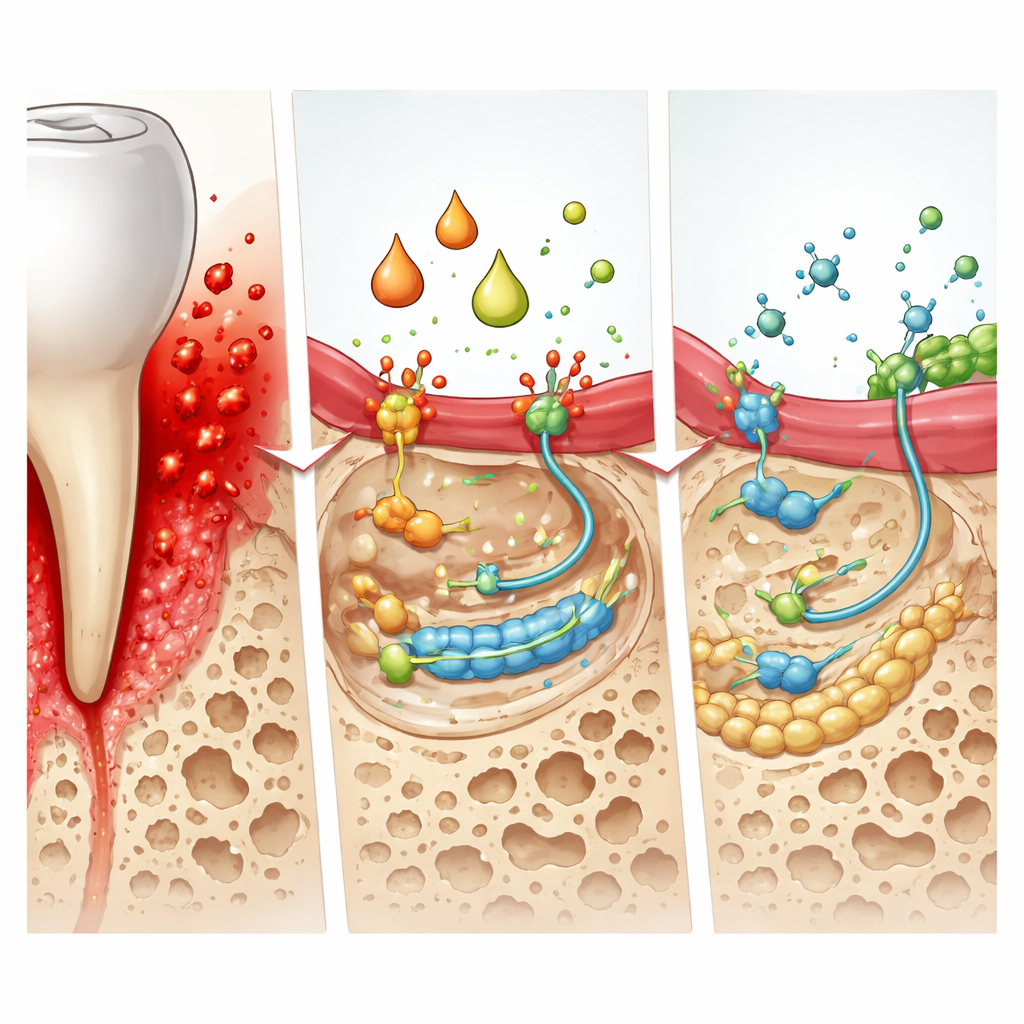
Periodontitis is fueled not only by bacteria but also by oxidative stress—excess reactive oxygen species that damage cell structures—and by strain on the cell’s protein-folding factory, the endoplasmic reticulum. In the gum-support cells, bacterial components switched on a stress pathway inside this compartment, which in turn amplified inflammation and cell injury. Bergapten blunted this stress response, particularly along a molecular route known to couple protein misfolding with inflammatory signaling. It also reduced levels of reactive oxygen species and restored key antioxidant defenses inside the cells. When the researchers artificially blocked a central stress sensor, the protective anti-inflammatory and antioxidant actions of bergapten largely disappeared, indicating that its benefits depend on rebalancing this stress system rather than simply blocking one inflammatory molecule.
Seeing results in living animals
To find out whether these cellular effects translate into real tissue protection, the scientists turned to two well-established rat models of periodontitis. In one, bacterial components were repeatedly injected near the molars; in the other, a thread was tied around a tooth to trap plaque and provoke chronic inflammation. In both models, untreated animals developed red, swollen gums, deepened pockets around the teeth, heavy infiltration of inflammatory cells, and clear loss of the supporting jawbone as seen on high-resolution scans. Animals given bergapten, either applied into the gum pocket or taken by mouth, showed milder inflammation, fewer inflammatory cells in tissue slices, and measurable preservation or regrowth of bone around the teeth. Levels of major inflammatory signals in the bloodstream also fell toward normal.
What this could mean for future dental care
Together, these findings portray bergapten as a multi-talented defender of the tissues that hold teeth in place. It tamps down excessive inflammatory messengers, shields cells from harmful oxygen sparks and internal stress, and encourages the cells that build bone to resume their work, all without obvious toxicity in the tested ranges. While much more research is needed—especially human clinical trials and safety studies—this work suggests that a molecule from a seaside herb could someday complement cleaning, surgery, and antibiotics as a gentler, natural-based option to prevent tooth loss and support gum healing in people with periodontitis.
Citation: Kim, EN., Trang, N.M., Na, M. et al. Pharmacological investigation of bergapten isolated from Glehnia littoralis against periodontitis. Sci Rep 16, 7896 (2026). https://doi.org/10.1038/s41598-026-38099-1
Keywords: periodontitis, bergapten, natural anti-inflammatory, gum and bone regeneration, oxidative stress