Clear Sky Science · en
Pea transcriptional and phytohormonal responses to adapted and non-adapted aphid biotypes at early stages of infestation
Why pea plants and tiny insects matter
Pea plants are an important source of plant protein, but they are under constant attack from aphids—small sap-sucking insects that can stunt growth and spread plant viruses. Not all aphids, however, can feed equally well on every pea plant. This study explores what happens inside pea plants during the very first days of attack by two closely related kinds of pea aphids: one that feeds successfully on peas and one that usually fails. By comparing several pea varieties that differ in how well they withstand aphids, the researchers aim to uncover natural defense strategies that plant breeders could use to reduce pesticide use.
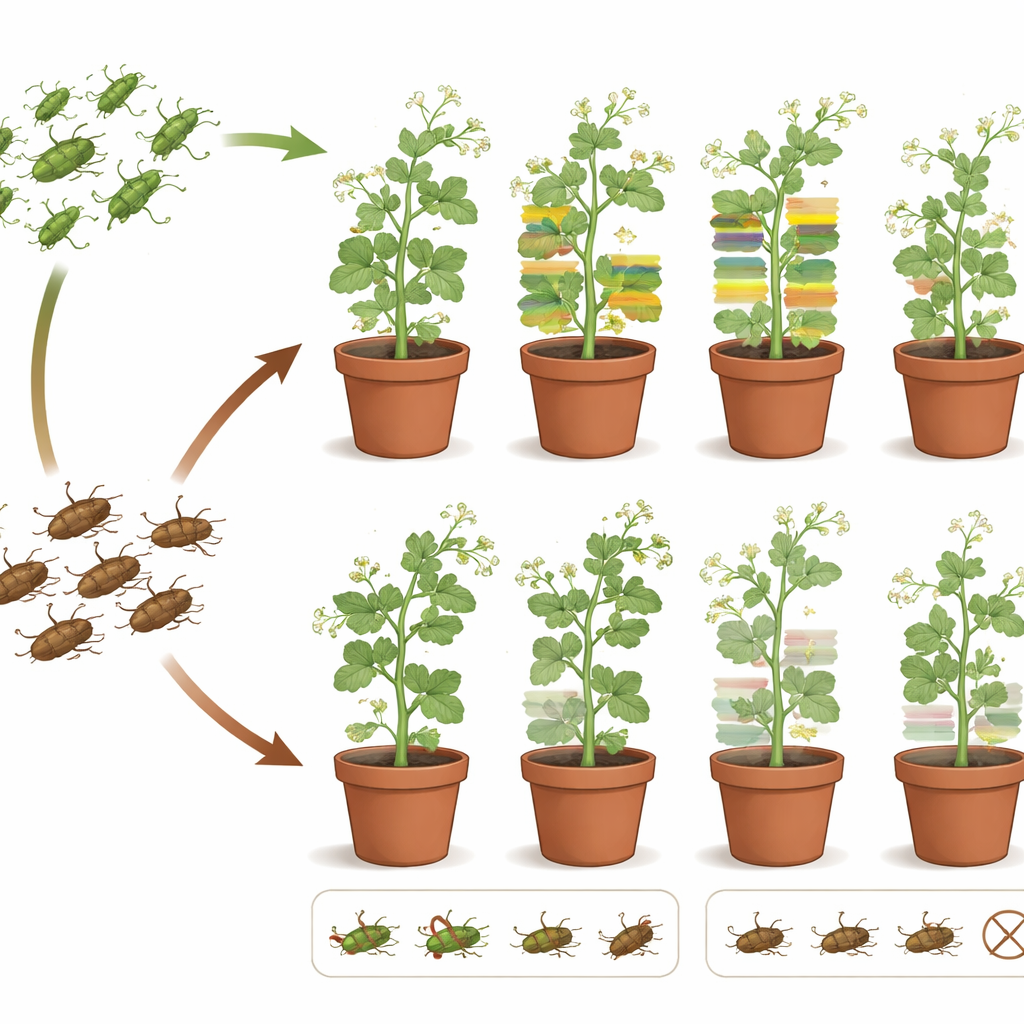
Two kinds of aphids, four kinds of peas
The team worked with four pea genotypes—genetically distinct lines—that range from susceptible to quite resistant to aphids. They exposed these peas to two aphid “biotypes”: a pea-adapted clone that thrives on peas and an alfalfa-adapted clone that normally cannot reproduce on them. Earlier work had shown that a region of the pea genome, called ApRVII, strongly influences resistance to both aphid types, even though it does not contain the classic resistance genes seen in many plant–pathogen battles. Here, the scientists focused on the first 72 hours after aphids were placed on the plants, a window when feeding is being established and defenses could be switched on.
Hormone alarms stay surprisingly quiet
Many plant defenses are controlled by small signaling molecules known as hormones, which often surge when insects or microbes attack. The researchers measured several major defense-related hormones and their derivatives, including salicylic acid, jasmonates, and abscisic acid, in the above-ground parts of each pea genotype. Despite careful statistical analysis, they found no clear, consistent rise or fall in these hormones that could be linked to aphid attack, aphid type, or pea resistance level. A few subtle, genotype-specific shifts were detected, but there was no shared hormonal “signature” that distinguished resistant from susceptible plants. This suggests that, at least in the early stages and at the whole-plant scale, pea defenses against these aphids are not driven by big swings in the usual hormone signals.
Gene activity changes depend on aphid success
To see deeper into the plant’s response, the team performed RNA sequencing, a method that tracks which genes are turned up or down. Across all samples they detected over 23,000 expressed genes, with more than 6,000 changing in at least one condition. A striking pattern emerged: the pea-adapted aphid triggered a massive wave of gene expression changes, especially after 24 and 72 hours, while the non-adapted alfalfa aphid altered only a few dozen genes in total. Three of the pea genotypes showed thousands of genes changing under attack by the adapted aphid, whereas the most resistant genotype showed very few shifts. Many of the small set of genes that did respond to the non-adapted aphid changed in the same direction when the adapted aphid fed, hinting at a basic, shared response to aphid feeding regardless of success.
Suppressing plant growth from the inside
When the researchers looked at which kinds of genes changed during attack by the pea-adapted aphid, a clear theme appeared. In three of the four pea genotypes, genes tied to core cellular functions were strongly dialed down. These included genes involved in copying DNA, building new cell walls and membranes, moving components within cells via motor proteins, and forming protective surface layers like cuticle and wax. In other words, processes that support growth, division, and structural upkeep were suppressed. A smaller set of genes linked to general defense and production of specialized protective compounds was turned up in some genotypes, including a susceptible one, suggesting that defensive reactions alone were not enough to stop the adapted aphid. By contrast, the highly resistant genotype barely changed its gene expression at all, pointing to built-in, rather than inducible, defenses.
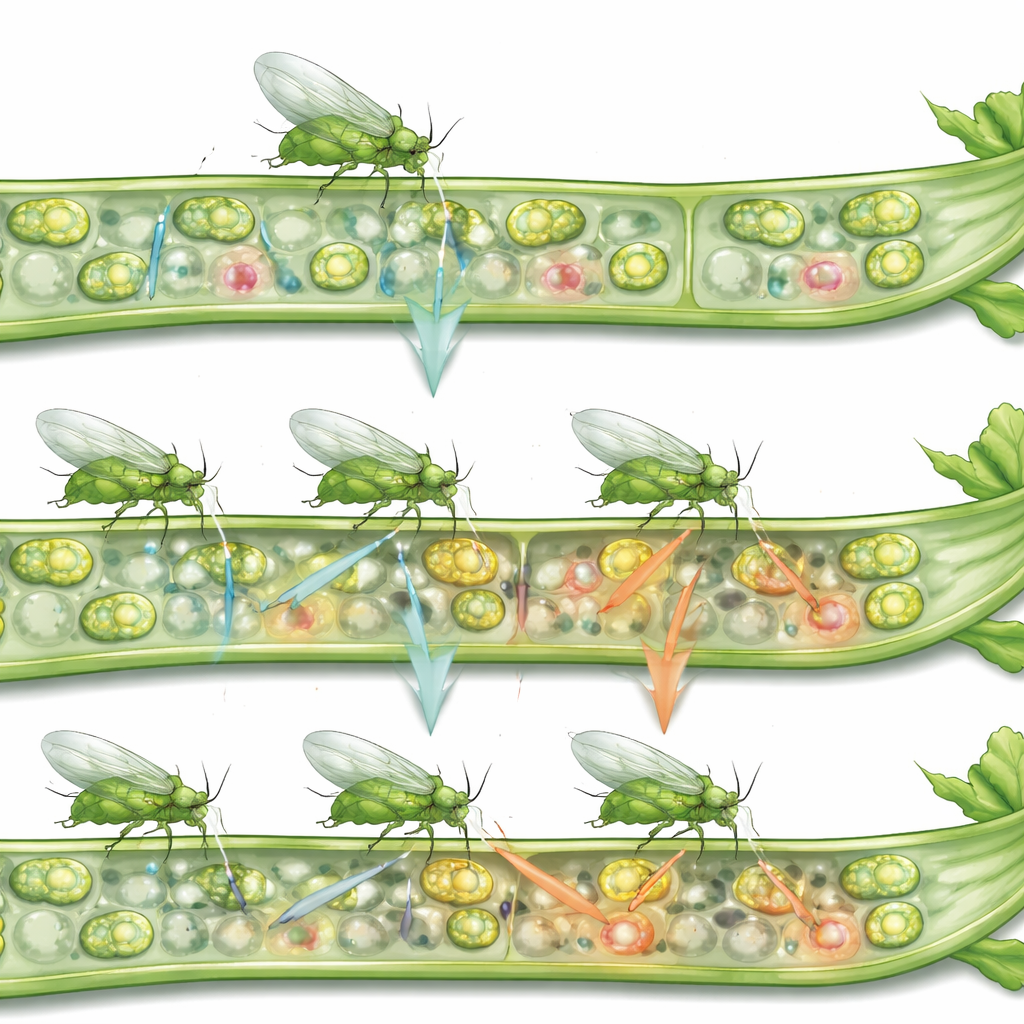
A built-in shield rather than a loud alarm
By comparing two pea genotypes that differ clearly at the ApRVII resistance region, the team found that many genes in this region are expressed at different levels even before aphids arrive. Several of these genes encode proteins that are often linked to stress tolerance or defense chemistry, while others have unknown roles. Because the resistant genotype showed little transcriptional response once aphids began to feed, the authors propose that ApRVII works mainly through pre-existing differences in cell structure or chemistry—possibly in the phloem sap where aphids drink—rather than through a dramatic, hormone-driven defense switch. Overall, the study suggests that successful pea aphids both cope with and reshape pea biology, quietly damping growth-related processes, while pea resistance against poorly adapted aphids may rely on barriers and traits that are already in place before the insects take their first bite.
Citation: Ollivier, R., Robin, S., Galland, M. et al. Pea transcriptional and phytohormonal responses to adapted and non-adapted aphid biotypes at early stages of infestation. Sci Rep 16, 8456 (2026). https://doi.org/10.1038/s41598-026-38098-2
Keywords: pea aphid, plant resistance, gene expression, crop protection, plant–insect interactions