Clear Sky Science · en
Occurrence of Borrelia miyamotoi in Ixodes ricinus and Dermacentor reticulatus ticks removed from human skin in Poland in 2022–2024
Why tiny ticks matter to everyday life
For anyone who spends time in gardens, parks, or forests, tick bites are an unwelcome part of warm weather. While many people have heard of Lyme disease, fewer know that ticks can also carry a lesser-known bacterium called Borrelia miyamotoi, which can cause a flu-like illness and, in rare cases, serious brain infection. This study from Poland looked closely at ticks actually removed from people’s skin to find out how often they carry this emerging germ, and what that means for the real-world risk after a bite.
Checking thousands of ticks from real tick bites
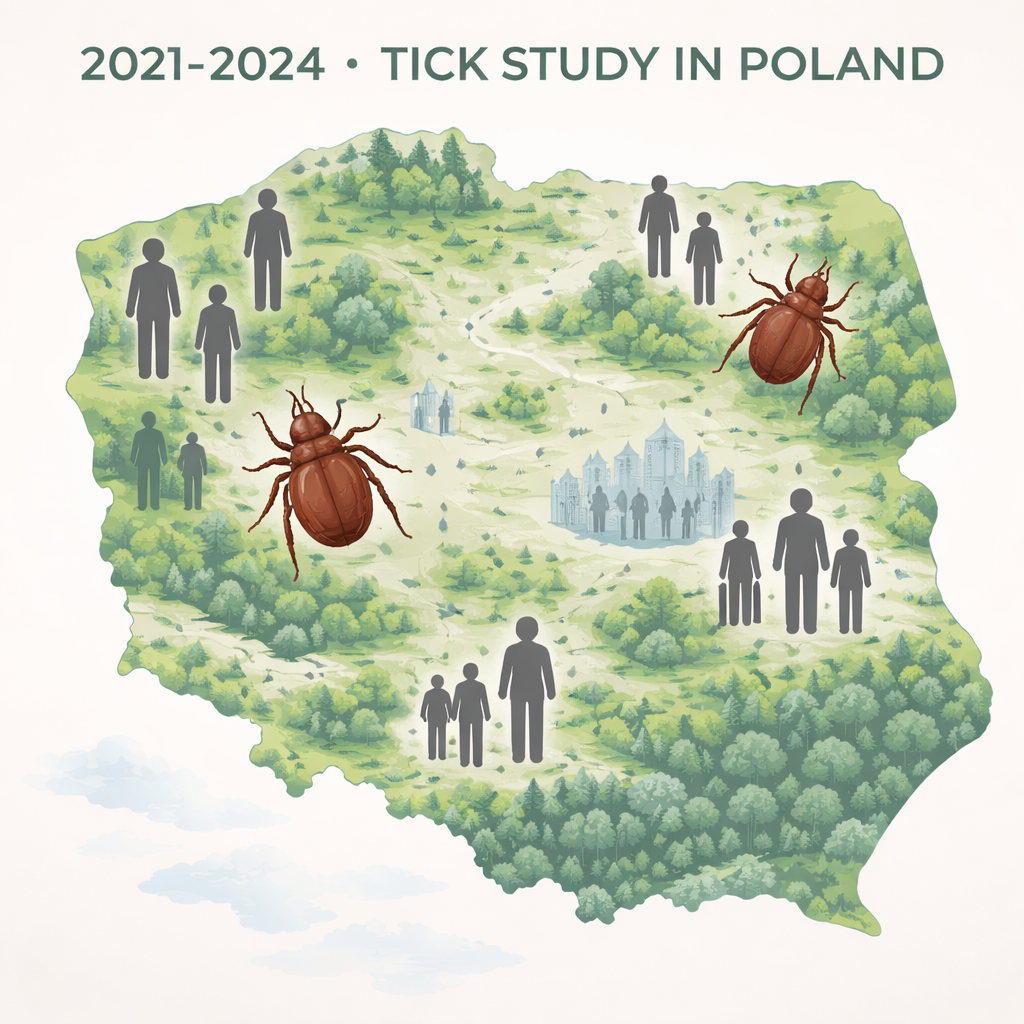
Between 2022 and 2024, Polish researchers collected 2,263 ticks that had been removed from people all over the country. Anyone who found a tick on their skin could send it to the laboratory, along with a short questionnaire about where they were bitten, what they were doing outdoors, and how long the tick had been attached. Most of the ticks belonged to the common species Ixodes ricinus, often called the castor bean tick, which frequently bites humans in Europe. A smaller number were Dermacentor reticulatus, sometimes known as the meadow tick. The team identified each tick, noted whether it was a tiny juvenile or an adult, and recorded how much blood it had already taken from its human host.
Hunting for a hidden infection
To see whether a tick carried Borrelia miyamotoi, the scientists extracted its DNA and used sensitive molecular tests that target two genes unique to this bacterium. This technique, known as PCR, can pick up even small traces of genetic material. They also checked positive samples to confirm their identity by reading part of the bacterium’s genetic code and comparing it with known strains stored in international databases. In addition, when they found Borrelia miyamotoi, they tested the same tick for the better-known Lyme disease bacteria, grouped under the name Borreliella burgdorferi sensu lato, to see how often both germs shared the same tiny carrier.
How common was the new tick-borne germ?
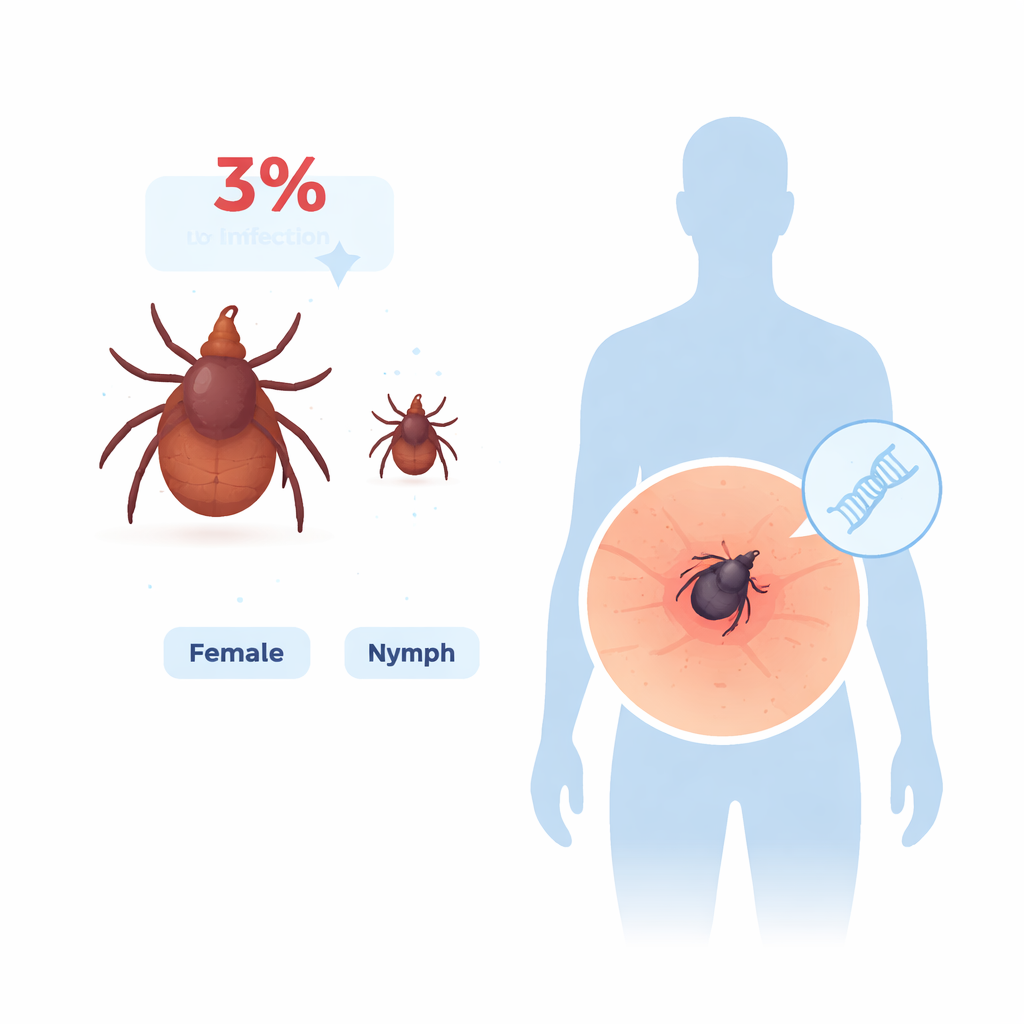
Overall, about 3 out of every 100 ticks that had bitten people in Poland carried Borrelia miyamotoi. In the main tick species, Ixodes ricinus, the infection was found only in adult females and in nymphs (the mid-sized juvenile stage), with similar rates in both. No infected males or larvae were detected, although relatively few of these were collected. The meadow tick, Dermacentor reticulatus, which fed on humans much less often, also occasionally carried the bacterium: four infected females were found, giving a similar infection level to that seen in Ixodes. Ticks carrying Borrelia miyamotoi were most often discovered in late spring and early summer, matching the usual high season for tick activity.
Tick bites, living environments, and co-infections
People were bitten in a wide range of settings, from forests and meadows to home gardens and city parks. Although more ticks came from rural areas, the share of infected ticks was at least as high in urban locations, underlining that city dwellers are not protected from tick-borne threats. Most infected ticks were partly filled with blood, meaning they had been feeding for some time, but the study did not find a clear link between how engorged a tick was and whether it carried the bacterium. When researchers looked for Lyme disease bacteria in the same ticks, nearly one in four Borrelia miyamotoi-positive Ixodes ticks also carried at least one Lyme-related species, most often Borreliella afzelii. People bitten by these co-infected ticks usually showed only mild or no skin changes at the bite site, so outward appearance gave little clue to what microbes the tick might be harboring.
What this means for people who get tick bites
The study shows that, in Poland, the chance that any single tick feeding on a person carries Borrelia miyamotoi is relatively low—around 3 percent. However, because ticks are common and people continue to be exposed in both countryside and city environments, this still represents a real, if modest, public health concern. The work also confirms that more than one tick species that bites humans can host this emerging germ, and that some ticks may carry it alongside Lyme disease bacteria. For lay readers, the key message is that careful tick prevention and prompt removal remain important, not just to avoid Lyme disease but also other lesser-known infections. Continued monitoring of ticks, as done in this study, helps doctors and health officials better understand and anticipate the risks that come with a simple walk in the grass.
Citation: Sawczyn-Domańska, A., Matczuk, M., Chmura, R. et al. Occurrence of Borrelia miyamotoi in Ixodes ricinus and Dermacentor reticulatus ticks removed from human skin in Poland in 2022–2024. Sci Rep 16, 6888 (2026). https://doi.org/10.1038/s41598-026-38085-7
Keywords: tick-borne disease, Borrelia miyamotoi, Lyme disease, Ixodes ricinus, Poland ticks