Clear Sky Science · en
α-Thalassemia has no association with asymptomatic Plasmodium falciparum carriage in three ecological zones of Ghana
Why a blood trait and malaria matter
Millions of people in Africa live with both malaria and inherited blood traits that subtly change how their red blood cells work. One of these traits, called alpha‑thalassemia, is especially common in places where malaria is frequent, raising a long‑standing question: does this blood difference help people quietly carry the parasite, or protect them from infection? This study looked for answers in Ghana by comparing who carried malaria parasites without feeling sick across three very different landscapes.
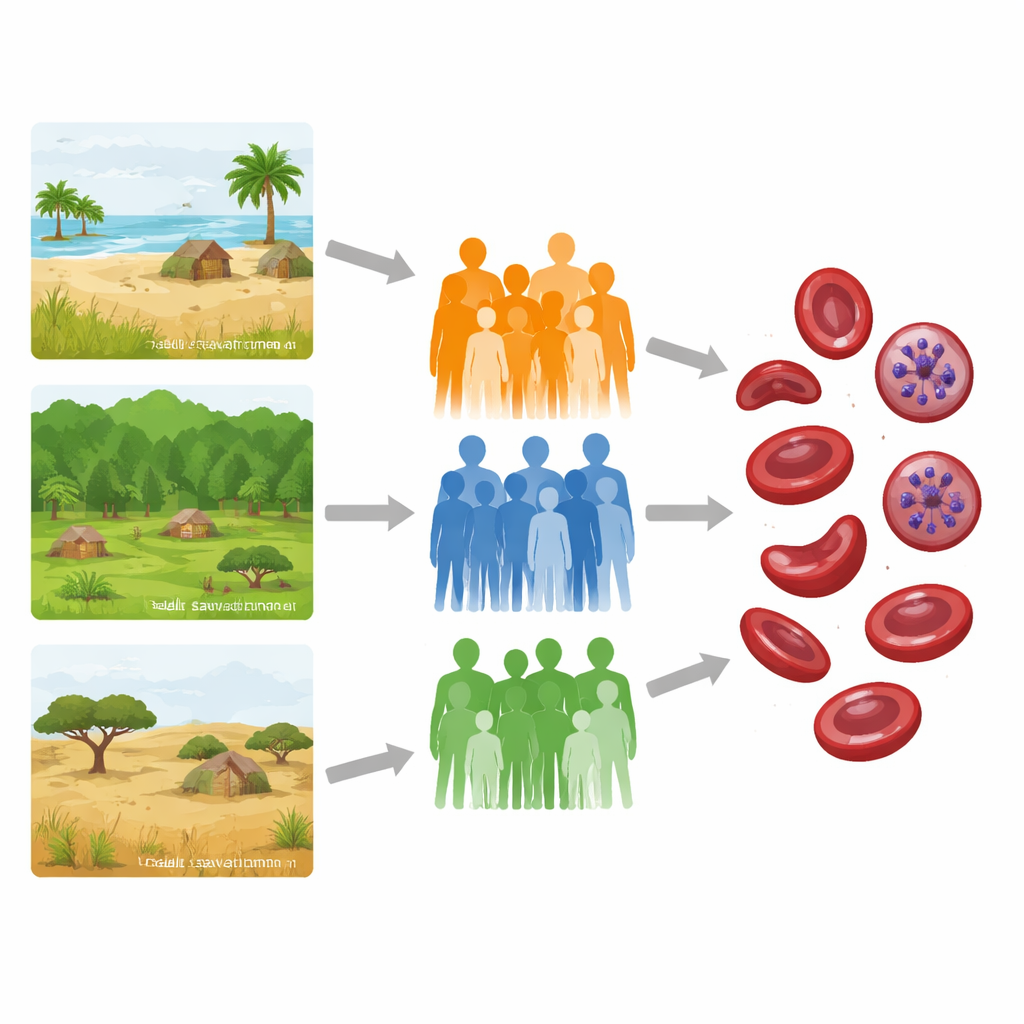
Different landscapes, different malaria patterns
Ghana stretches from humid coastline to dense forest to dry savannah, and each of these zones supports malaria in a different way. The researchers enrolled 1,401 people aged 1 to 60 years from four communities that represent these three ecological zones. None of the participants had malaria symptoms at the time of sampling. Blood from a finger prick was used to check for malaria parasites with rapid tests, microscope examination, and a highly sensitive DNA test (PCR). The forest community had the highest rate of parasite carriage by PCR, meaning more people there quietly harbored malaria in their blood, while the coastal and Sahel savannah communities showed somewhat lower levels.
How a common blood trait is spread across Ghana
The team also examined each participant’s DNA to determine whether they had the usual form of the alpha‑globin gene or one of the shorter versions that cause alpha‑thalassemia. More than half of the people tested had the usual, or “wild type,” version. About four in ten carried one altered copy (a milder form of the trait), and only a small minority carried two altered copies, which can cause more serious anemia. This broad pattern was similar across all three ecological zones, though the exact proportions differed slightly from place to place, reflecting how local history, population movements, and past malaria pressure have shaped the genetic make‑up of each community.
Checking for hidden links with silent infections
To see whether this blood trait makes people more or less likely to carry malaria without symptoms, the researchers compared parasite carriage across the different genetic groups. They looked separately at ordinary parasite stages and the special sexual stages called gametocytes, which are the forms mosquitoes pick up and pass on. Overall, there was no clear or statistically reliable relationship between having alpha‑thalassemia and the presence or density of asexual parasites. Most people, regardless of genotype, had no detectable parasites, and among those who did, infection levels were generally low. The data hinted that people with two altered gene copies might carry slightly more parasites or gametocytes, but these trends were weak and could have occurred by chance.
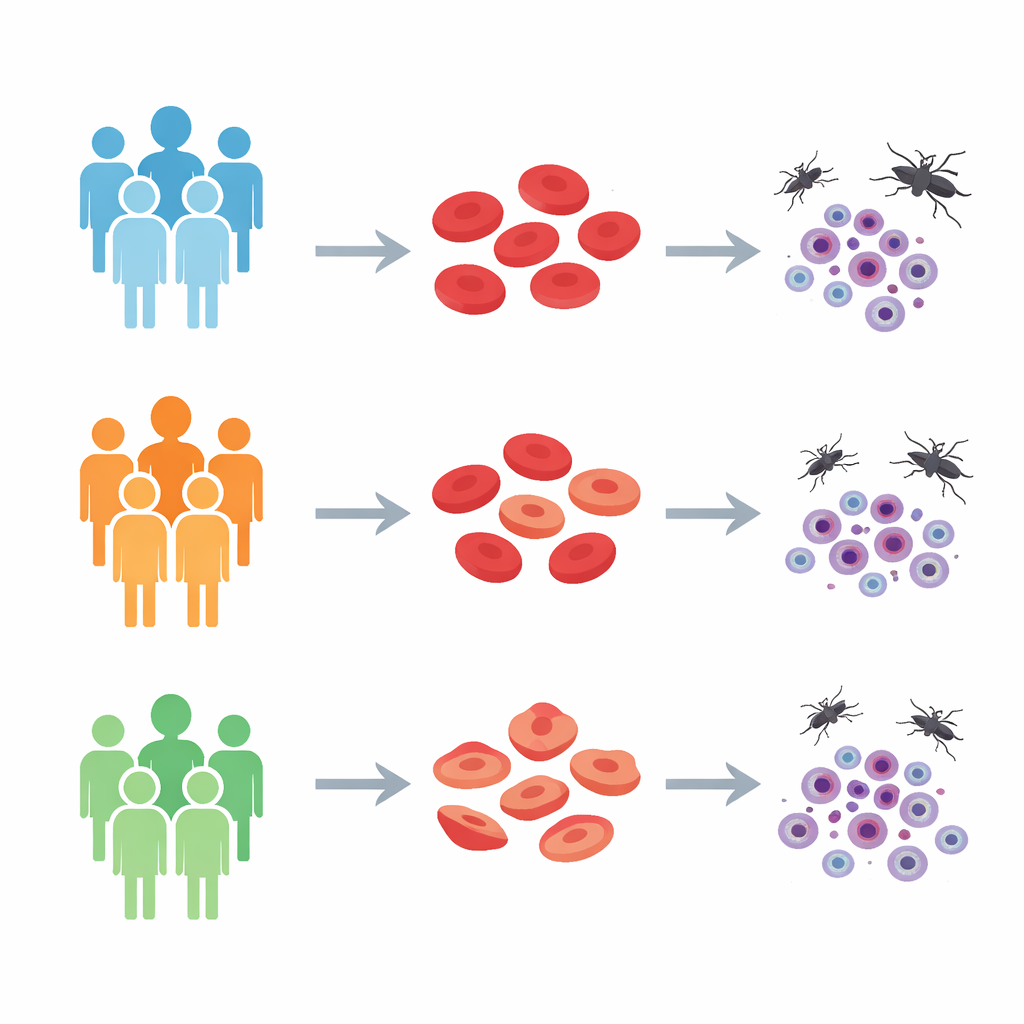
Who is most likely to carry and spread malaria
Age and geography turned out to matter more than this particular blood trait. School‑aged children, especially those between 5 and 15 years old, were far more likely to have parasites detected by PCR than adults. The forest zone showed the highest levels of both hidden infections and gametocyte carriage, consistent with its more favorable conditions for mosquito breeding and more intense transmission. In contrast, the Sahel site Pagaza showed no detectable gametocytes at all, suggesting very low onward transmission at the time of the survey. These findings point to specific age groups and regions as the main silent reservoirs feeding the malaria cycle.
What this means for malaria control
For non‑specialists, the key message is that this common inherited blood trait does not seem to determine who quietly carries malaria parasites in Ghana. While alpha‑thalassemia may help protect against life‑threatening malaria in some settings, it does not appear to be a major driver of symptom‑free infection in the communities studied here. Instead, where people live and how old they are play a bigger role in whether they harbor parasites and the transmissible gametocyte stage. The authors conclude that malaria control efforts in Ghana should focus on high‑transmission zones like the forest region and on school‑aged children, and pay particular attention to individuals who carry gametocytes, because treating these silent carriers could significantly slow the spread of the disease.
Citation: Donkor, A.B., Bernasko, F.G., Abdulai, A. et al. α-Thalassemia has no association with asymptomatic Plasmodium falciparum carriage in three ecological zones of Ghana. Sci Rep 16, 9734 (2026). https://doi.org/10.1038/s41598-026-38080-y
Keywords: alpha-thalassemia, malaria, Ghana, asymptomatic infection, genetic epidemiology