Clear Sky Science · en
Testing sensorimotor timing across age and music experience in a real-world environment
Why our sense of rhythm matters
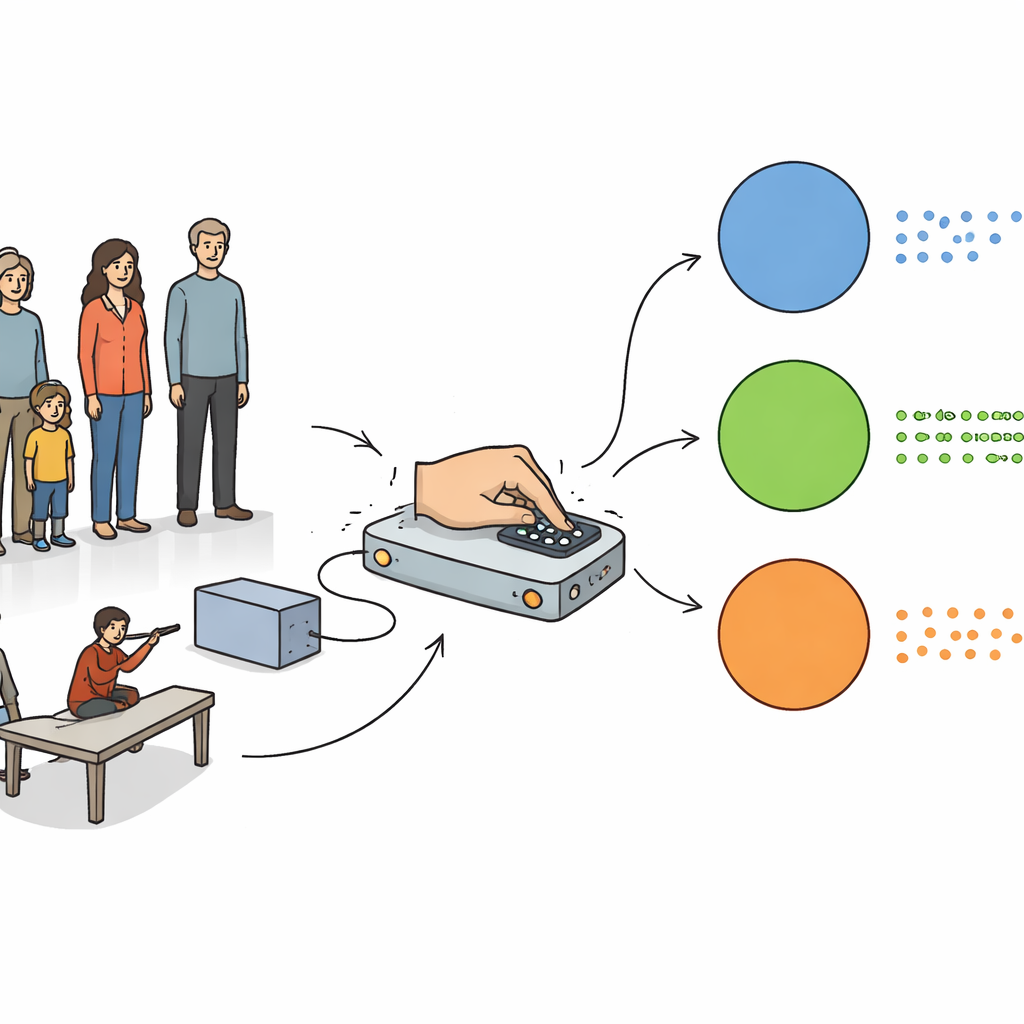
From clapping along at a concert to keeping a steady walking pace, our daily lives are filled with rhythm. Yet most scientific studies of timing have been done in ultra-quiet labs with carefully selected volunteers. This paper asks a very down-to-earth question: do those precise laboratory findings still hold when you test real people, of all ages and musical backgrounds, in a noisy public space? To find out, the researchers moved a classic rhythm experiment into a busy science museum.
A simple tapping game in a busy museum
In the Museum of Science in Boston, visitors aged 5 to 68 were invited to play a finger-tapping game. First, each person tapped at whatever pace felt most natural; this “comfortable speed” is known as their preferred tempo. Next, they tapped in time with a metronome that matched this tempo, then with beats that were 20% faster and 20% slower. For each setting, they tapped along with the sound and then continued on their own after the metronome stopped. This setup let the scientists see not only how closely people could follow an external beat, but also how well they could keep a rhythm going in their heads.
How age and musical practice shape timing
The museum data revealed clear life-span patterns. Children’s tapping was relatively uneven and off-target, improved steadily into young adulthood, and then became more variable again in later life. This U-shaped curve appeared both for how far each tap drifted from the beat and for how inconsistent the intervals between taps were. People with any music experience, even a few years of informal lessons or singing, tended to tap more precisely and more regularly than those with no musical background. Interestingly, people with music experience also preferred slightly slower natural tempos, suggesting that musical practice may encourage a calmer underlying rhythm.
Our inner rhythm pulls us back
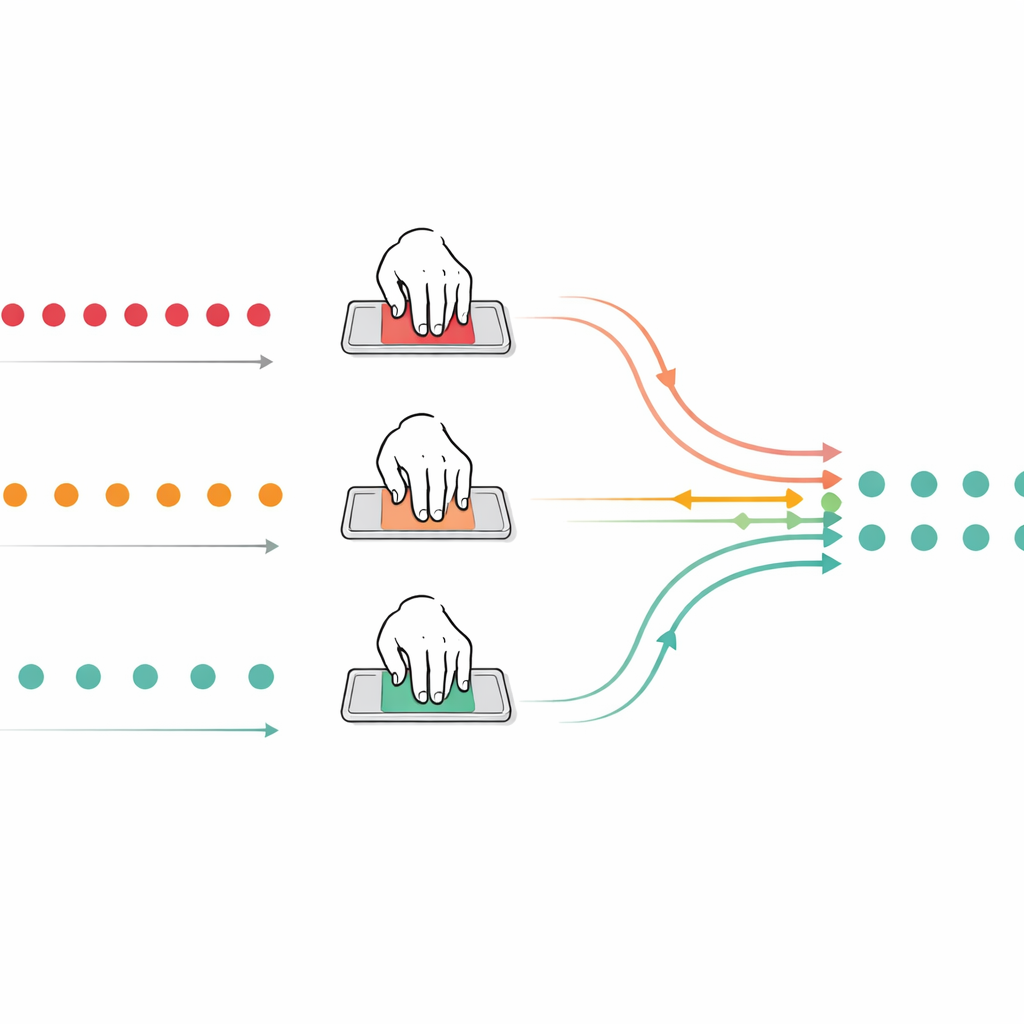
One of the study’s most striking findings was what happened when the metronome turned off. Regardless of whether people had been tapping to a faster or slower beat, their tapping gradually slid back toward their own preferred tempo. This happened even though museum visitors differed widely in their natural speeds. The result supports the idea that each of us has an internal rhythm generator that behaves like a “tempo magnet,” pulling our movements back to a comfortable pace once outside cues disappear. Age and musical experience strongly affected how accurate and steady people were, but they did not change this basic tendency to drift back toward one’s own rhythm.
Doing careful science in the real world
Collecting data in a public hall came with plenty of challenges: background noise, variable attention, curious family members looking on, and equipment that had to be reassembled for every session. The researchers developed special signal-processing methods to reliably detect each tap in these messy conditions and carefully filtered out trials where the task was not followed. Even with this extra “noise,” the core patterns long reported from controlled lab studies reappeared: a typical preferred tempo around half a second, better timing around that tempo than at faster or slower beats, improvements from childhood into adulthood, and noticeable benefits of musical experience.
What this means for everyday life
To a lay observer, the differences measured here—often just a few tens of milliseconds—might sound tiny. Yet the study shows that our sense of timing is both highly reliable and meaningfully shaped by age and musical practice, even in the uncontrolled swirl of real life. The work suggests that simple musical activities can sharpen timing skills across a wide range of people, and that our bodies naturally favor certain rhythms that guide how we move. Because these effects remain robust outside the lab, the findings strengthen the case for using rhythm-based training in education, sports, and rehabilitation, from helping children develop coordination to supporting people with movement disorders.
Citation: Serré, H., Harrigian, K., Park, SW. et al. Testing sensorimotor timing across age and music experience in a real-world environment. Sci Rep 16, 8300 (2026). https://doi.org/10.1038/s41598-026-38073-x
Keywords: rhythm, finger tapping, musical training, lifespan development, sensorimotor timing