Clear Sky Science · en
Gastroprotective and antioxidant effects of stachydrine against indomethacin-induced gastric injury via ERK, AKT and iNOS signaling pathways
Why your pain pills can hurt your stomach
Many people rely on painkillers like indomethacin and other non-steroidal anti-inflammatory drugs (NSAIDs) for arthritis, injuries, and everyday aches. But these medicines can quietly damage the stomach lining, leading to painful ulcers and even bleeding. This study explores whether stachydrine, a natural ingredient from the traditional herb motherwort, can help shield the stomach from such damage by calming inflammation and oxidative stress. 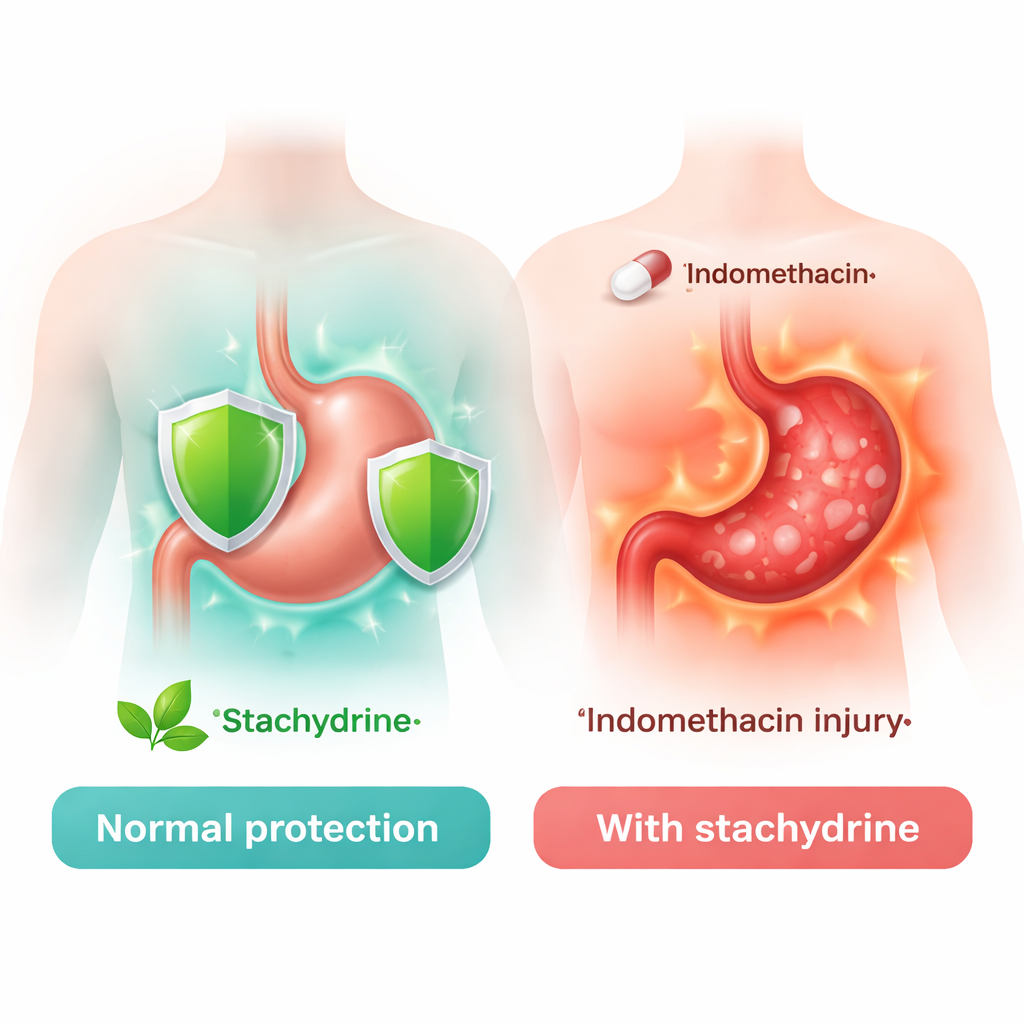
A plant compound with protective promise
Motherwort (Leonurus heterophyllus) has long been used in traditional medicine, especially for women’s health. One of its main active components is stachydrine, a small molecule already known to have anti-inflammatory and antioxidant effects in the heart, liver, and joints. However, no one had tested whether it could protect the stomach from NSAID-induced injury. The authors set out to answer a simple but important question: after indomethacin has started to harm the stomach, can a later dose of stachydrine still limit the damage?
Putting stachydrine to the test in mice
To mimic how painkillers injure the stomach, the researchers gave mice a single dose of indomethacin by mouth. Half an hour later, they treated different groups of animals with either stachydrine at two doses, a standard anti-ulcer drug (lansoprazole), or a harmless salt solution. Six hours after the painkiller, they examined the animals’ stomachs. They looked with the naked eye for visible ulcers and bleeding, and under the microscope for erosion of the inner lining and swelling deeper in the tissue. They also measured markers of inflammation, such as immune enzymes and chemical messengers, and indicators of oxidative stress, which reflect how intensely harmful oxygen-related molecules are attacking cells.
Less damage, calmer inflammation, and lower oxidative stress
Mice that received indomethacin alone showed obvious streaks of bleeding and deep erosions in their stomach lining, along with heavy swelling and immune cell invasion under the microscope. In contrast, mice treated with stachydrine—especially the higher dose—had much milder changes: only small erosions and scattered spots of bleeding. The area of the stomach surface covered by ulcers was clearly smaller. At the molecular level, stachydrine lowered the activity of myeloperoxidase, an enzyme that signals a surge of inflammatory white blood cells, and reduced key inflammatory messengers such as TNF-α, IL-6, and IL-1β. It also decreased levels of malondialdehyde, a marker of oxidative damage to cell membranes, while restoring the activity of superoxide dismutase, one of the body’s natural antioxidant enzymes.
Quieting harmful signals inside stomach cells
Beyond these general effects, the team asked how stachydrine changes specific signaling routes inside cells that drive injury. Indomethacin strongly activated proteins called ERK and AKT, which sit in major signaling pathways linked to stress, inflammation, and cell survival. It also boosted levels of inducible nitric oxide synthase (iNOS) and COX-2, enzymes that help generate large amounts of inflammatory molecules, and increased activation of NF-κB, a master switch for inflammatory genes. Stachydrine, again in a dose-dependent manner, dialed down the activated (phosphorylated) forms of ERK and AKT, and reduced iNOS, COX-2, and NF-κB activity in the stomach. These changes suggest that the plant compound does not merely mop up free radicals; it also turns down deeper inflammatory control knobs that NSAIDs turn up. 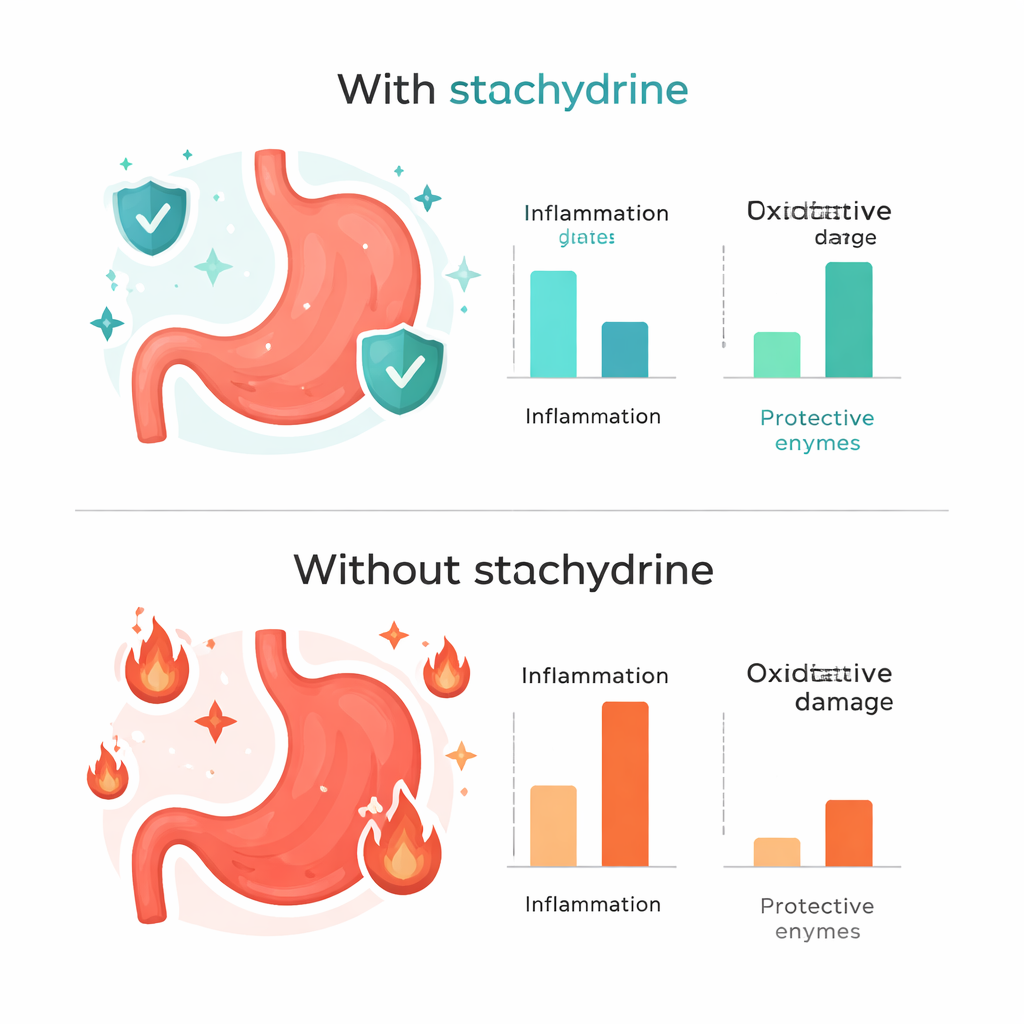
What this could mean for people who need pain relief
Taken together, the findings show that stachydrine can significantly soften the stomach damage caused by indomethacin in mice, with effects approaching those of a commonly prescribed acid-blocking drug. For a lay reader, the message is that a natural compound from a traditional herb can help protect the stomach’s lining by both reducing inflammation and strengthening the organ’s antioxidant defenses. While this work is still in animals and not yet ready to change medical practice, it points toward the possibility of developing safer support therapies for people who must regularly use NSAID painkillers, potentially lowering the risk of ulcers and bleeding without relying solely on strong acid-suppressing drugs.
Citation: Liu, FC., Yu, HP., Lee, HC. et al. Gastroprotective and antioxidant effects of stachydrine against indomethacin-induced gastric injury via ERK, AKT and iNOS signaling pathways. Sci Rep 16, 6919 (2026). https://doi.org/10.1038/s41598-026-38072-y
Keywords: stomach ulcers, NSAID injury, stachydrine, herbal gastroprotection, oxidative stress