Clear Sky Science · en
Effects of astaxanthin supplementation on human sperm quality during the freeze thaw process: a systematic review and meta analysis
Why This Matters for Future Families
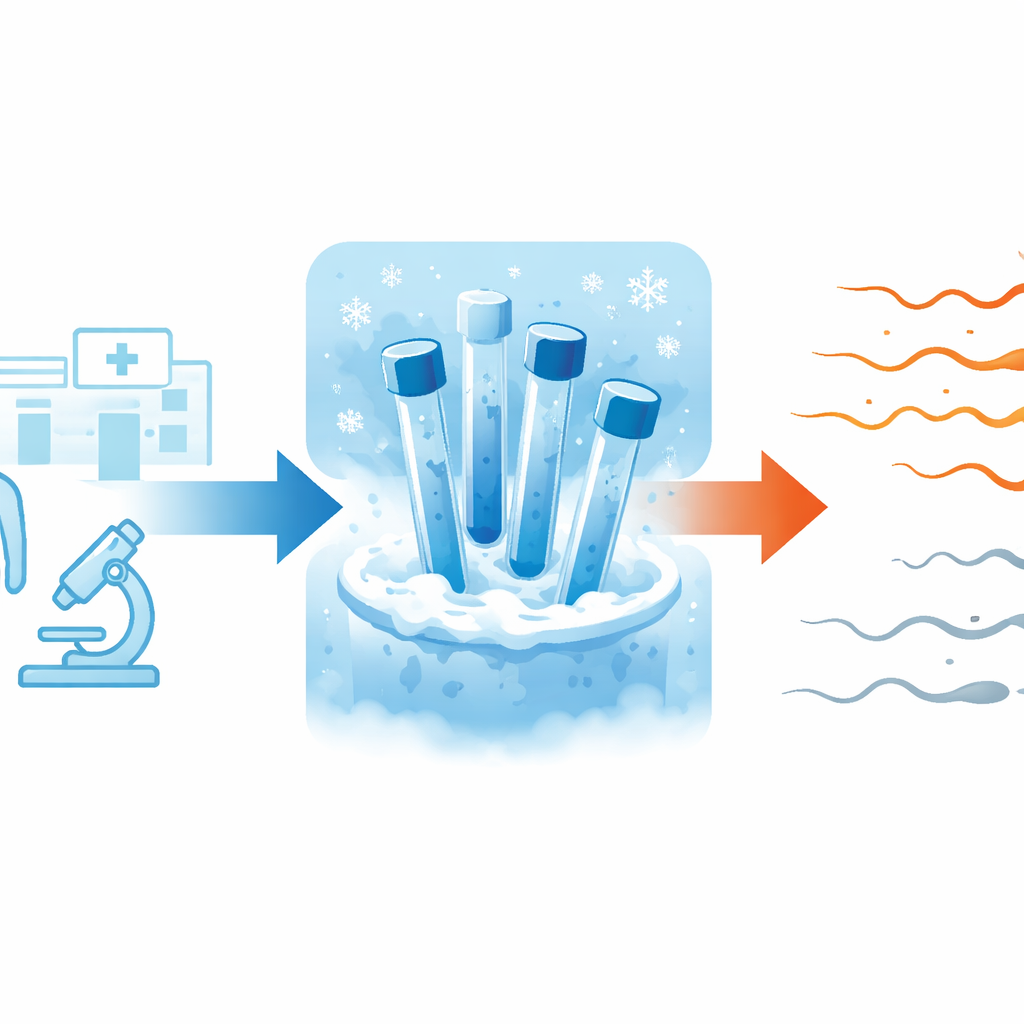
Freezing sperm is a crucial backup plan for many men facing cancer treatment, gender-affirming care, or other medical procedures that could harm fertility. Yet the freeze–thaw process itself can injure these delicate cells. This paper explores whether astaxanthin—a naturally occurring red pigment found in salmon and shrimp—can act as a protective shield for sperm during freezing, helping preserve a man’s chances of having children later on.
The Challenge of Freezing Sperm Safely
When sperm are frozen, they face a hostile environment. Rapid temperature changes, ice formation, and shifts in water and salt levels can all damage the cell membrane, internal structures, and DNA. A major culprit is oxidative stress: unstable molecules known as reactive oxygen species can punch holes in membranes, disrupt energy-producing mitochondria, and fragment DNA. Clinics already add various antioxidants to freezing solutions to reduce this damage, but astaxanthin, one of the most powerful natural antioxidants, had not been systematically evaluated in this setting.
What the Researchers Set Out to Test
The authors performed a systematic review and meta-analysis, a method that combines results from several small studies to see overall patterns. They searched three major medical databases up to mid-2024 and found four human trials that met strict criteria. All used sperm from adults with semen quality in the normal range, froze samples for at least 72 hours, and compared freezing with and without added astaxanthin. The studies, conducted in Iran, Turkey, and Thailand, tested different doses of astaxanthin and a few freezing techniques but measured similar outcomes, such as how well sperm moved, how many survived, how normal they looked under the microscope, and whether their DNA remained intact.
How Astaxanthin Changed Sperm Performance
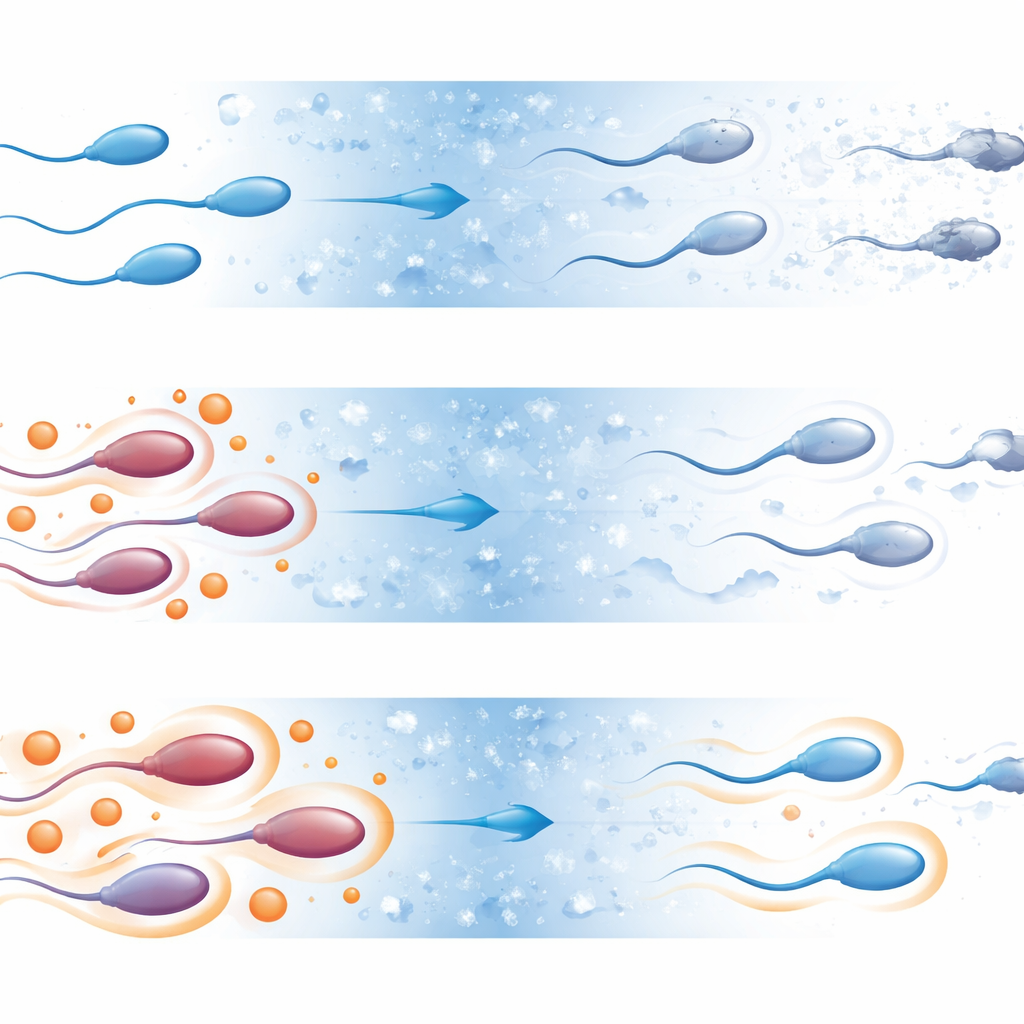
When the results from all four trials were pooled, a clear pattern emerged. Astaxanthin did not noticeably increase the overall number of moving sperm after thawing, nor did it reliably reduce DNA breakage. However, it did improve the quality of movement: more sperm showed strong, forward motion, which is particularly important for reaching and fertilizing an egg. The percentage of live sperm and the share with normal shape were also higher in the astaxanthin groups. In more detailed motion analysis, certain speed-related measures improved, suggesting that treated sperm swam in a more energetic and effective way, even though not every movement parameter changed.
Clues to What Happens Inside the Cell
Beyond simple counts and motion, several studies looked at the inner workings of sperm cells. Astaxanthin was consistently linked to a better redox balance: levels of harmful oxidative molecules dropped, while markers of antioxidant defense improved. In some experiments, sperm treated with astaxanthin showed stronger mitochondrial membrane potential, an indicator of healthier energy factories inside the cell, and higher metabolic activity. Markers of programmed cell death fell, meaning fewer cells were on the path to self-destruction after thawing. Together, these findings support the view that astaxanthin acts like a molecular bodyguard, stabilizing membranes rich in fragile fats and helping mitochondria keep producing the energy needed for vigorous swimming.
Limits, Uncertainties, and Next Steps
Despite these encouraging signals, the evidence is still preliminary. Only four small studies with 110 men in total were available, and they differed in how they processed semen, the exact freezing method, and the doses and timing of astaxanthin. These differences introduced considerable variability into the results, especially for total movement, cell shape, and DNA damage. Laboratory techniques used to judge DNA breaks and abnormal forms also varied, making it difficult to draw firm conclusions. The authors therefore caution that the current results should be viewed as hypothesis-generating rather than a green light for routine clinical use.
What This Means for Patients and Clinicians
In everyday terms, this analysis suggests that adding astaxanthin to sperm-freezing solutions can help more cells survive the deep-freeze and emerge with stronger, more purposeful swimming ability and healthier appearance. That could one day translate into better success rates for procedures that rely on frozen sperm, supporting men who bank samples before medical treatments or other life events. However, the data are not yet strong or consistent enough to change standard practice. Larger, carefully designed trials that use uniform methods and track actual pregnancy outcomes will be needed to confirm whether astaxanthin truly boosts fertility after sperm freezing.
Citation: Babaei Hoolari, B., Fatahi Dehpahni, M. & Amidi, F. Effects of astaxanthin supplementation on human sperm quality during the freeze thaw process: a systematic review and meta analysis. Sci Rep 16, 9796 (2026). https://doi.org/10.1038/s41598-026-38070-0
Keywords: sperm cryopreservation, astaxanthin, oxidative stress, male fertility, antioxidant supplementation