Clear Sky Science · en
Psychosocial experience of couples coping with prostate cancer: a qualitative study
Why this story matters for couples and families
Prostate cancer is often seen as a man’s disease, but its emotional shockwaves are felt across the whole household. This study looks beyond test results and treatments to ask a simple, human question: what is it really like for Chinese couples to live through the first six months after a prostate cancer diagnosis? By listening closely to both men and their wives, the researchers reveal how illness reshapes love, daily routines, and ideas about manhood—and what kinds of support couples actually need but rarely receive.
Life turned upside down
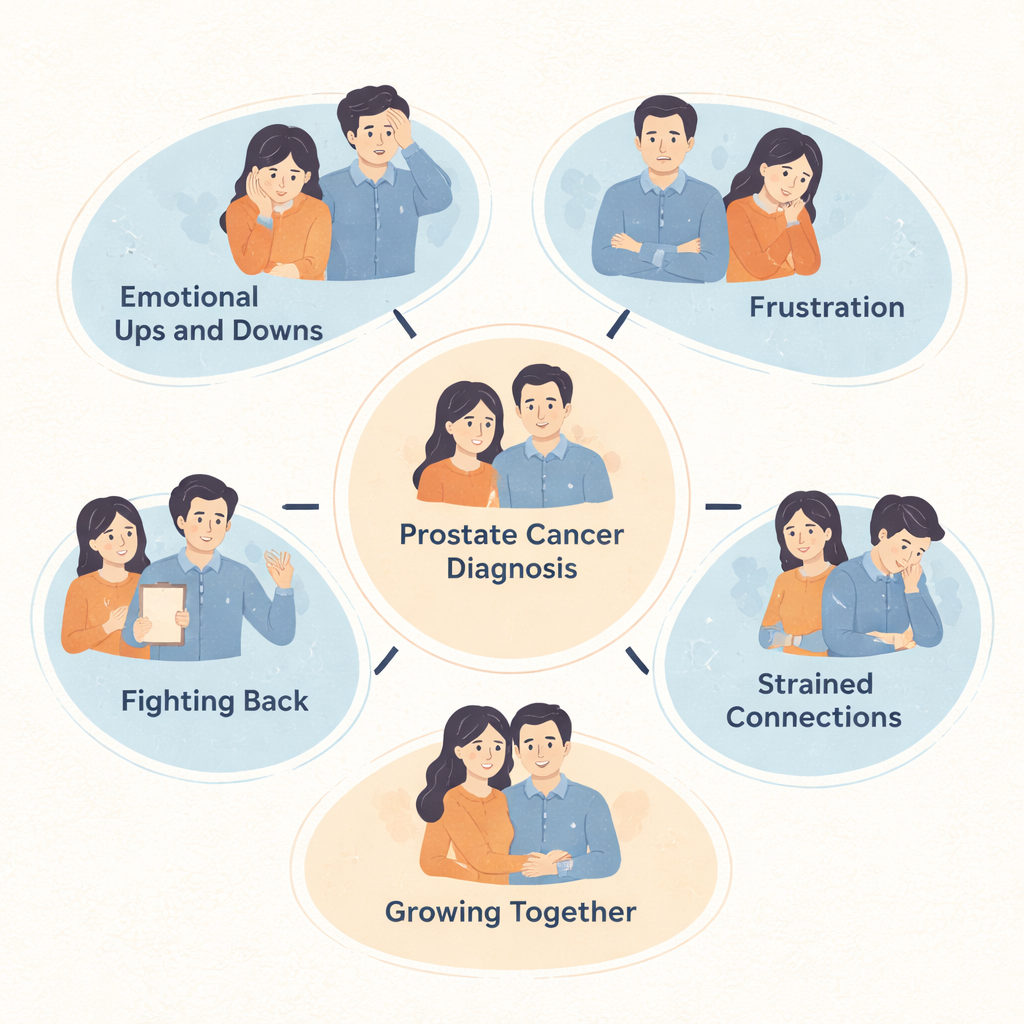
For the 14 couples interviewed, cancer crashed into ordinary life without warning. Men were dealing not only with the word “cancer” but also with fears about survival, work, and their role in the family. Wives, often with health problems of their own, suddenly became primary caregivers, appointment organizers, and emotional anchors. Many couples described the early weeks as a fog of shock, confusion, and sleepless nights. Although both partners felt intense worry, they tended to hide their distress from each other, hoping to “stay strong” and avoid adding to the other’s burden. This silence meant that much of their emotional pain went unspoken and unnoticed at home.
Hidden fears and wounded pride
As treatment began, new challenges surfaced. Surgery and hormone therapy often led to problems such as urinary leakage and loss of sexual function. These changes struck at the heart of many men’s sense of masculinity. Several said they no longer felt like a “whole man,” even if they had not been very sexually active before. At the same time, wives quietly shouldered extra housework and care tasks, sometimes despite serious chronic illnesses. Yet both sides tended to downplay their own struggles. In a culture that prizes emotional restraint and privacy about sex, couples rarely spoke openly about fear, embarrassment, or changes in intimacy. The result was a shared but largely invisible distress that each person tried to manage alone.
When home and social life shrink around cancer
Cancer also disrupted the wider circle of family and community. Many couples found that daily life became dominated by tests, treatments, and side effects, leaving little time or energy for ordinary pleasures or social visits. Older couples without children or digital skills felt especially isolated as hospitals increasingly relied on smartphone systems and online information. Some described hospital trips as their only regular outing. Gaps in follow-up care after surgery or treatment added to their anxiety; when new symptoms appeared at home, they were unsure whether to worry, wait, or rush back to clinic. Inside the relationship, roles shifted as men cut back on work or household duties and wives took on more responsibilities, sometimes to the point of exhaustion.
Fighting back together—and sometimes apart
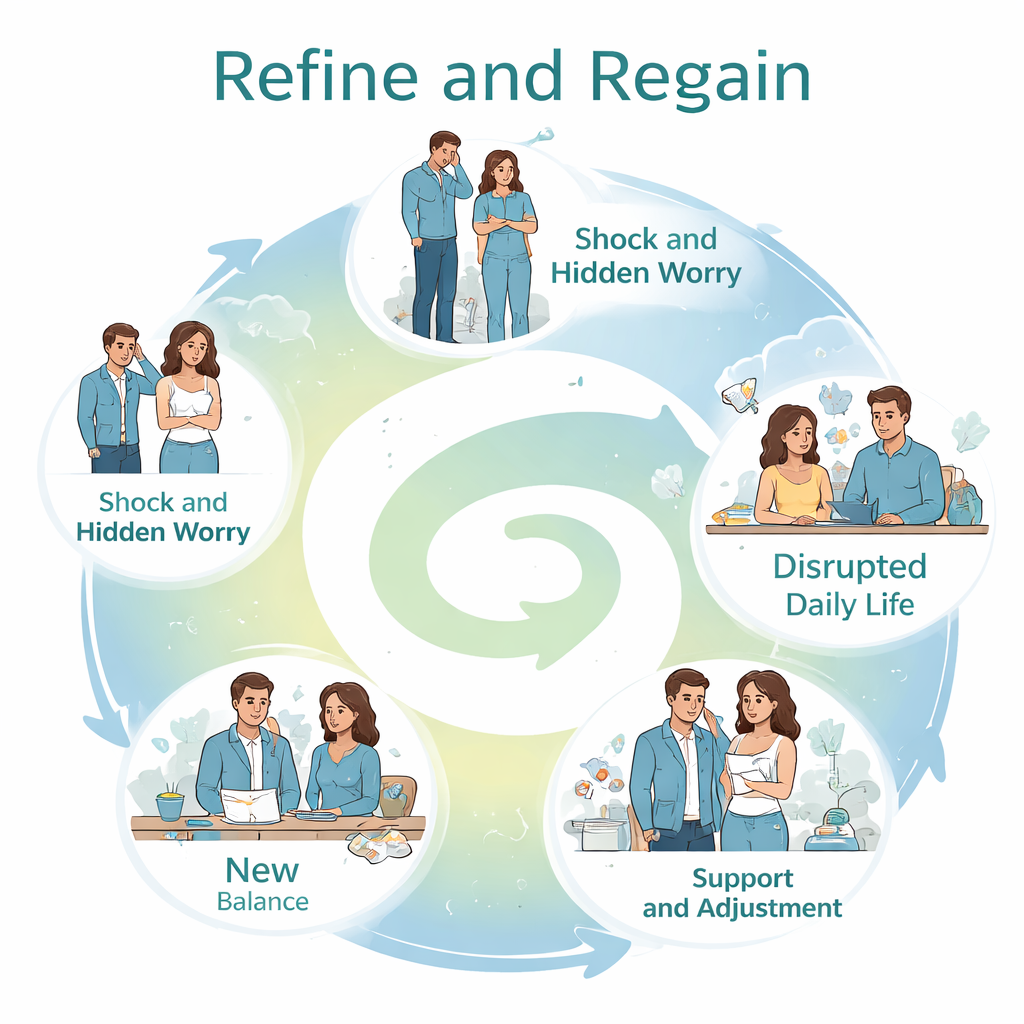
Despite these difficulties, couples did not simply give up. Many experimented with different ways of coping. Some wives carefully filtered bad news to protect their husbands from despair, taking on a “gatekeeper” role in medical decisions. Many men initially preferred to handle information and appointments alone, believing this would spare their partners. Communication about sex and emotion often remained limited, but there were small acts of care: washing sheets, sitting for long hours in waiting rooms, or learning about new treatment options. Over time, some couples began to talk more openly, share tasks more fairly, and look for practical strategies to manage symptoms at home. The researchers described this overall pattern as “Refine and Regain”: couples continually adjust routines and expectations (refine) in order to recover a sense of balance and togetherness (regain).
Finding new ways to live and love
Although six months is a short window, a few couples reported unexpected growth. Some felt their relationship had actually become closer, with more appreciation, gratitude, and teamwork than before the diagnosis. Others used the experience as a wake-up call to change diet, exercise more, or encourage sons and grandsons to get regular checkups. Still, most couples continued to struggle with low mood, poor communication, and limited support. The study concludes that prostate cancer is best understood not as an individual’s illness but as a shared challenge for couples, shaped strongly by culture and gender roles. Helping these families will require more than medical treatment alone: it will mean offering counseling and education designed for both partners, in language that respects Chinese values while making it easier to talk about fear, intimacy, and the long road of living with cancer.
Citation: Yuan, X., Yu, Z., Yin, H. et al. Psychosocial experience of couples coping with prostate cancer: a qualitative study. Sci Rep 16, 7363 (2026). https://doi.org/10.1038/s41598-026-38068-8
Keywords: prostate cancer couples, psychosocial adaptation, caregiving and intimacy, Chinese cultural context, cancer coping strategies