Clear Sky Science · en
Machine learning models for predicting treatment outcomes in chronic non-specific back pain patients undergoing lumbar extension traction
Why Back Pain and Smart Computers Matter to You
Chronic low back pain is one of the leading reasons people miss work, skip family activities, or live with constant discomfort. Many treatments exist, but they do not work equally well for everyone. This study asks a very practical question: can we use modern computer tools, known as machine learning, to predict which patients will benefit most from a specific spine therapy that gently restores the natural curve in the lower back?
A Closer Look at a Common Back Problem
The lower spine naturally has a gentle inward curve called lordosis. In many people with long-lasting, non-specific low back pain, this curve is reduced or flattened. That change can alter how forces travel through the spine, straining joints, discs, and muscles. One treatment, lumbar extension traction, is designed to slowly restore this lost curve by placing the patient on a specialized table and applying a controlled pull that arches the lower back over many sessions. Earlier, small clinical trials suggested this method can reduce pain and disability, but doctors still lacked a way to tell in advance who would respond best.
How the Study Was Done
The researchers reviewed records from 431 adults with chronic low back pain and a clearly reduced lumbar curve on X-ray. All patients followed a standardized rehabilitation program that combined physical therapy methods such as electrical stimulation, heat, stretching exercises, and lumbar extension traction. Treatments were delivered three to six times per week for four to ten weeks, with flexibility to match each person’s schedule and tolerance. Before and after the program, the team measured the shape of the lower spine on X-ray, pain on a 0–10 scale, and disability using a widely used questionnaire about daily activities.
Teaching the Computer to Forecast Recovery
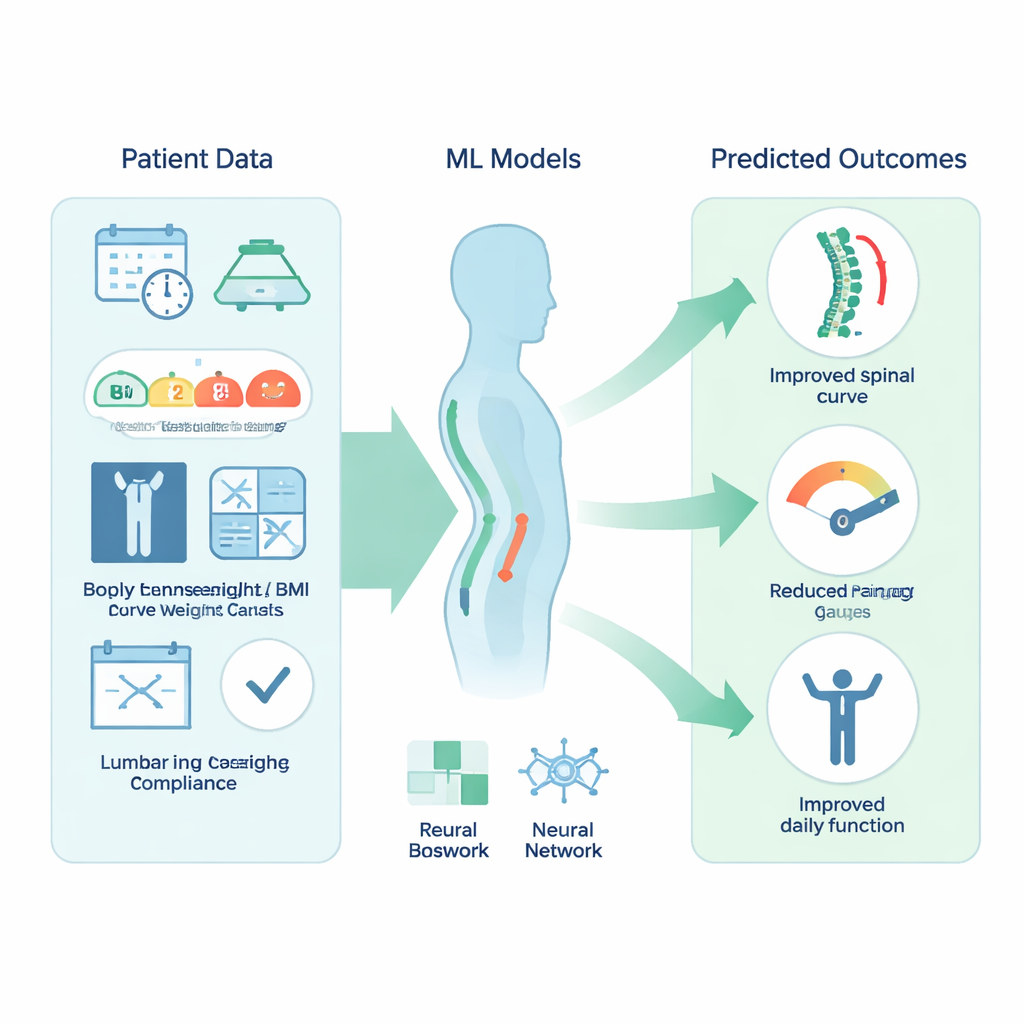
To see if outcomes could be predicted in advance, the authors fed ten pieces of information into three different machine learning models. These inputs included age, body mass index, initial spine curve and pelvic angle from X-rays, starting pain and disability scores, how often and how long traction was applied, treatment compliance, and a descriptive “fit type” that captured how well the spine curve and pelvic angle matched. The computer systems were trained on most of the patient data and then tested on the rest, using standard measures to see how well predicted results matched reality. Additional checks probed which factors mattered most and how sensitive the models were to measurement noise or missing information.
What the Models and Patients Revealed
On average, patients made meaningful gains: the lower back curve increased by about 12 degrees, pain dropped from around 7 to 3 out of 10, and disability scores fell to roughly one-third of their starting level. Eight out of ten patients met a widely accepted threshold for important pain relief, and over half reached a strong improvement in function. Among the computer tools, two tree-based approaches—Random Forest and XGBoost—were best at predicting who would achieve these benefits. They explained a large share of the variation in the final spine curve, pain, and disability, while a neural-network model struggled in forecasting functional recovery.
The Factors That Matter Most
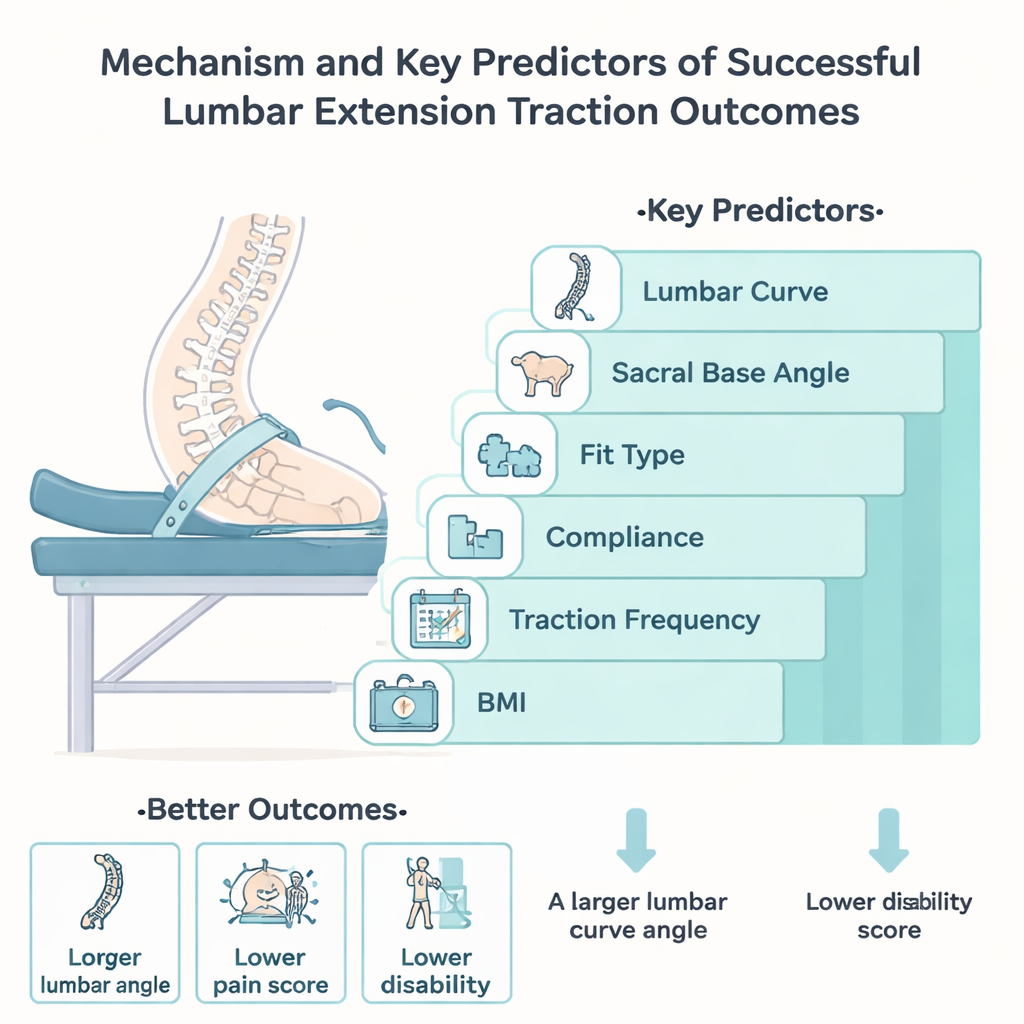
By examining how the models made their decisions, the team found a consistent pattern. The starting shape of the lower spine and its relationship to the pelvic angle were major drivers of whether the curve could be restored. Patients whose curve and pelvis were most “out of sync” often showed the largest corrections. How regularly people attended their sessions (compliance), how frequently traction was applied each week, and body weight also played important roles, especially for pain outcomes. Standard demographics like age mattered less than the combination of precise X-ray findings and the intensity and regularity of treatment.
What This Means for People With Back Pain
For the everyday patient and their clinician, this research suggests that a tailored approach to restoring the natural low-back curve can be both effective and predictable. Careful X-ray assessment, combined with information about treatment plans and attendance, can feed into machine learning tools that estimate likely improvements in pain and function. In plain terms, computers can help doctors match the right patients to lumbar extension traction, set realistic expectations, and fine-tune how often and how long treatment should last. While more work is needed, especially with longer follow-up and broader patient groups, this study points toward a future where back pain care is more personalized, data-driven, and efficient.
Citation: Moustafa, I.M., Ozsahin, D.U., Mustapha, M.T. et al. Machine learning models for predicting treatment outcomes in chronic non-specific back pain patients undergoing lumbar extension traction. Sci Rep 16, 6738 (2026). https://doi.org/10.1038/s41598-026-38059-9
Keywords: chronic low back pain, lumbar extension traction, spinal curvature, machine learning in medicine, treatment prediction