Clear Sky Science · en
Stocking density as a driver of growth, health, water productivity and economic returns in biofloc-reared pengba, osteobrama belangeri (Valenciennes, 1844)
Why crowded fish tanks matter to your dinner plate
Aquaculture—fish farming—is increasingly responsible for putting affordable protein on dinner tables worldwide, especially as wild fish catches level off. But raising more fish usually means using more water and cramming more animals into the same space, which can hurt their health and the farmer’s bottom line. This study looks at a promising way around that trade-off: a microbe-rich "biofloc" system that cleans and recycles water while also feeding the fish. The researchers tested how tightly they could stock a valuable Indian carp called pengba at different life stages without sacrificing growth, welfare or profits.
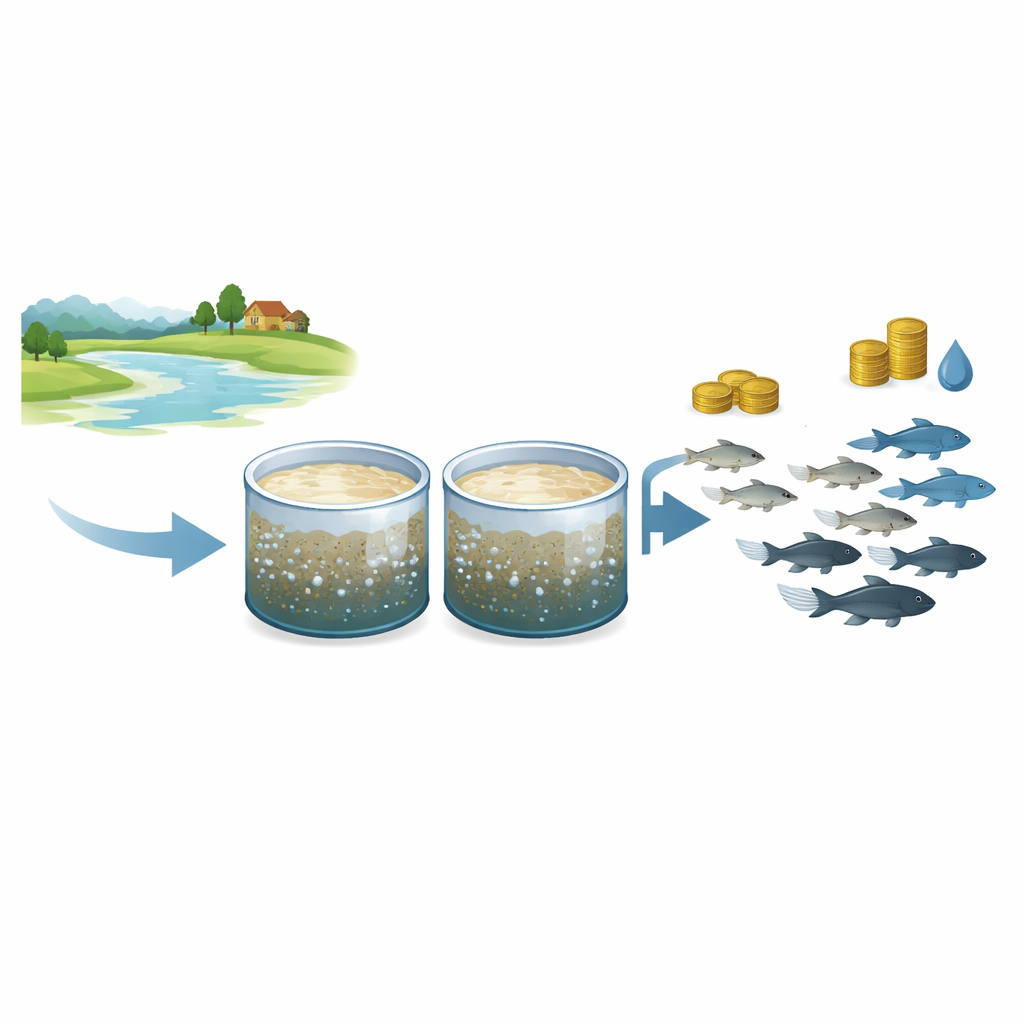
A clever tank that feeds and cleans itself
In a biofloc system, constant aeration and added carbon encourage harmless bacteria to grow into tiny clumps, or flocs. These microbes turn leftover feed and fish waste into less harmful forms of nitrogen and, over time, into extra protein-rich particles that the fish can eat. The result is a cloudy but healthy soup where water can be reused for long periods with little or no discharge. In this study, scientists raised pengba from newly hatched spawn to fry, then to fingerlings, and finally to juveniles in large circular tanks run as biofloc units. For each stage, they compared three stocking densities—low, medium and high—while tracking water quality, growth, survival, biochemical signs of stress, economic returns and how much water each kilogram of fish effectively required.
Finding the sweet spot for tiny fish
The earliest stage, when spawn grow into fry, turned out to be the most sensitive to crowding. Although the biofloc system kept temperature, oxygen, acidity and nitrogen compounds within acceptable ranges, fry stocked at the highest density stayed smaller and died more often than those in roomier tanks. These undersized fry were also less valuable on the market. When the team added up feed, seed and other costs and compared them to the sale value, the lowest density clearly produced both the healthiest fry and the best profit and water-based return. In other words, pushing more baby fish into the same volume of biofloc water did not pay off.
Older fish handle crowding—but feel it
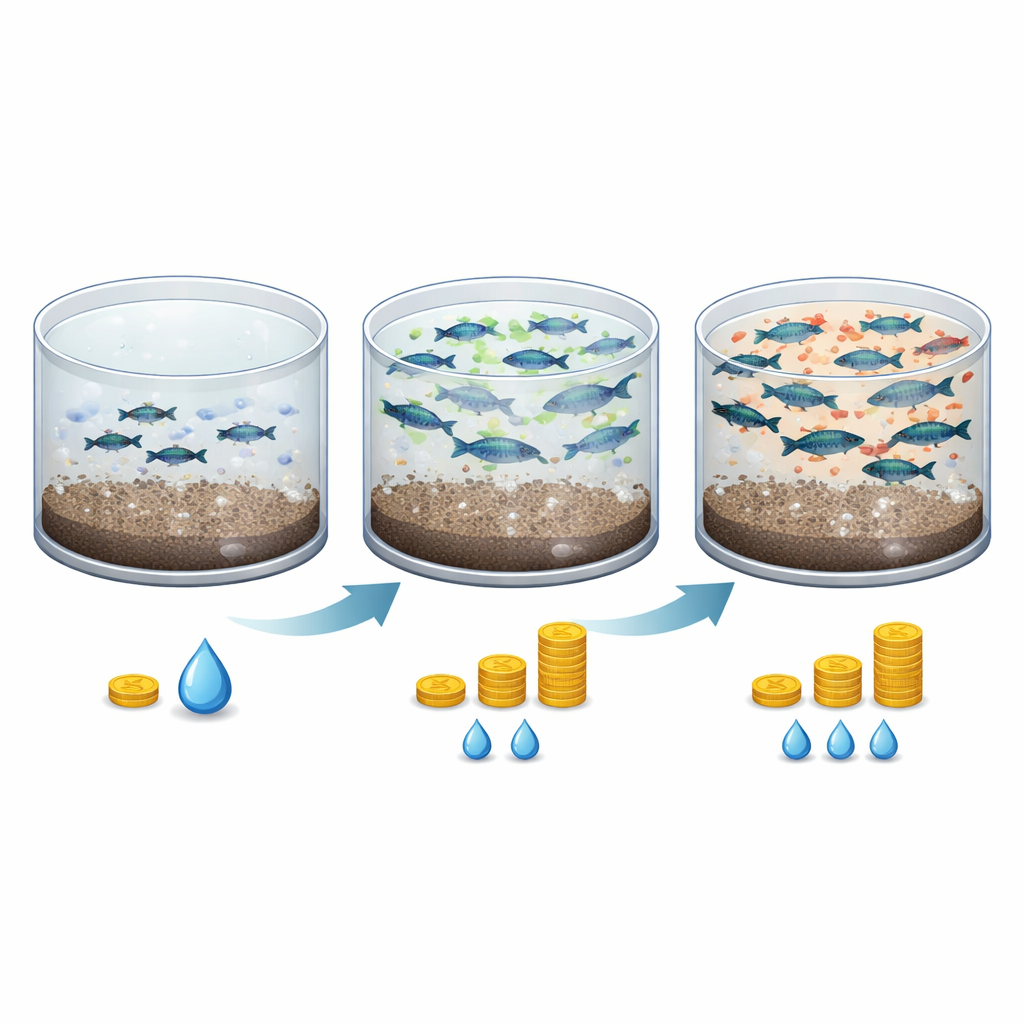
As pengba grew into fingerlings and then juveniles, a different pattern emerged. Individual growth rates did decline somewhat at higher densities, but survival remained very high and final sizes in juveniles hardly differed across treatments. Because there were many more fish in the crowded tanks, total harvest weight, income per tank and profit per unit of water all rose with density. Blood tests, however, revealed that the fish were working harder to cope. Measures such as blood sugar and key liver enzymes climbed with crowding, and antioxidant enzymes that mop up damaging molecules were more active, especially in juveniles. An integrated "biomarker response" score, which combines several of these signals into a single stress index, increased sharply at the highest densities. Despite this, the fish still grew well and stayed alive, suggesting that pengba can adapt to the biofloc environment at moderately high densities.
Making more fish with less water
Beyond fish size and health, the researchers calculated how efficiently each setup used water. Because biofloc tanks reuse the same water over long culture periods, the total effective volume was limited and similar across treatments. For fry, higher densities did not boost the number of marketable fish per cubic meter of water in a meaningful way, and the highest density actually reduced profit per unit of water. In contrast, for fingerlings and juveniles, more crowded tanks consistently produced more saleable fish and more income for every cubic meter of water consumed. This means that, once the fish are large and robust enough, farmers can use biofloc systems to both conserve water and increase earnings.
What this means for farmers and food security
Putting all the pieces together, the study recommends a careful balance: keep early-stage pengba relatively loosely stocked in biofloc tanks to safeguard survival and quality, but raise the numbers for fingerlings and juveniles to improve water productivity and profits. The authors suggest about 5000 spawn per cubic meter for fry, 100 fry per cubic meter for fingerlings, and at least 50 fingerlings per cubic meter for juveniles as workable targets under their conditions. These results show that microbe-powered tank systems can help produce more fish seed using much less water, while still protecting animal welfare, offering a practical path toward more sustainable freshwater aquaculture in a thirsty world.
Citation: Swain, H.S., Banu, H., Vignesh, V. et al. Stocking density as a driver of growth, health, water productivity and economic returns in biofloc-reared pengba, osteobrama belangeri (Valenciennes, 1844). Sci Rep 16, 9459 (2026). https://doi.org/10.1038/s41598-026-38058-w
Keywords: biofloc aquaculture, stocking density, freshwater fish farming, pengba osteobrama belangeri, water use efficiency