Clear Sky Science · en
High on-clopidogrel platelet reactivity among diabetic female patients with acute ischaemic stroke
Why this research matters to everyday people
Stroke is one of the leading causes of death and disability worldwide, and many survivors take blood-thinning medicines to prevent another attack. This study asks a simple but important question with real-life consequences: do men and women with diabetes respond differently to one of the most common of these drugs, clopidogrel, after an ischaemic stroke? The answer could help doctors recognize which patients might still be at higher risk, even when they are taking their medication as prescribed.
Stroke, diabetes, and a widely used blood thinner
After an ischaemic stroke, where a blood clot blocks blood flow to part of the brain, many patients are given antiplatelet drugs to stop platelets (tiny blood cells that help clots form) from sticking together too easily. Clopidogrel is one of the most widely used drugs for this purpose. However, some people’s platelets remain relatively active despite taking clopidogrel, a situation known as high on-treatment platelet reactivity. These patients may still face a higher risk of another stroke. Diabetes is common among stroke patients and is already known to increase the chance of clots and recurrent events, but whether its impact differs between men and women has not been well studied, especially in Asian populations.
How the study was carried out
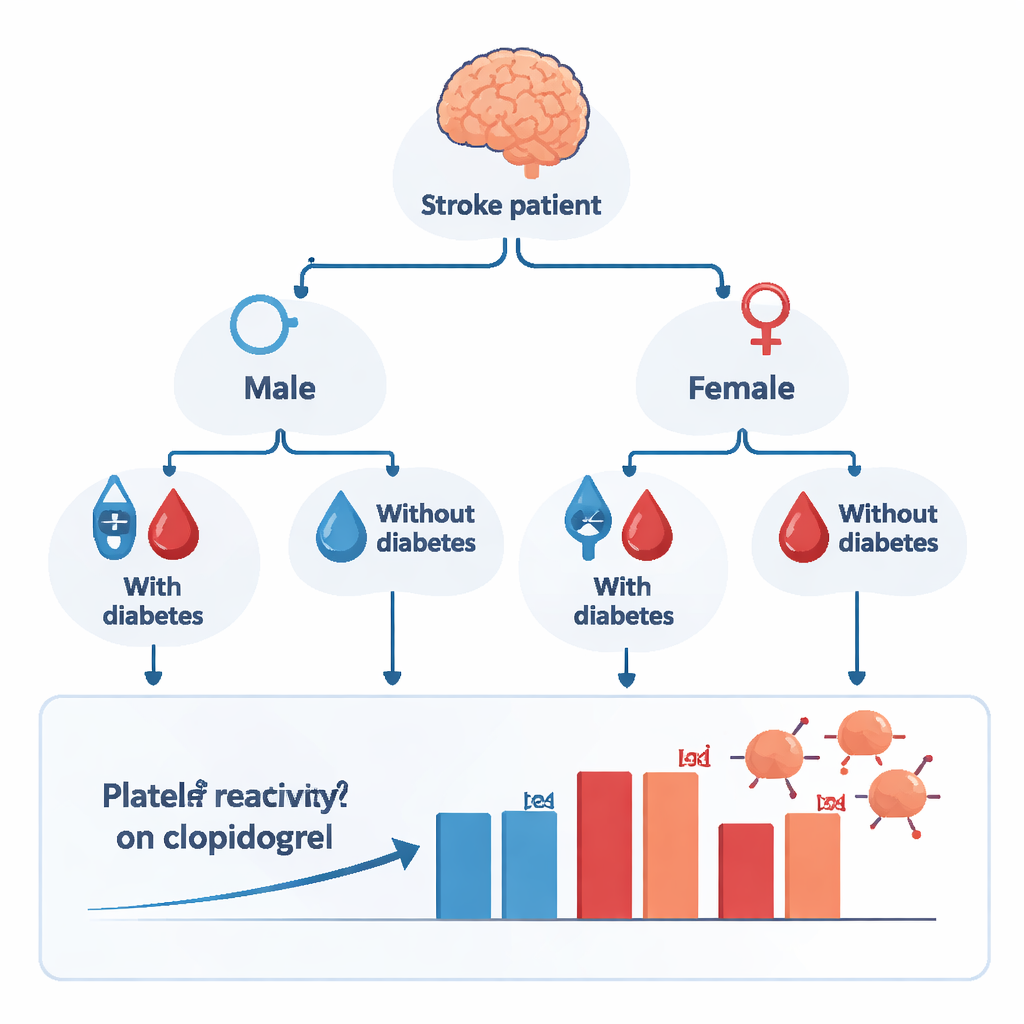
Researchers in Indonesia analysed 650 adults who were hospitalized with a first episode of mild to moderate ischaemic stroke. All patients received a standard 300 mg loading dose of clopidogrel because they were not eligible for clot-busting or clot-removing procedures. More than eight hours after the dose, blood samples were taken and platelet activity was measured using a point-of-care test that reports a value called the platelet reactivity unit (PRU). Higher PRU values mean platelets are more active despite treatment. The team also collected information from medical records, including age, sex, presence of diabetes, blood pressure, cholesterol, body mass index, smoking status, kidney function, and several blood test results.
What the scientists found in men and women
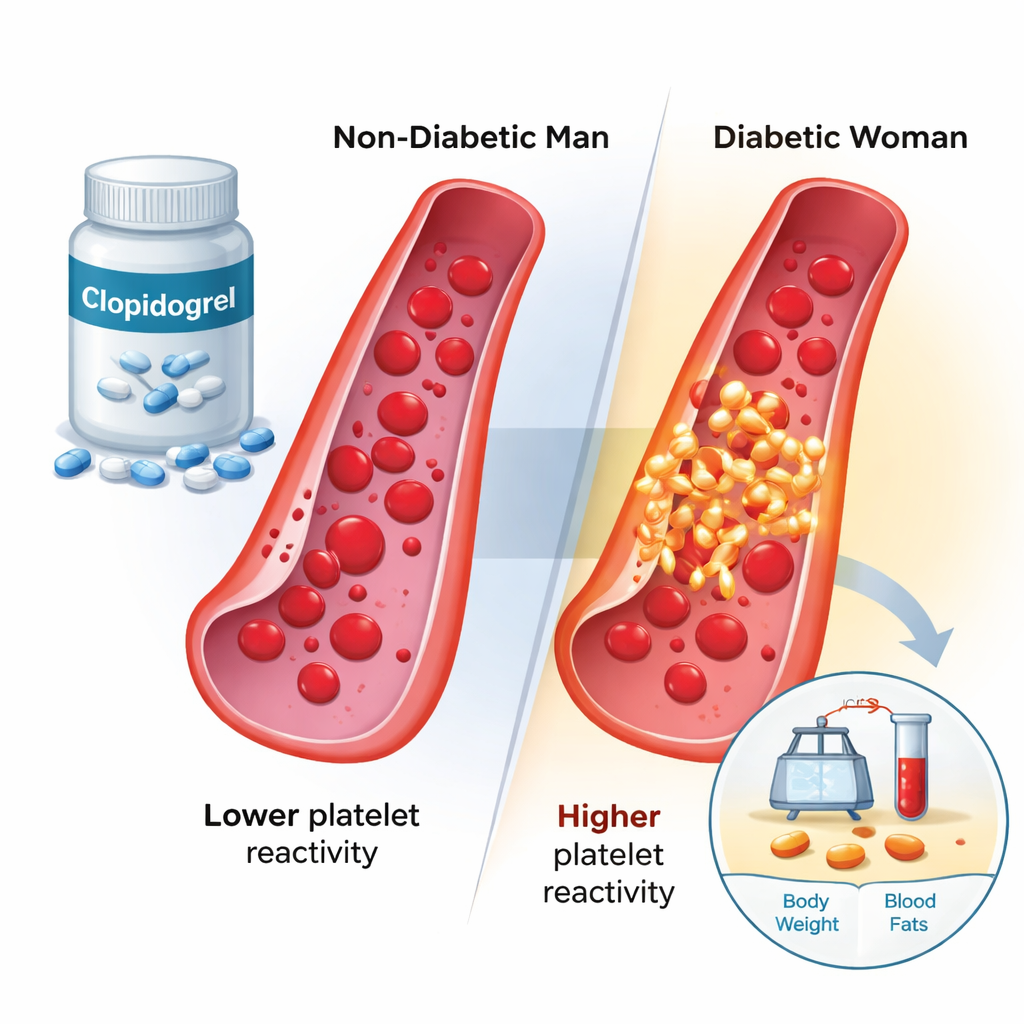
Across all 650 patients, the average PRU value was 168, but it was clearly higher in people with diabetes than in those without. When the researchers looked more closely by sex, they noticed that women tended to have higher platelet activity than men, and this difference was most pronounced among women with diabetes. Using statistical models that accounted for other health factors, they discovered that neither being female nor having diabetes alone fully explained the higher platelet reactivity. Instead, it was the combination of being a woman and having diabetes that stood out. Diabetic women showed about a 20-unit increase in PRU related to this interaction, and overall about a 27-unit higher PRU compared with men without diabetes, marking them as a potential high-risk subgroup.
Other health factors that played a role
The study also highlighted several everyday health measures that were linked with how well clopidogrel seemed to work. Higher body mass index was associated with higher platelet reactivity, suggesting that excess weight may blunt the drug’s effect. A higher ratio of triglycerides to “good” HDL cholesterol, a marker linked to insulin resistance, was also tied to more active platelets. In contrast, higher haemoglobin levels and higher platelet counts were linked to lower PRU readings, although the authors caution that these particular relationships may partly reflect how the testing device behaves rather than true changes in biology. Factors such as other medications, genetic differences in drug handling, and inflammation were not measured and could also influence individual responses.
What these findings mean for patients
For a lay reader, the key message is that not all stroke survivors benefit equally from the same blood thinner. In this Indonesian hospital cohort, women with diabetes had the most active platelets despite taking clopidogrel, meaning their blood may still clot more easily than doctors expect. The study does not prove that clopidogrel “fails” in these patients or that they will definitely have another stroke, but it flags them as a group that may need closer monitoring or tailored treatment in the future. The authors call for further research that measures platelet activity before and after therapy, includes more women in clinical trials, and tests whether alternative dosing or different drugs can better protect diabetic women after stroke.
Citation: Bustami, M., Idaiani, S., Ariffandi, B. et al. High on-clopidogrel platelet reactivity among diabetic female patients with acute ischaemic stroke. Sci Rep 16, 6709 (2026). https://doi.org/10.1038/s41598-026-38057-x
Keywords: ischemic stroke, clopidogrel, diabetes, platelet reactivity, sex differences