Clear Sky Science · en
The potential cytotoxic effect of recent universal adhesives with modified monomeric compositions on human gingival epithelial cells
Why the glue in your filling matters
When you get a tooth filled, the dentist uses not only a white filling material but also a clear liquid “glue” called a universal adhesive to make the repair stick. Tiny traces of chemicals from these adhesives can escape and touch the nearby gum tissue. This study asked a simple but important question: are the newest versions of these dental glues gentler on the cells that line our gums than traditional formulas?
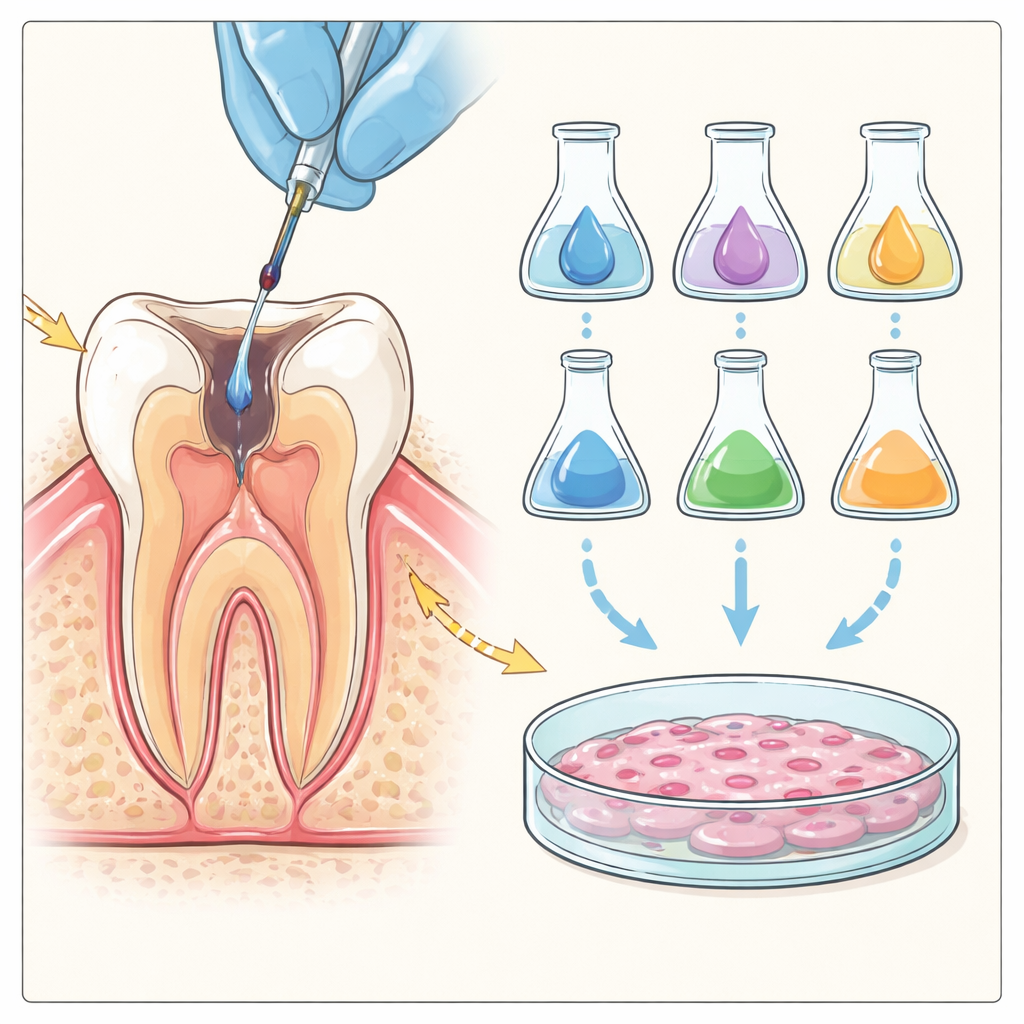
How modern dental glues work
Universal adhesives are popular because they let dentists use one bottle in many situations, whether they lightly etch the tooth or not. To cling strongly to enamel and dentin, these materials contain special molecules that can both flow into the tooth surface and harden into a solid layer when light-cured. Classic recipes include building-block chemicals such as Bis-GMA and HEMA, which help create a tough plastic network but have been linked in past research to unwanted effects on living cells. Manufacturers have recently started tweaking these recipes: reducing or removing controversial ingredients and adding new types of monomers that may be less aggressive while still giving a strong bond.
Putting gum cells to the test
To see how safe different glues might be for the mouth’s soft tissues, the researchers worked with a human gingival epithelial cell line—cells similar to those that cover the gums. They prepared small cured disks of four commercial universal adhesives, then soaked these disks in a nutrient solution so that any leachable substances could diffuse out. Gum cells were then exposed either to full-strength extracts or to a half-strength mixture. Two color-based tests (MTT and SRB) measured how many cells were still alive and functioning, and a third test (ELISA) measured levels of reactive oxygen species—highly reactive molecules that can signal or cause cellular stress.
Different formulas, different cell responses
The four adhesives showed clearly different behaviors. One material with relatively high amounts of both Bis-GMA and HEMA consistently caused the greatest drop in cell health, especially at full strength, and pushed oxidative stress markers upward. In contrast, a recently modified adhesive containing lower amounts of these older monomers plus a newer amide-based ingredient allowed gum cells to remain close to normal in both viability tests and showed the lowest levels of reactive oxygen species. A Bis-GMA-free, HEMA-containing adhesive and another product that lacked both Bis-GMA and HEMA fell in between: their impact depended strongly on concentration and on which cell test was used, suggesting early metabolic strain even when overall cell mass looked preserved.
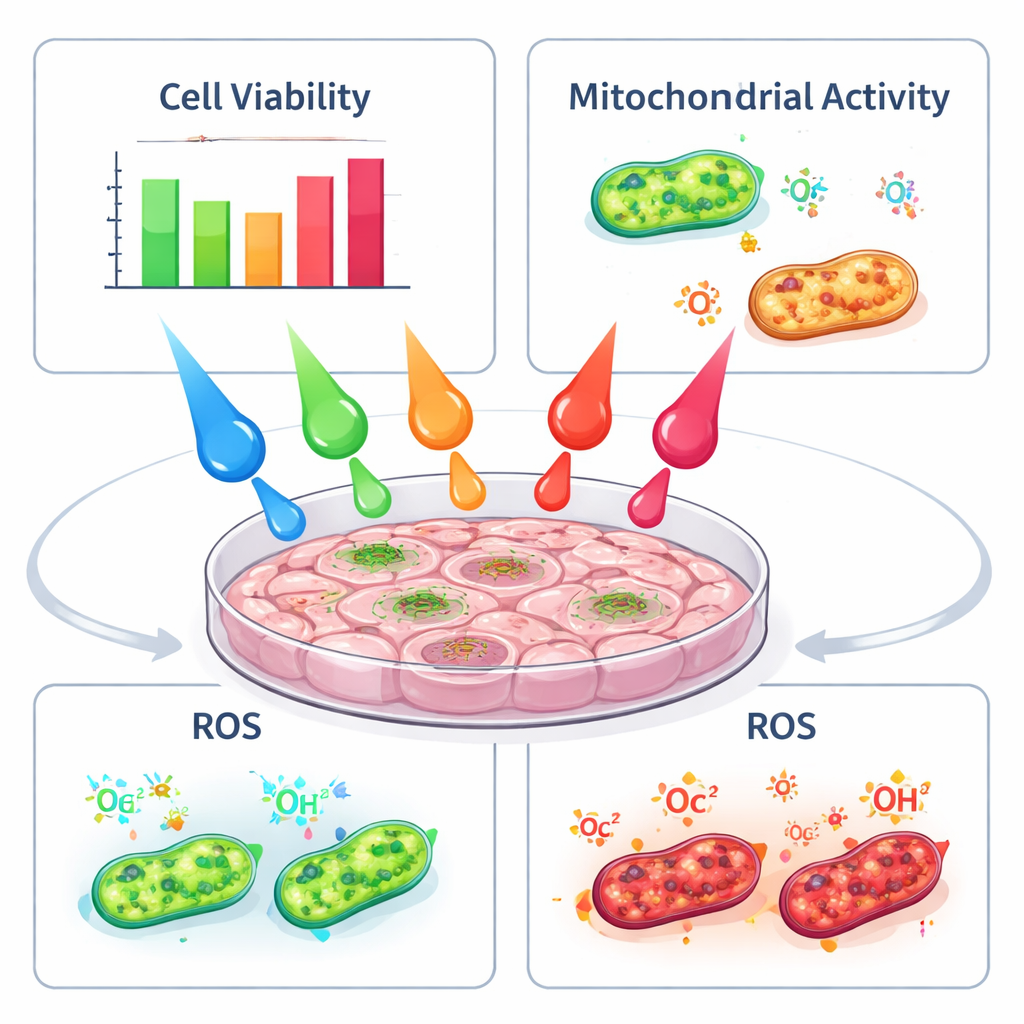
What the stress signals reveal
The measurement of reactive oxygen species added another layer to the story. All four adhesives increased these stress-related molecules compared with untreated cells, but not always in direct step with cell death. For the most biocompatible formulation, low oxidative stress matched good cell survival. For the others, cells sometimes endured higher stress without immediately dying, hinting that gum tissues might activate internal defense systems to cope with chemical exposure. This mismatch between stress levels and survival also underscored that no single test can fully describe how a material behaves in contact with living tissue.
What this means for patients and dentists
Overall, the study found that the biological safety of universal dental adhesives depends strongly on their exact chemical makeup and on how much leachable material reaches nearby cells. Newer, modified formulations tended to be kinder to gum cells than a more traditional, Bis-GMA- and HEMA-rich product, with one adhesive in particular showing a notably “gentle” profile. For patients, this suggests that advances in adhesive chemistry are not only about longer-lasting fillings but also about making treatments friendlier to the mouth’s delicate tissues, especially in deep cavities where glue can come very close to the gums.
Citation: El-Maksoud, O.A., Sultan, N., Ismail, H.S. et al. The potential cytotoxic effect of recent universal adhesives with modified monomeric compositions on human gingival epithelial cells. Sci Rep 16, 7727 (2026). https://doi.org/10.1038/s41598-026-38054-0
Keywords: dental adhesives, gum cells, cytotoxicity, biocompatibility, resin monomers