Clear Sky Science · en
Cold stress impacts cognitive performance in healthy volunteers: results from a randomized, controlled, cross-over study
Why a Cold Day Can Cloud Your Thinking
Anyone who has tried to work, drive, or make quick choices on a freezing day knows it feels harder to think clearly. This study asked a simple but important question: does brief exposure to very cold air actually slow our minds, even when we are warmly dressed and not yet truly chilled inside? The answer matters for people who work or play outdoors in winter—from drivers and rescue teams to skiers and hikers—because even small dips in attention or judgment can have big safety consequences. 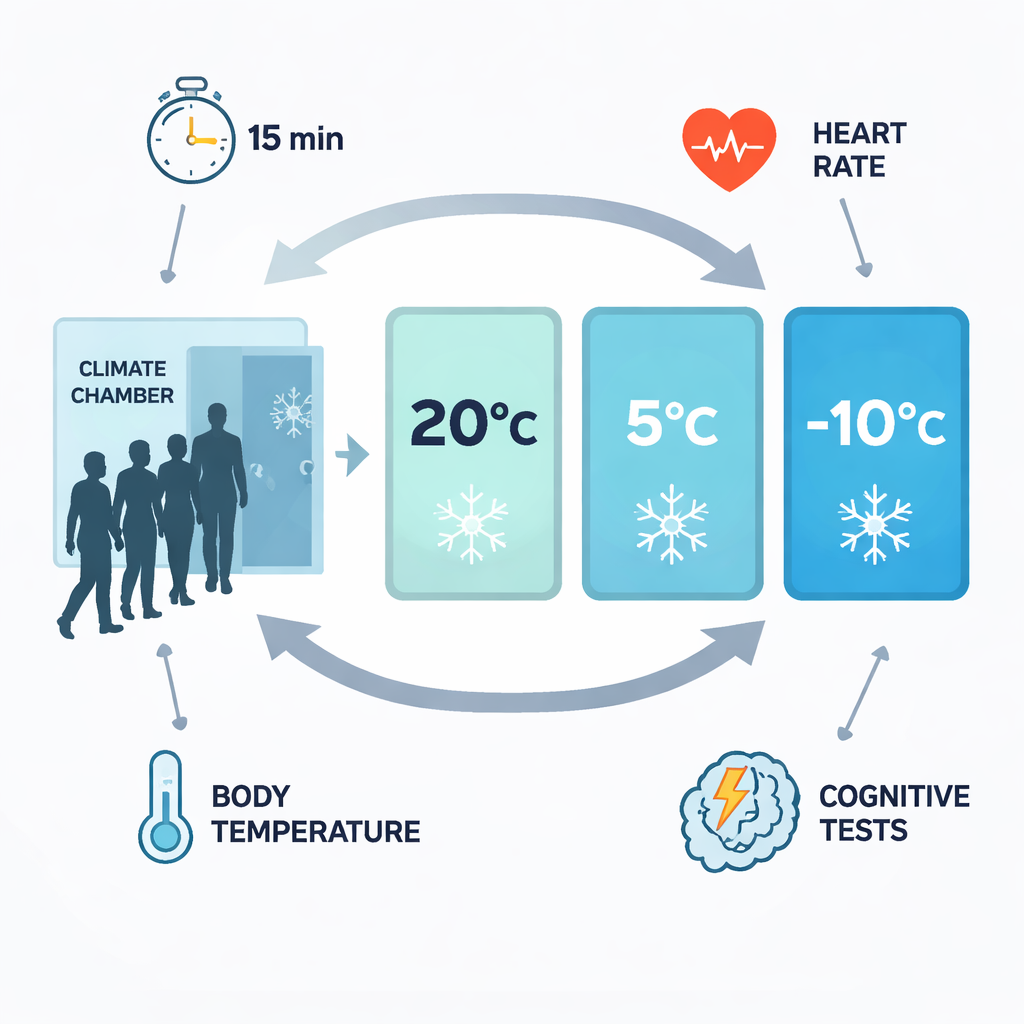
A Closer Look Inside a Cold Room
Researchers invited 23 healthy adults into a high-tech climate chamber where they could precisely control the air temperature. Each person spent 15 minutes in three different conditions: a comfortable room at 20 °C, a chilly room at 5 °C, and a very cold room at −10 °C. The order of these sessions was shuffled for each volunteer so that the results would not be biased by practice or fatigue. Between cold bouts, everyone warmed back up at 20 °C to let their bodies recover. While in the chamber, participants wore similar winter-style clothing and completed a set of short computer tests that measured how quickly and accurately they reacted, how fast they processed simple symbols, and how much risk they were willing to take in a game-like task.
Testing Attention, Speed, and Risk-Taking
The team used well-known tools from psychology to probe different sides of mental performance. One test measured how fast people pressed a button when a signal appeared, and how often they “zoned out” and reacted too slowly—an index of sustained attention. Another test, a symbol-matching task, checked how quickly they could scan and respond to visual information. A third test mimicked real-life risk-taking: participants could gain more points by taking chances, but risked losing them if they went too far. At the same time, sensors tracked heart rate, oxygen levels, and body temperatures deep inside the chest and on the skin. Volunteers also rated how cold, stressed, and comfortable they felt, and how well they thought they were performing.
Cold Air, Slower Minds
Fifteen minutes in −10 °C was enough to nudge thinking off course, even though core body temperature did not change. In the very cold condition, people reacted more slowly and had more lapses in attention compared with 5 °C and 20 °C. Their decision-making shifted as well: in the risk game, they became slightly more cautious, taking fewer chances to gain points. Heart rate, feelings of cold and stress, and thermal discomfort all rose as the air got colder, but deeper body temperature stayed stable—suggesting that the mind was affected before the body truly cooled. Interestingly, men and women performed similarly: despite earlier hints that the sexes might respond differently to cold, this brief exposure did not reveal any clear gap.
Distraction, Not Deep Chilling
The findings support what scientists call the “distraction” idea: the sudden, uncomfortable bite of cold appears to steal mental resources away from the task at hand. Instead of a drop in core temperature directly slowing the brain, it may be the flood of cold signals from the skin—especially the hands—that tugs attention toward bodily discomfort. Participants felt markedly colder and less comfortable at −10 °C, but their deep body temperature and chest skin temperature barely budged. This pattern suggests that even short, sharp cold can momentarily cloud attention and alter risk-taking simply because the body is loudly signaling, “I’m cold,” and the brain is listening. 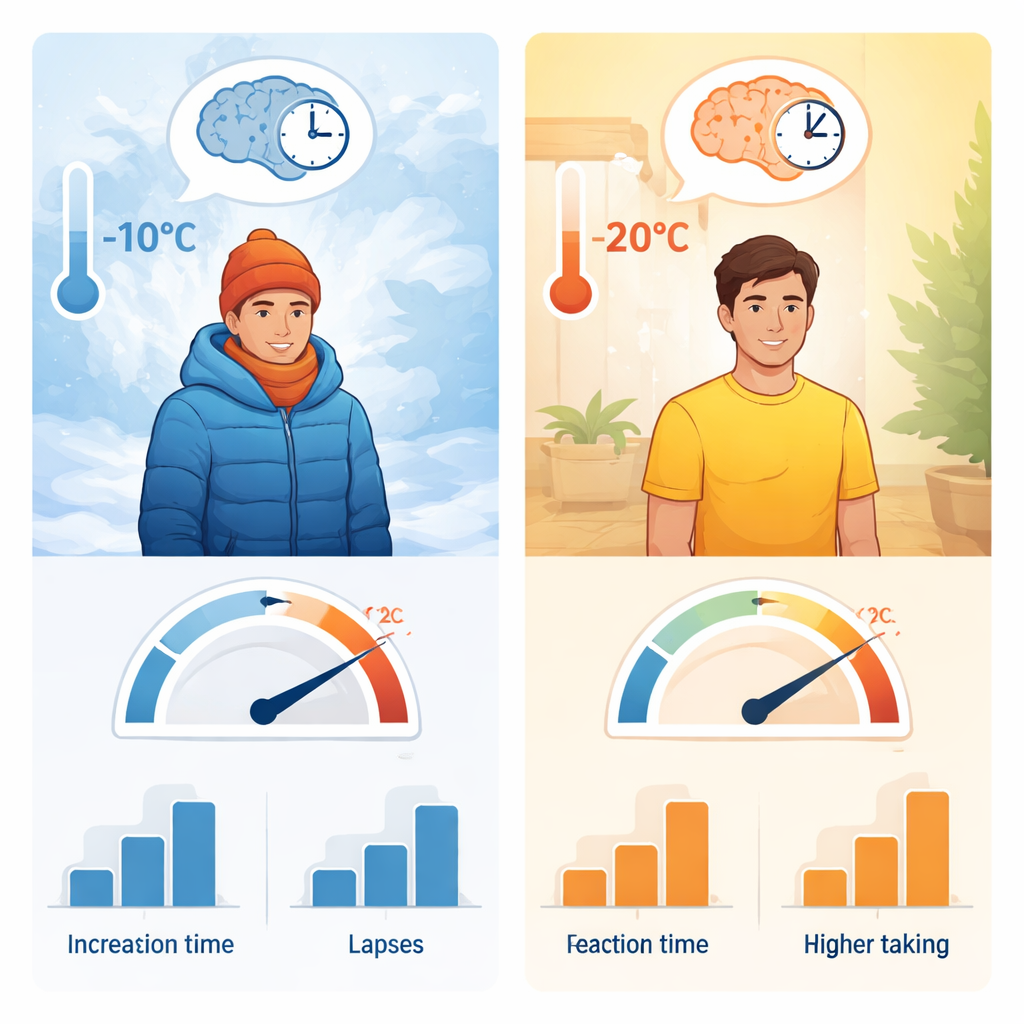
What This Means for Life in the Cold
For everyday life and work, the message is straightforward: even brief stints in intense cold can subtly slow reactions and change how boldly we make choices, long before we become dangerously chilled. That could matter for activities that demand quick thinking and sound judgment, such as winter driving, rescue operations, outdoor labor, or technical sports on snow and ice. Good gloves, better protection for exposed skin, and smart scheduling to limit time in extreme cold may help keep not just bodies, but also minds, performing at their best.
Citation: Falla, M., Masè, M., Dal Cappello, T. et al. Cold stress impacts cognitive performance in healthy volunteers: results from a randomized, controlled, cross-over study. Sci Rep 16, 7013 (2026). https://doi.org/10.1038/s41598-026-38048-y
Keywords: cold exposure, cognitive performance, attention, risk-taking, thermal stress