Clear Sky Science · en
Investigating the oncogenic role of aberrant EZH2 in hepatoblastoma
Why this cancer story matters for families
Hepatoblastoma is a rare but serious liver cancer that mostly affects very young children. Current treatments rely heavily on intense chemotherapy and major surgery, sometimes even liver transplants, which can leave lasting side effects. This study asks a hopeful question: is there a molecular "master switch" helping drive this cancer that we could turn off, making treatment both more precise and more effective?
A hidden switch inside liver tumor cells
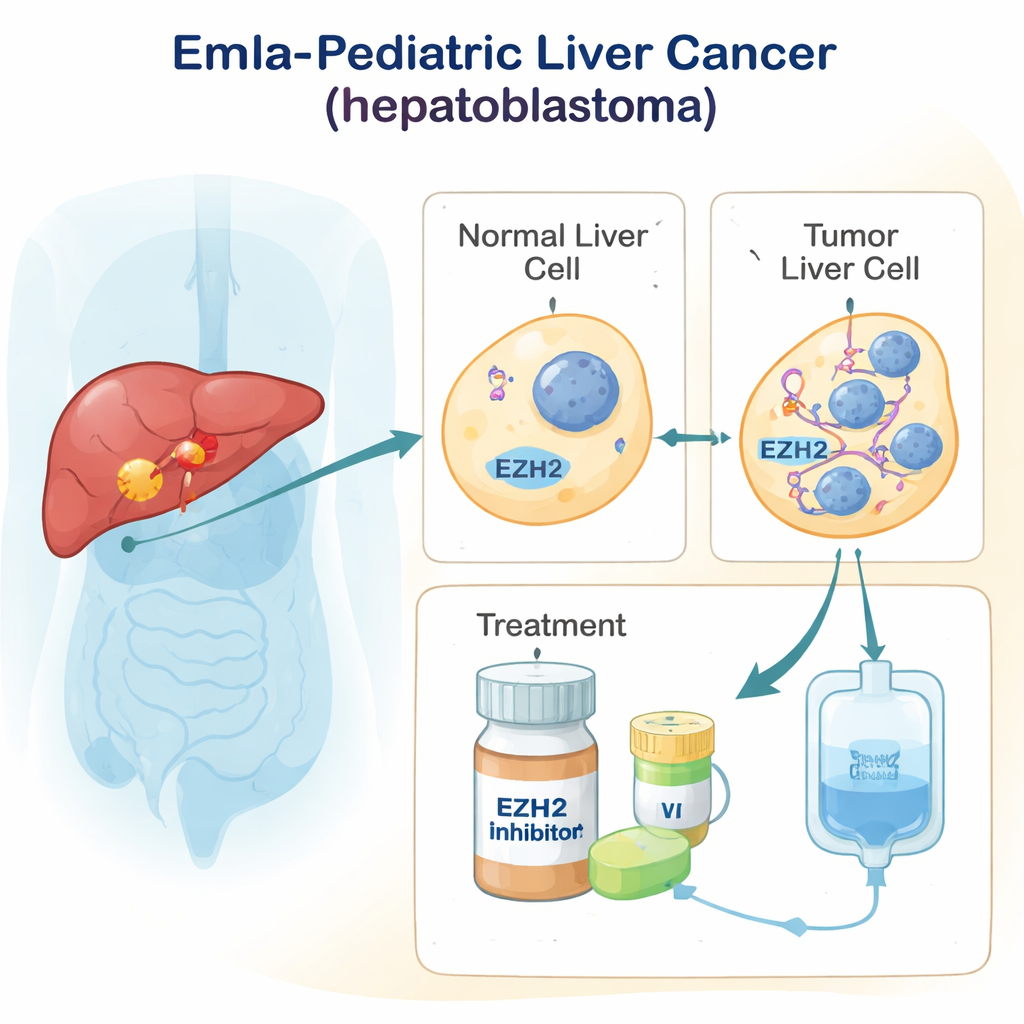
The researchers focused on a protein called EZH2, part of the machinery that controls which genes are turned on or off without changing the DNA itself. Using a powerful technique that reads the activity of thousands of genes in individual cell nuclei, they examined both tumor tissue and nearby healthy liver from children with hepatoblastoma. They discovered a special group of tumor cells, derived from liver cells, that were actively dividing and showed very high levels of EZH2. These so‑called "cycling" tumor cells were much more common in the most aggressive, embryonal form of the disease than in background liver tissue.
What makes these tumor cells so aggressive
By comparing gene activity patterns, the team found that the EZH2‑rich tumor cells were loaded with signals that promote rapid cell division and changes in the structure of chromosomes. They also saw signs that normal growth‑control pathways were altered, suggesting that EZH2 was not only silencing protective genes but also rewiring other cancer‑related signals in unexpected ways. When they looked at patient tumor slides under the microscope, they confirmed that EZH2 protein was especially abundant in embryonal regions of the tumors, and often present in cells caught in the act of dividing. Interestingly, other parts of the EZH2 protein complex did not always rise in step, hinting that EZH2 may be acting both through classic gene‑silencing roles and through less traditional, “off‑script” mechanisms.
Genetic clues and vulnerable weak points
The team also searched the DNA of 11 children’s tumors for changes in genes involved in this machinery. Every tumor carried variants in EZH2 and another complex member, SUZ12, and most also had mutations in CTNNB1, a well‑known driver of liver tumors. While these particular EZH2 and SUZ12 variants are not yet proven to be harmful on their own, their presence alongside strong EZH2 overactivity suggests they may subtly alter how the complex functions. Overall gene‑expression tests across many tumors showed that EZH2 and several cell‑division genes were consistently higher in tumor than in normal liver, while some genes that normally help keep growth and tissue organization in check were reduced.
Turning down EZH2 to boost chemotherapy
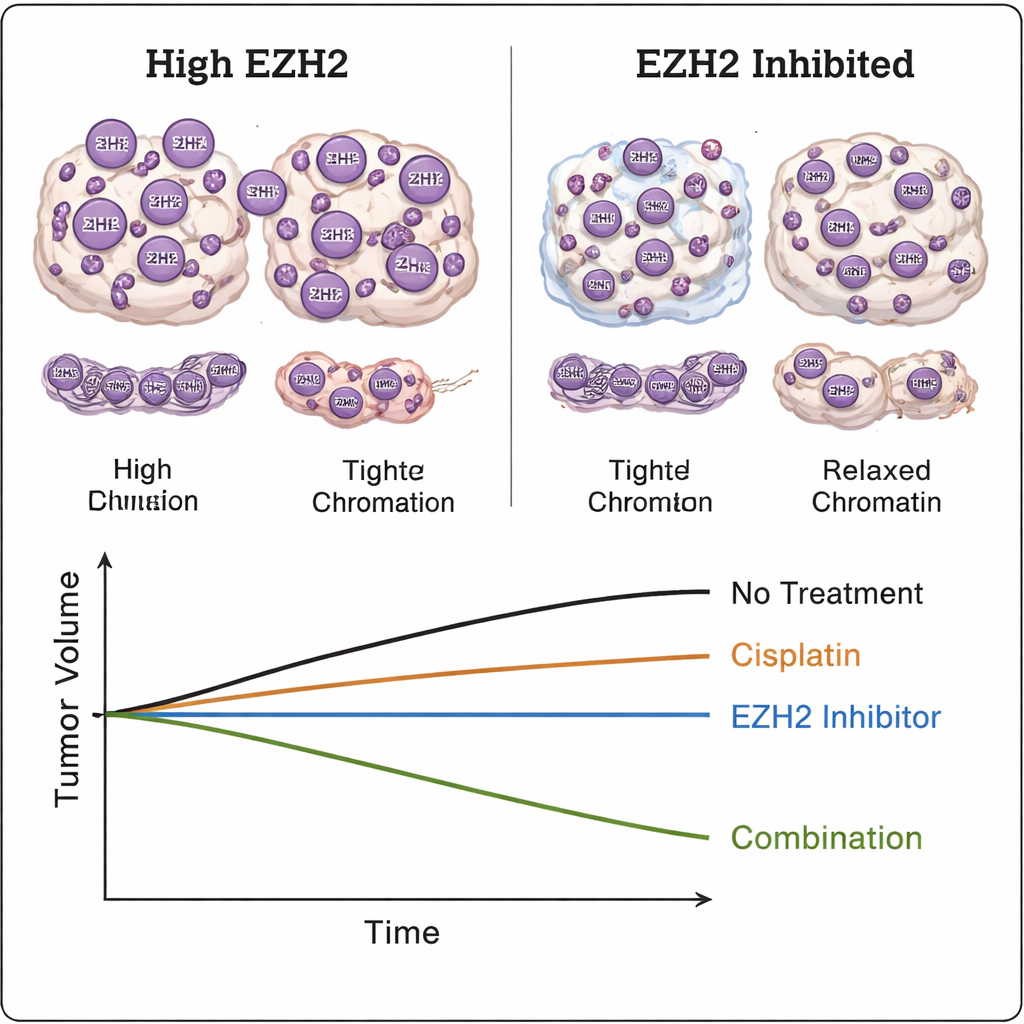
To see if EZH2 is more than a bystander, the researchers treated liver cancer cell lines and patient‑derived tumor cells in the lab with drugs that block EZH2, then exposed them to cisplatin, a standard chemotherapy drug. On their own, the EZH2 inhibitors had modest effects. But when combined with cisplatin, many hepatoblastoma cells became far more sensitive and died at lower chemotherapy doses, especially in lines that resemble the aggressive pediatric tumors. In a mouse model carrying human hepatoblastoma tissue, blocking EZH2 together with cisplatin shrank tumors more than either treatment alone and reduced a chemical mark (H3K27me3) linked to EZH2’s activity, showing that the drug was hitting its intended target in living tissue.
What this could mean for children with liver cancer
Taken together, the findings paint EZH2 as a central driver of a fast‑growing, treatment‑resistant cell population in hepatoblastoma, particularly in the embryonal subtype that tends to behave more aggressively. By dialing down EZH2, doctors may one day be able to weaken these hard‑to‑kill cells and make existing chemotherapy work better, potentially at lower doses. While more research and clinical trials are needed before such strategies reach the bedside, this work lays the scientific groundwork for targeting EZH2 as a new, more tailored treatment option for children facing this rare liver cancer.
Citation: Glaser, K., DePasquale, E.A.K., Berklite, L. et al. Investigating the oncogenic role of aberrant EZH2 in hepatoblastoma. Sci Rep 16, 7563 (2026). https://doi.org/10.1038/s41598-026-38038-0
Keywords: hepatoblastoma, EZH2, pediatric liver cancer, epigenetic therapy, cisplatin