Clear Sky Science · en
Subjective mental fatigue mediates the relationship between information processing speed and verbal memory deficits in multiple sclerosis
Why constant mental tiredness in MS matters
Many people with multiple sclerosis (MS) describe a relentless mental tiredness that sleep never quite fixes. It is more than feeling worn out after a long day—it can slow thinking, make it hard to remember conversations, and erode confidence at work and at home. This study set out to understand how that subjective sense of mental fatigue fits together with two key thinking skills that are often affected in MS: how quickly the brain processes information and how well people learn and remember spoken words.
Piecing together thinking speed, fatigue, and memory
The researchers followed 66 adults with MS and 38 healthy volunteers of similar age and sex. Everyone took tests that measured how fast they could match symbols to numbers (a standard way to gauge thinking speed), how well they could learn and recall lists of spoken words, and how strongly they felt mentally fatigued in everyday life, using a detailed questionnaire. The MS group also completed a broader battery of cognitive tests and quality-of-life measures so that the team could see how these specific skills fit into their overall thinking profile.
MS brains working harder for the same tasks
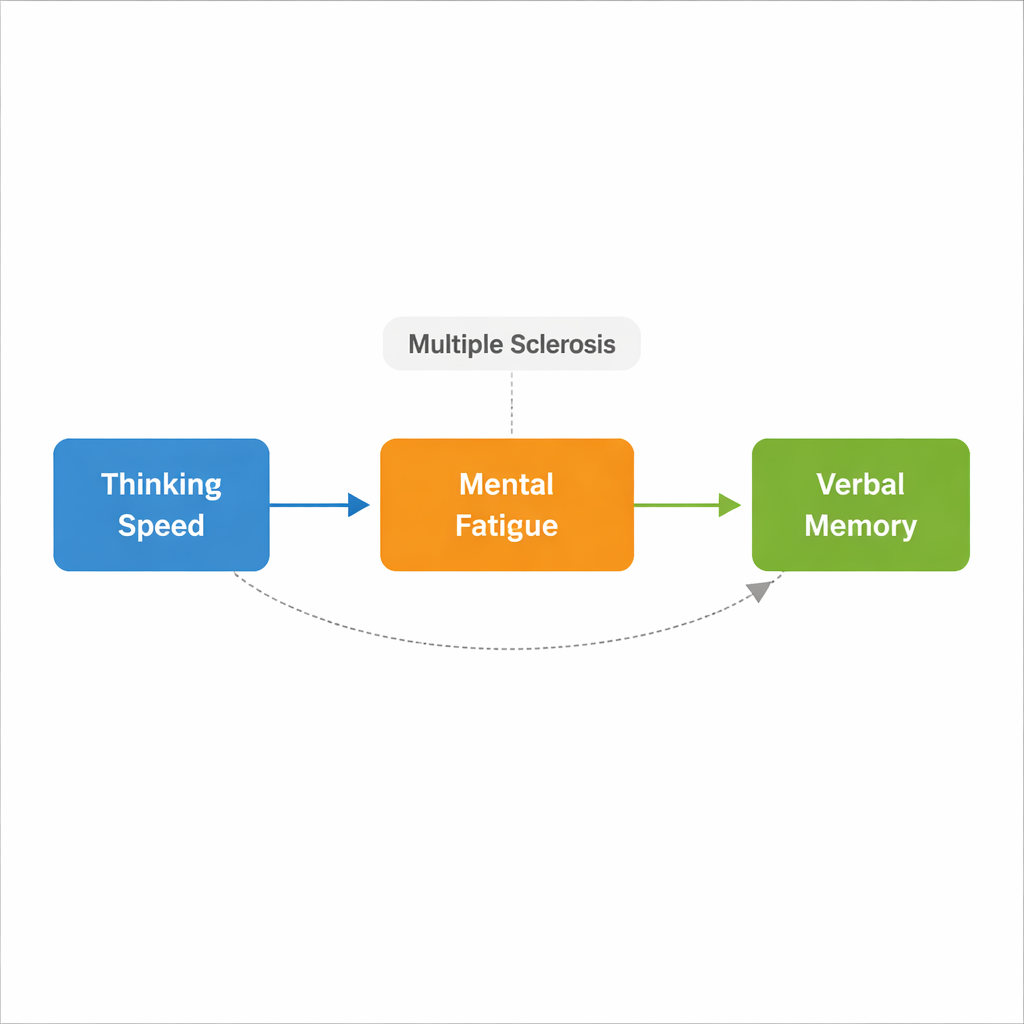
Across nearly every test, people with MS performed worse than the healthy group. They processed information more slowly, had more trouble learning and recalling words, and reported higher levels of mental fatigue. Yet those differences alone do not explain how these problems connect. The team proposed a chain: damage from MS slows down nerve communication in the brain, which makes thinking tasks more effortful. That sustained extra effort is felt as mental fatigue. Over time, this fatigue may drain the mental resources people need to take in and store new information, further weakening memory.
Mental fatigue as the missing link
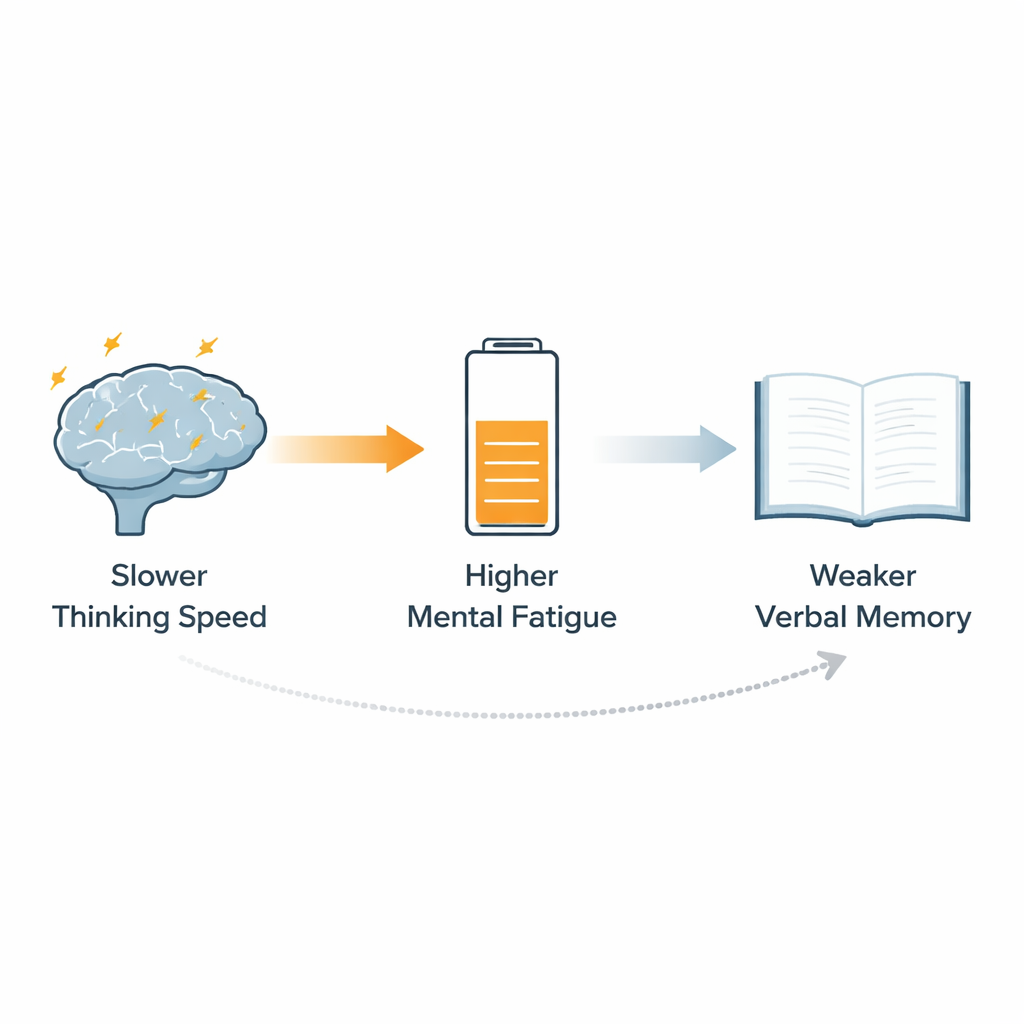
To test this idea, the researchers used a statistical approach called mediation analysis. First, they confirmed that, in the MS group, slower thinking speed was linked to poorer verbal memory. Then they added self-reported mental fatigue into the model. Once mental fatigue was taken into account, the direct link between thinking speed and memory largely disappeared, while the indirect pathway—slower thinking leading to more fatigue, which then related to worse memory—remained clearly significant. In plain terms, mental fatigue acted as a bridge: it carried much of the impact of slower thinking onto memory performance.
What was different in people without MS
When the same analyses were run in the healthy volunteers, the picture changed. Their thinking speed and verbal memory were not strongly tied together, and adding mental fatigue into the model did not alter this relationship. Even when healthy people felt tired, that feeling did not explain their memory performance in the same way. This contrast suggests that the kind of persistent mental fatigue reported in MS is not just everyday tiredness; it is closely linked to the disease process and how the brain copes with reduced efficiency.
What this means for life with MS
For people living with MS, these findings offer both an explanation and a hopeful message. The study suggests that mental fatigue is not merely a side effect of cognitive problems—it is a key player that helps turn slower thinking into real-world memory difficulties. That means treating or reducing mental fatigue, through targeted cognitive training, lifestyle strategies, or future medications, could help protect day-to-day memory, even when underlying brain changes cannot be fully reversed. In short, easing the sense of mental exhaustion may unlock better thinking and remembering for many people with MS.
Citation: Tsoukaki, N., Anagnostopoulou, A., Kartsidis, P.E. et al. Subjective mental fatigue mediates the relationship between information processing speed and verbal memory deficits in multiple sclerosis. Sci Rep 16, 7560 (2026). https://doi.org/10.1038/s41598-026-38027-3
Keywords: multiple sclerosis, mental fatigue, cognitive impairment, information processing speed, verbal memory