Clear Sky Science · en
Predictors of unsuccessful tuberculosis treatment outcome in Bhutan: A retrospective study using comprehensive national tuberculosis surveillance data
Why this matters for everyday life
Tuberculosis (TB) is often seen as a disease of the past, yet it still kills more people worldwide than almost any other infection. This study from Bhutan offers a rare, countrywide look at how well TB treatment really works when care is free and closely monitored. Understanding why some patients still die or fail treatment, despite strong health services, can point the way to saving more lives in Bhutan and in other countries with similar challenges.
Taking a national snapshot of TB care
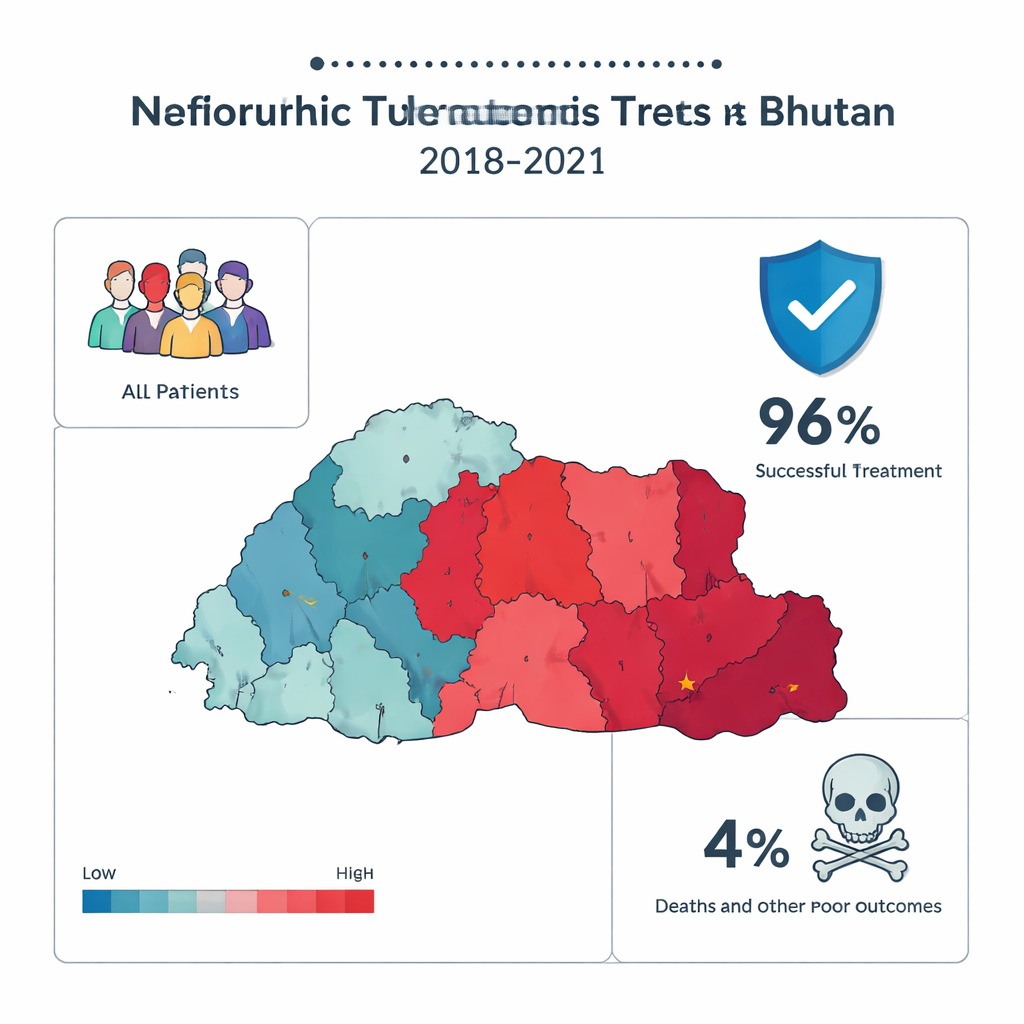
Researchers examined records for every person treated for TB in Bhutan between 2018 and 2021, drawing on a national, web-based tracking system that collects information from all public health facilities. In total, 3,619 patients started treatment and 3,330 had a recorded final outcome. The team grouped patients by age, sex, where they lived, what part of the body TB affected (lungs or other organs), whether their infection was drug-sensitive or drug-resistant, and whether they had been treated before. Using standard World Health Organization definitions, they classified outcomes as successful (cured or completed treatment) or unsuccessful (death, treatment failure, or loss to follow-up).
Very high success, but deaths still occur
The results were encouraging: 96.2% of patients with known outcomes had successful treatment. About half completed all their medicine, while a slightly smaller share were confirmed cured with laboratory tests. Only 3.8% had an unsuccessful outcome: most of these patients died during treatment, and far fewer failed treatment or stopped coming for care. This success rate exceeds the global target of 90% and matches or outperforms results from many other countries. The authors suggest that Bhutan’s free health care, strong vaccination program, and low rates of HIV infection all help keep TB treatment on track.
Who is most at risk when treatment fails?
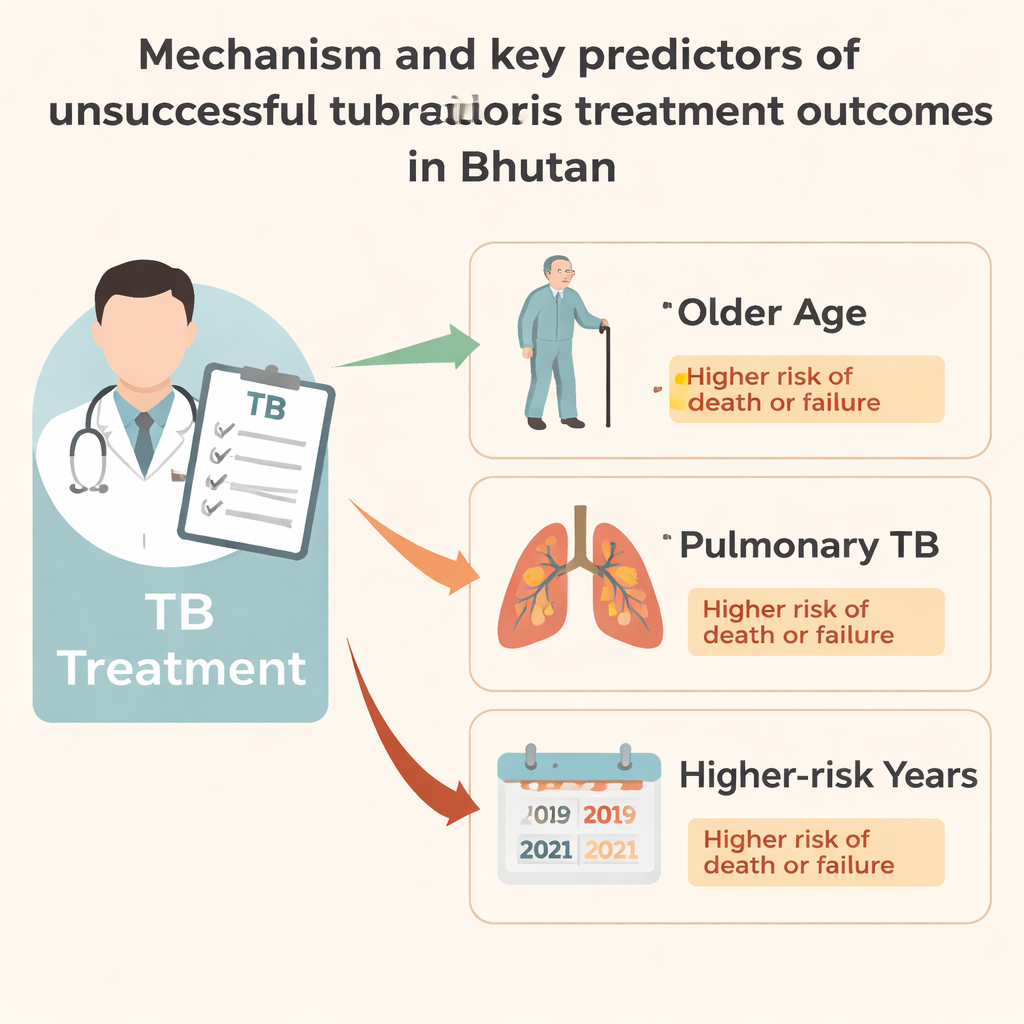
Despite the strong overall picture, the study highlights groups who face higher danger. Older adults, especially those aged 60 and above, were more than four times as likely to have an unsuccessful outcome as children and teenagers. Patients with TB in the lungs, rather than other organs, were also more likely to die or fail treatment—likely because lung disease often reflects a heavier infection and can be harder on the body. Unsuccessful outcomes were more common for patients diagnosed in 2019 and 2021. The authors link 2021’s problems to COVID-19 lockdowns, staff reassignments, and disrupted clinic visits and record-keeping, echoing global reports of TB setbacks during the pandemic.
Patterns behind the numbers
TB cases were not spread evenly across the country. Most occurred in the western region, particularly in the capital district, where population density is higher and health services are more concentrated. Students formed the largest occupation group among patients, which may reflect crowding in classrooms and dormitories. A small but important number of health workers also developed TB, underscoring the need to protect frontline staff through regular screening and infection control. Interestingly, treatment success was high even among people with drug-resistant TB, possibly because these patients received intensive hospital-based care, nutritional support, and close monitoring early in their treatment.
How Bhutan can do even better
The authors argue that the main remaining challenge is to prevent deaths among older adults and people with lung TB. They recommend earlier detection through more active screening, especially in high-burden districts, schools, and elderly communities. They also call for closer follow-up during the first months of treatment, when deaths are most likely, and for better recording of factors such as weight, other illnesses, and treatment adherence. In the future, more “patient-centered” approaches—such as safe home isolation instead of long hospital stays, plus simple reminder systems and incentives—could help patients complete treatment while reducing stigma and financial strain.
What this means for the fight against TB
To a lay reader, the main takeaway is that TB treatment can work remarkably well when care is free, organized, and carefully tracked, as in Bhutan. Yet even in this strong system, older people and those with lung disease remain vulnerable, and disruptions like the COVID-19 pandemic can quickly erode progress. By focusing extra attention and support on these high-risk groups and sharpening its data systems, Bhutan has a real chance to cut TB deaths further and provide a model for other countries aiming to end this ancient disease.
Citation: Dorji, T., Tshering, K., Adhikari, L. et al. Predictors of unsuccessful tuberculosis treatment outcome in Bhutan: A retrospective study using comprehensive national tuberculosis surveillance data. Sci Rep 16, 7535 (2026). https://doi.org/10.1038/s41598-026-38023-7
Keywords: tuberculosis treatment, Bhutan public health, treatment outcomes, drug-resistant TB, elderly patients