Clear Sky Science · en
Metabolomic and transcriptomic analyses identify metabolic alterations and immune suppression in ovarian cancer
Why Cancer’s Fuel Matters
Ovarian cancer is often discovered late, when treatment is harder and survival chances are lower. This study looks under the “hood” of ovarian tumors to see how the tiny chemicals that fuel cells—and the genes that control them—change as the disease progresses. By linking these chemical shifts to the body’s immune defenses, the research offers clues to why some tumors grow more aggressively and how future blood or tissue tests might help detect dangerous changes earlier.
Two Types of Tumor Chemistry
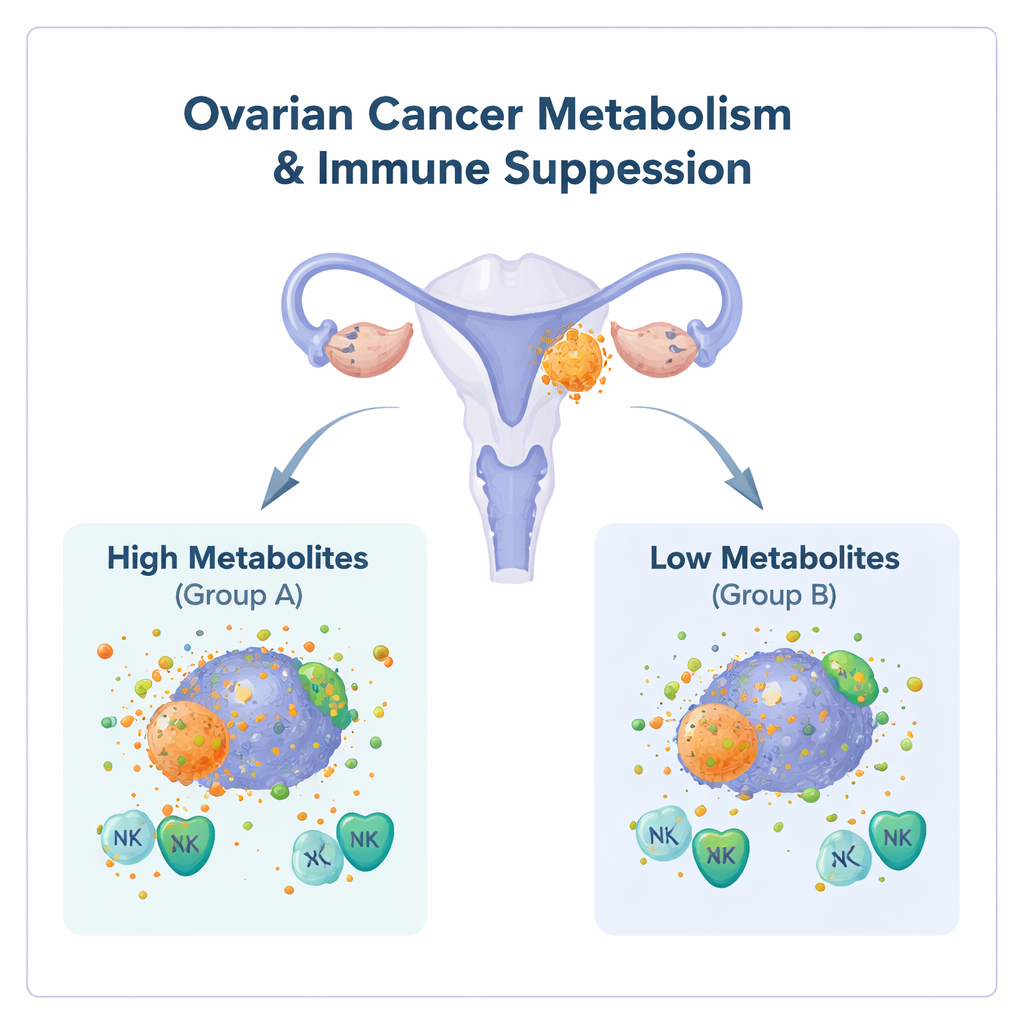
The researchers examined blood and tumor samples from women treated for ovarian cancer and compared them with samples from women who had noncancerous ovarian growths. They measured hundreds of small molecules, known as metabolites, that reflect how cells use sugar, fats, and amino acids as fuel and building blocks. In the tumor tissue itself, they found clear differences: cancers could be divided into two groups based on overall metabolite levels—one with broadly higher amounts (Group A) and one with lower amounts (Group B). This split did not depend on the tumor’s microscopic appearance or on obvious gene mutations, suggesting that metabolism added a new layer of information beyond standard pathology.
Amino Acids and Advanced Disease
Digging deeper, the team saw that many amino acids—the components of proteins—were especially elevated in the high-metabolite group. Substances such as taurine, cysteine, tyrosine, serine, methionine, and related compounds were more abundant in these tumors, and several were higher in women whose cancer had already reached advanced stages. In contrast, surrounding noncancerous ovarian tissue was richer in molecules tied to basic sugar breakdown, hinting that cancer cells rewire their fuel use compared with normal cells. These patterns fit with the idea that rapidly growing tumors divert nutrients toward making new proteins, antioxidants, and other tools that support spread and treatment resistance.
When Tumor Fuel Undercuts Immune Defenses
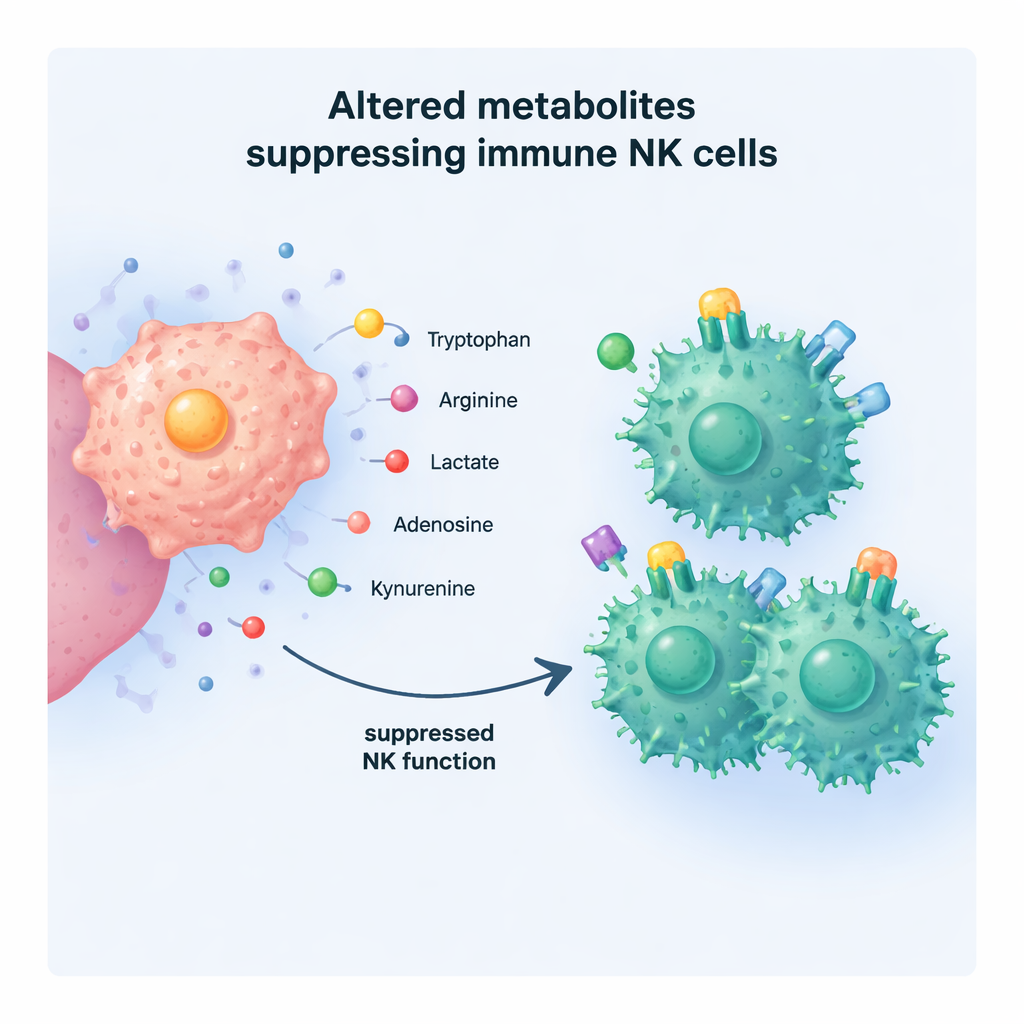
Because metabolism and immunity are closely linked, the researchers next asked whether the two tumor groups differed in their immune landscapes. Using RNA sequencing—a technique that measures which genes are turned on—they found that cancers in the high‑metabolite group showed weaker activity in gene pathways related to immune responses, especially those tied to natural killer (NK) cells. NK cells are a frontline defense that can destroy abnormal cells without prior training. A computational method that estimates immune cell types from gene patterns confirmed that tumors with abundant metabolites harbored a smaller fraction of NK cells. The study also highlighted changes in pathways involving tryptophan and arginine, two amino acids whose breakdown products are known from other work to dampen T cells and NK cells, helping tumors escape attack.
What This Could Mean for Patients
Although the study was relatively small and did not yet show clear survival differences between the two metabolic groups, it points to a potentially important story: ovarian tumors with ramped‑up metabolism are more often advanced and appear to sit in a more immune‑suppressed environment. Rather than being driven by a single “on–off” gene switch, these metabolic shifts likely arise from many genes acting together. If confirmed in larger groups and tested in lab models, such chemical fingerprints might one day help doctors identify high‑risk tumors earlier, refine how patients are grouped for treatment, or design therapies that both starve tumors of key nutrients and restore the strength of NK cells.
Big Picture Takeaway
In simple terms, this work suggests that how ovarian tumors feed themselves is closely tied to how well the immune system can fight them. Tumors that hoard certain fuel molecules tend to be more advanced and better at shutting down natural killer cells. Understanding and tracking these metabolic signatures could become a valuable part of spotting dangerous cancers sooner and tailoring treatments that target both the cancer’s energy supply and its ability to hide from the body’s defenses.
Citation: Yamaguchi, M., Higuchi, D., Yoshida, H. et al. Metabolomic and transcriptomic analyses identify metabolic alterations and immune suppression in ovarian cancer. Sci Rep 16, 7429 (2026). https://doi.org/10.1038/s41598-026-38014-8
Keywords: ovarian cancer, cancer metabolism, natural killer cells, immune suppression, metabolomics