Clear Sky Science · en
Phytochemical composition and antimicrobial activity of Matricaria chamomilla ethanolic extracts against clinical bacterial isolates in Ibb City, Yemen
A familiar herb with a hidden power
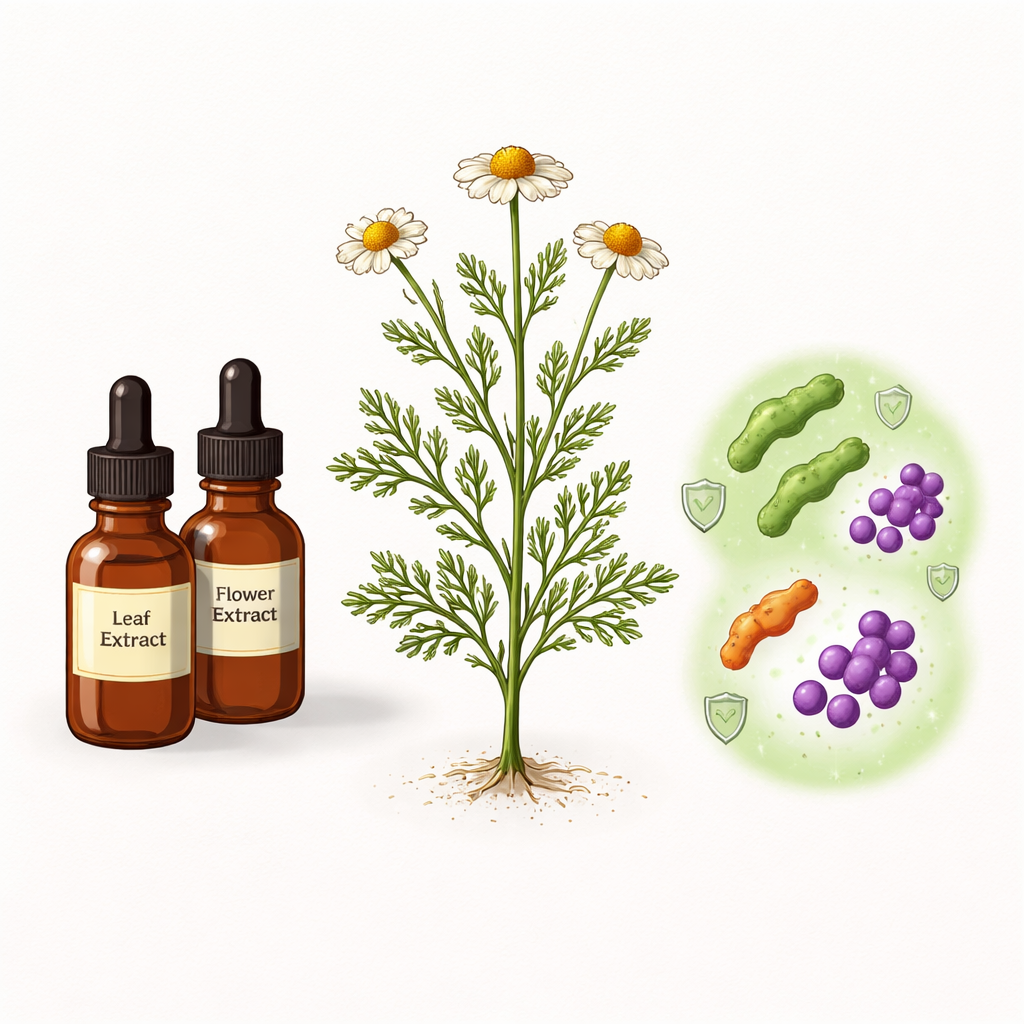
Many people know chamomile as a soothing tea for better sleep or a calm stomach. This study asks a different question: can the same plant help fight harmful bacteria, including some that no longer respond well to common antibiotics? By testing chamomile grown in Yemen against real infection-causing germs from local clinics, the researchers explored whether a traditional remedy might support modern medicine.
Why scientists are revisiting old remedies
Bacterial infections are becoming harder to treat as more strains develop resistance to existing drugs. Around the world, scientists are searching plants long used in folk medicine for natural substances that might slow or kill dangerous microbes. Matricaria chamomilla, or German chamomile, has a long history in Europe, Asia, and the Middle East as a remedy for skin problems, digestive upset, and anxiety. Earlier studies hinted that chamomile contains chemicals with antibacterial effects, but results varied widely depending on which part of the plant was used and how it was prepared. Few studies had tested chamomile against real clinical bacteria from Yemen, where herbal remedies are part of everyday care.
From field to lab bench
The team collected chamomile leaves and flowers from the Ibb region of Yemen, carefully identified the plant, and then dried and ground the material. They soaked the powders in ethanol, a common laboratory solvent, to pull out the active substances, producing separate leaf and flower extracts. Basic chemical tests showed that both extracts contained several groups of plant compounds—tannins, alkaloids, sterols, and terpenoids—known from other research to disturb bacterial cell walls, leak their contents, or interfere with vital processes. Other common plant chemicals, such as flavonoids and saponins, were not detected in these samples, suggesting that the antibacterial effects would mainly come from the compounds that were present.
Putting chamomile up against real pathogens
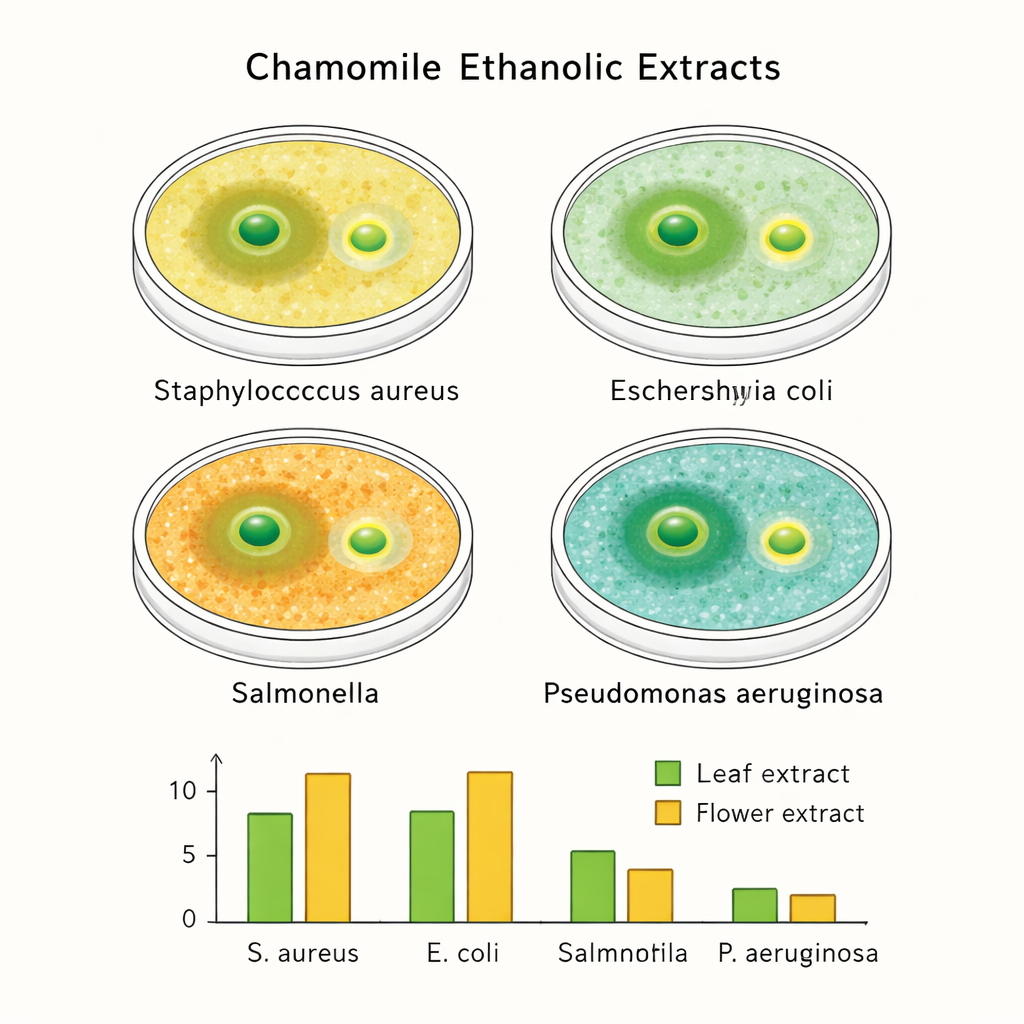
To see whether these extracts could slow or stop bacteria, the researchers used clinical strains of four important disease-causing microbes: Staphylococcus aureus, Escherichia coli, Salmonella species, and Pseudomonas aeruginosa. These were not gentle lab strains but bacteria taken from patients and re-checked using standard hospital procedures. In petri dish tests, the scientists placed the chamomile extracts into small wells on plates covered with bacteria and measured the clear circles where growth was halted. Leaf extract was especially effective against S. aureus, producing a wide 24-millimeter clear zone, while flower extract was strongest against E. coli. Both leaf and flower extracts showed similar, moderate effects on Salmonella. Strikingly, the leaf extract also inhibited P. aeruginosa, a notoriously hard-to-treat germ often resistant to many antibiotics, while the flower extract had no effect on this species.
How strong are the effects compared with antibiotics?
When compared directly with standard antibiotics, chamomile extracts were usually weaker overall—but the story is more nuanced. The leaf extract’s action against S. aureus was similar in size to that of several commonly used drugs, and its impact on P. aeruginosa approached that of imipenem, an important hospital antibiotic, in a situation where some other drugs showed little effect. The researchers then determined how much extract was needed to stop visible bacterial growth and how much was needed to kill nearly all of the bacteria. For most of the tested microbes, both leaf and flower extracts stopped growth and killed the bacteria at the same concentration, a sign of strong, outright killing rather than mere slowing. Only P. aeruginosa needed a higher dose of leaf extract to be fully killed, reflecting its well-known toughness.
What this means for everyday health
For non-specialists, the take-home message is that a familiar herb, chamomile, contains natural substances that can meaningfully damage or kill several important disease-causing bacteria, including some that challenge modern antibiotics. This does not mean that chamomile tea or home remedies can replace prescribed medicines, especially for serious infections. Instead, the study highlights chamomile as a promising source of future drug ingredients or supportive treatments—particularly if scientists can isolate and concentrate the most active compounds, check their safety in animals and humans, and explore how they might work alongside existing antibiotics. In an era of rising antibiotic resistance, such plant-based leads could become valuable tools in maintaining the effectiveness of infection control.
Citation: Esmail, A., Hassan, A., Almuntaser, K. et al. Phytochemical composition and antimicrobial activity of Matricaria chamomilla ethanolic extracts against clinical bacterial isolates in Ibb City, Yemen. Sci Rep 16, 7098 (2026). https://doi.org/10.1038/s41598-026-38001-z
Keywords: chamomile, antimicrobial, plant extracts, antibiotic resistance, bacterial infections