Clear Sky Science · en
Physical performance transition and the risk of adverse health outcomes among community-dwelling older adults with or without fatigue
Why Tiredness in Later Life Matters
Many older adults describe feeling tired most days, but that simple complaint can signal more than just a busy week. This study followed nearly 500 community-dwelling older people in Beijing for three years to see how feeling frequently fatigued was linked to changes in walking, balance, and strength—and to serious outcomes such as muscle loss, poor nutrition, and memory problems. The findings suggest that routinely asking, “Do you feel tired most days?” can help flag who is at higher risk of losing independence and health.
Checking Strength, Balance, and Everyday Function
Researchers began in 2019 with 795 adults aged 60 and older living at home; 456 who completed both the initial and three-year follow-up assessments were included in the final analysis. None had severe mobility problems at the start. Participants answered a simple yes-or-no question: had they felt tired or fatigued on at least three or four days each week? About 30% said yes and were placed in the “fatigue” group; the rest formed the “non-fatigue” group. Everyone took a standard set of short tests—the Short Physical Performance Battery—to measure how fast they walked, how well they could stand and keep their balance, and how easily they could rise from a chair. Scores were grouped into poor, moderate, or good physical performance.
Tracking Who Improved, Stayed the Same, or Got Worse
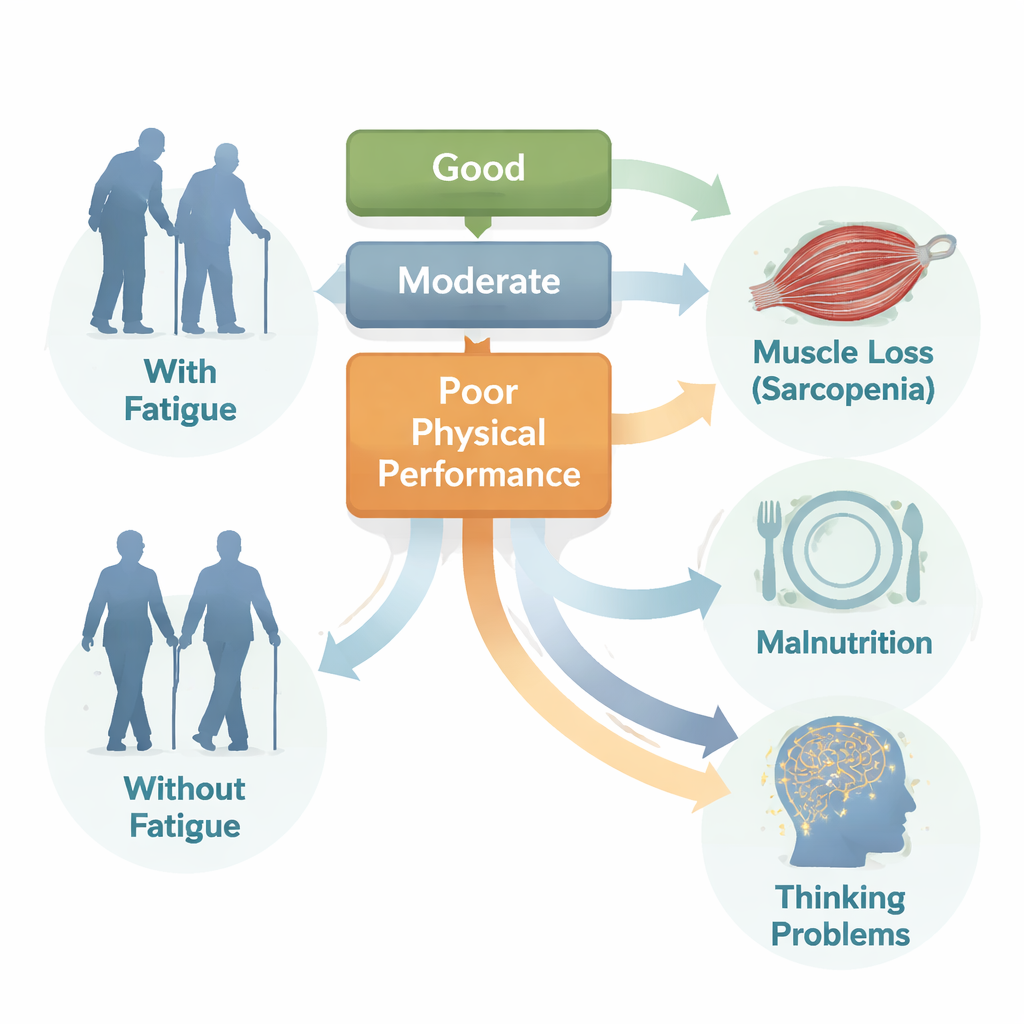
Over three years, physical performance turned out to be dynamic rather than fixed. People were classified as improved, stable, or worsened based on how their test scores changed. Among those who started out fatigued, most already had poor physical performance at baseline and tended to remain poor or get worse. Still, about one in three fatigued individuals with poor starting scores managed to move up to moderate or even good performance, suggesting that decline is not inevitable. In contrast, older adults without fatigue were more evenly spread across performance levels at the start, and many with poor scores improved over time—nearly 85% of them moved up to moderate or good performance—showing that better function is possible even in later life when fatigue is absent.
Hidden Risks: Muscle Loss, Malnutrition, and Thinking Problems
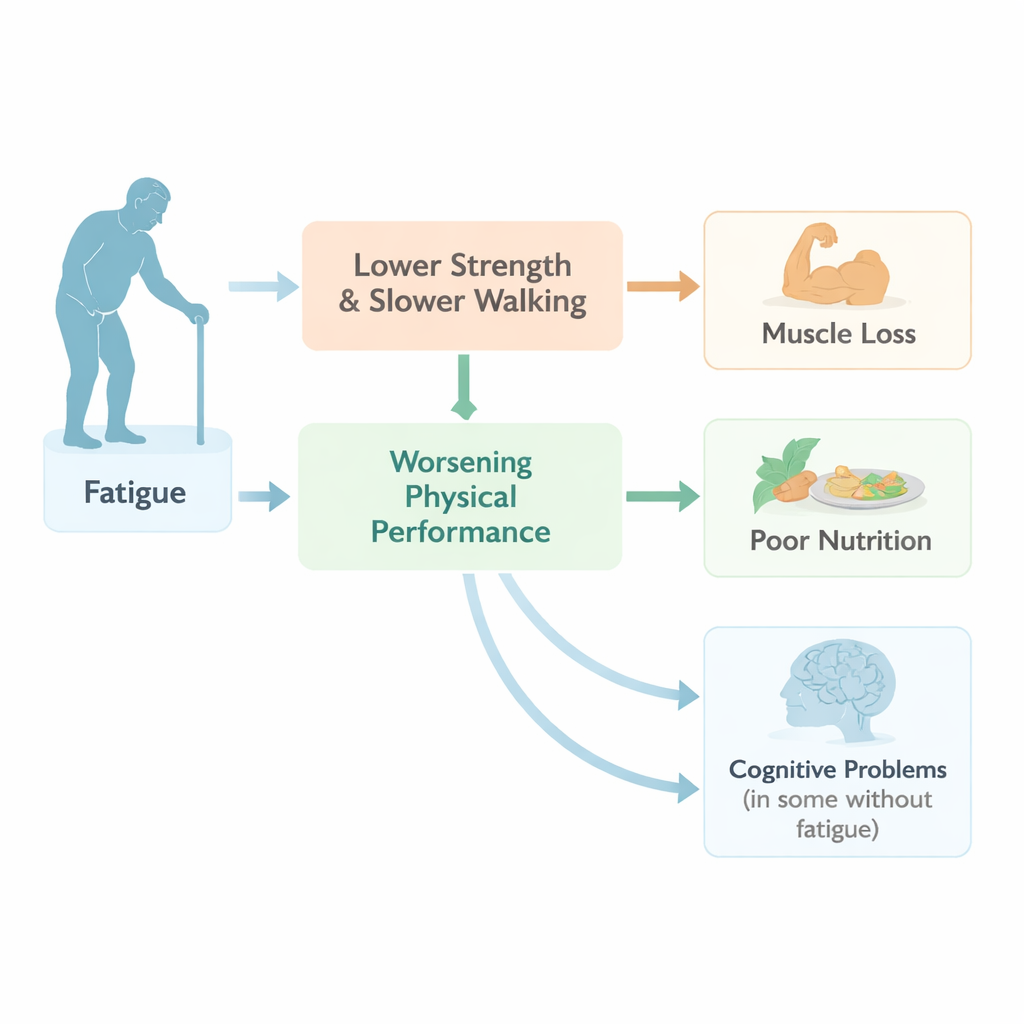
The study also tracked new health problems that emerged during the three years, including sarcopenia (a condition marked by serious muscle loss and weakness), malnutrition, depression, pain, falls, and difficulties in daily activities like dressing or bathing. After taking age, sex, body weight, and existing chronic diseases into account, older adults who were fatigued and whose physical performance worsened were more than three times as likely to develop sarcopenia and almost three times as likely to become malnourished compared with fatigued peers whose performance stayed stable. Among those who were not fatigued, worsened physical performance was still linked to higher chances of sarcopenia, and it was also associated with new cognitive problems. This pattern suggests that fatigue, muscle health, nutrition, and brain function are tightly connected in aging.
What This Means for Everyday Care
Because the fatigue question was so simple, the authors argue it could be used routinely in clinics and community health checks to quickly spot older adults who might benefit from closer evaluation. Those who report frequent tiredness and show signs of declining walking speed or balance may need checks for muscle strength, diet quality, mood, sleep problems, medication side effects, and hidden illnesses. Addressing treatable causes of fatigue—such as poor sleep, pain, or depression—along with tailored exercise and nutrition support might slow or even reverse some of the physical decline seen in the study, particularly for those whose fatigue reflects low “vitality” or reserve.
Take-Home Message for Families and Policymakers
The study concludes that fatigue is not just an annoying symptom of getting older; it is a warning sign that an older person may be at higher risk for rapid loss of strength, poor nutrition, and, in some cases, cognitive decline. While not all declines can be prevented, the results show that some older adults—especially those without fatigue—can and do improve their physical performance over time. Recognizing and responding early to persistent tiredness, rather than dismissing it as normal aging, could help families and health systems protect independence and quality of life in an aging population.
Citation: Su, D., Su, Y., Zhang, X. et al. Physical performance transition and the risk of adverse health outcomes among community-dwelling older adults with or without fatigue. Sci Rep 16, 7260 (2026). https://doi.org/10.1038/s41598-026-37997-8
Keywords: fatigue, older adults, physical performance, sarcopenia, malnutrition