Clear Sky Science · en
Analytical and clinical validation of CancerMaster, an automated targeted NGS panel, for tumor-only precision oncology
Turning Tumor DNA into a Treatment Roadmap
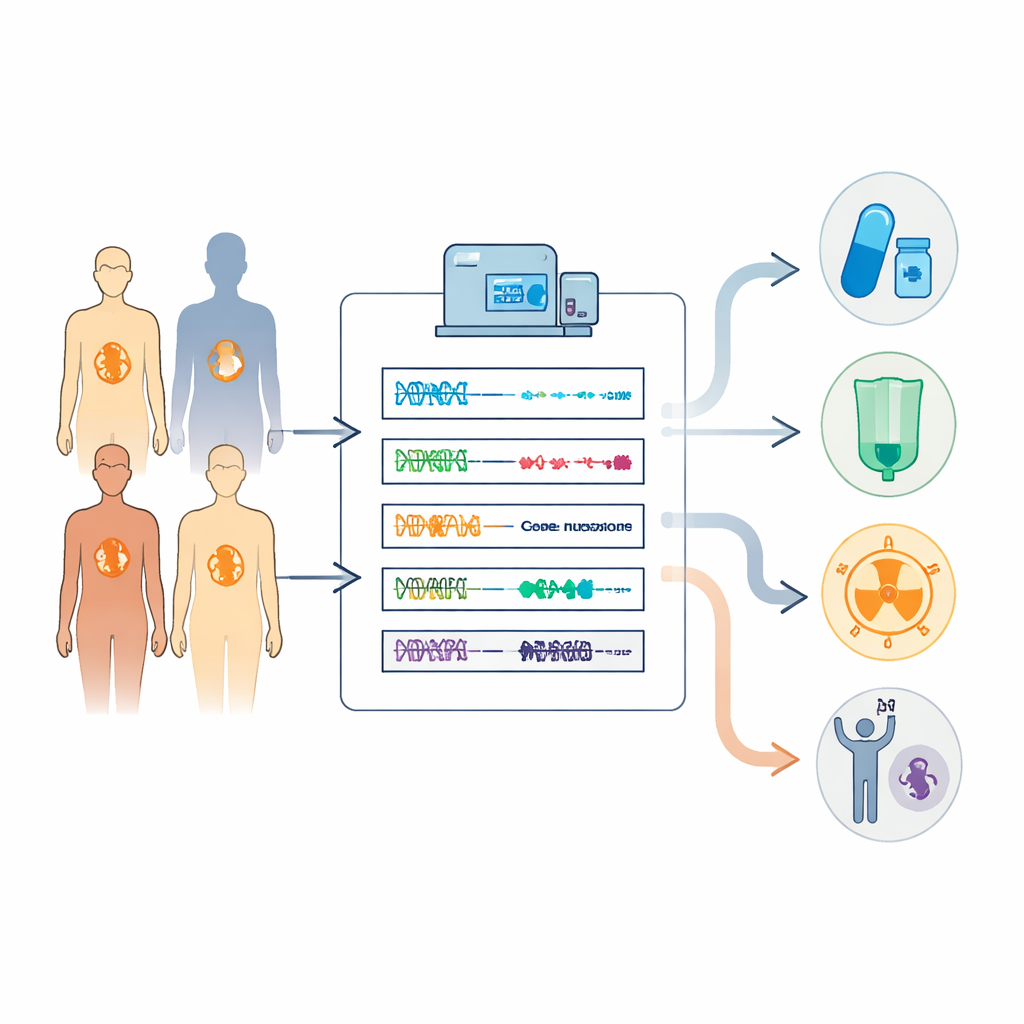
Cancer care is rapidly moving from one‑size‑fits‑all therapies to treatments tailored to the unique DNA changes in each person’s tumor. But getting that genetic information quickly, accurately, and from often tiny biopsies is a major challenge for hospitals. This study introduces a new laboratory test, called CancerMaster, designed to read many important cancer genes at once from tumor samples alone and automatically turn that data into reports doctors can use to guide precision treatment.
Why Doctors Need Faster, Smarter Gene Tests
For many solid tumors, especially hard‑to‑treat stomach and colorectal cancers, treatment decisions now depend on detecting specific DNA changes. Some mutations can predict whether drugs that block growth signals will work, while other patterns help identify patients likely to benefit from immune‑boosting drugs. Whole‑genome or whole‑exome sequencing can, in theory, find nearly all such changes, but they are expensive, slow, and generate more data than most clinics can comfortably handle. Existing focused gene panels are faster but often miss key signals: they may not track viral infections linked to cancer, struggle when only tumor tissue is available, or require manual, time‑consuming analysis and reporting.
A One‑Stop Panel Built for Real‑World Hospitals
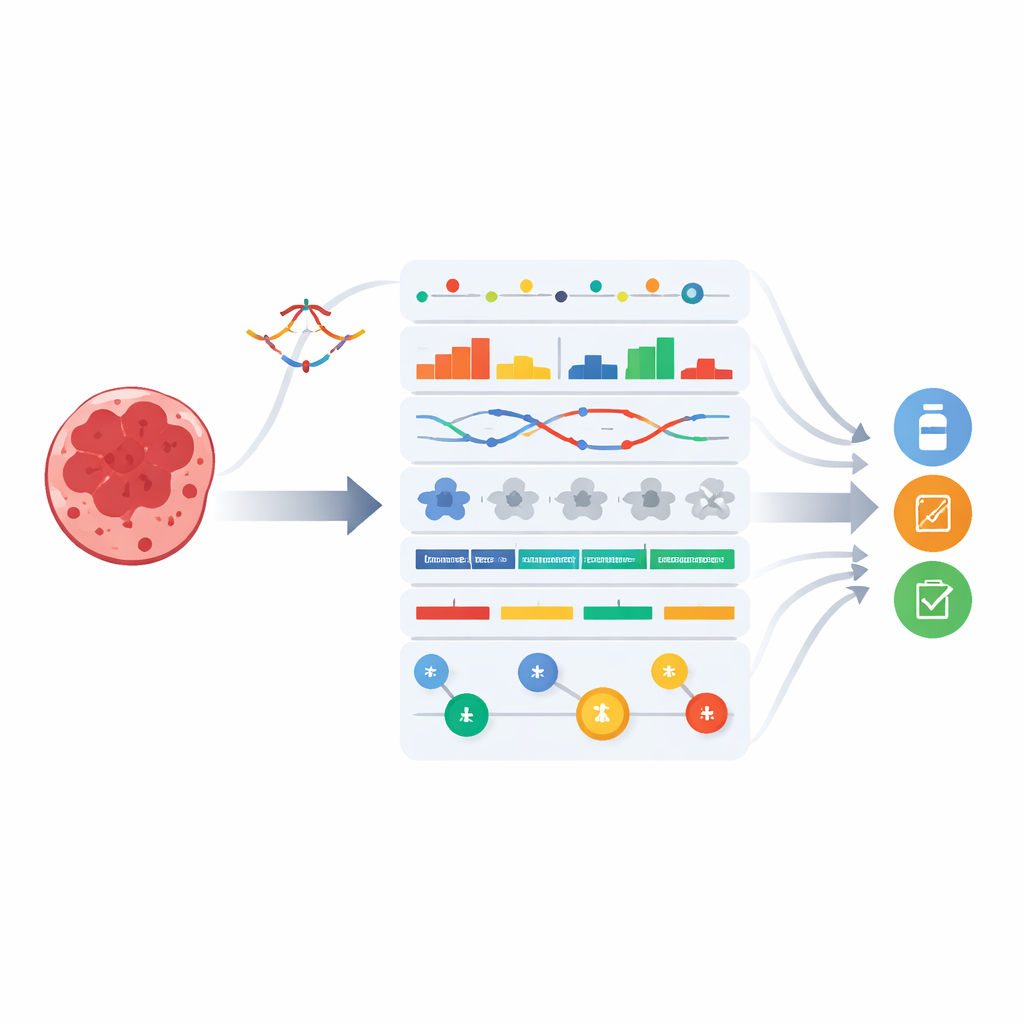
The researchers developed CancerMaster as an in‑house, hybrid‑capture DNA test that targets 524 cancer‑related genes and several virus genomes in a single assay. Instead of sending samples to outside companies, the panel and its software pipeline run entirely within the institution, giving doctors more control and flexibility. The system was engineered to work on tumor tissue alone—without a matching sample of healthy tissue—because in routine practice such paired samples are often not available. Behind the scenes, CancerMaster breaks the job into parallel modules that can each analyze a different type of signal, such as mutations, large gains or losses of DNA, gene fusions, viral DNA, and measures linked to response to immunotherapy, and then automatically combines the results into a structured report. This design aims to shorten turnaround time while conserving precious biopsy material.
Putting Accuracy and Reliability to the Test
To see whether the new panel could be trusted for clinical decisions, the team first tested it on well‑characterized reference samples containing hundreds of known DNA changes. CancerMaster repeatedly found nearly all expected variants, with 99% analytical sensitivity and 100% reproducibility across repeated runs. They then compared its performance head‑to‑head with a widely used commercial assay, TruSight Oncology 500, in 23 tumor samples. Most findings matched between the two tests; where they disagreed, the differences often traced back to how each system defines reportable events. Notably, CancerMaster alone picked up a potentially important change in the ERBB2 gene, while one apparent extra DNA gain reported only by the commercial test did not hold up under independent checking, aligning instead with CancerMaster’s call.
What the Panel Revealed in Hundreds of Patients
Beyond test tubes and quality checks, the researchers applied CancerMaster to 668 patients with solid tumors, most of whom had gastric or colorectal cancer. The panel captured a rich landscape of clinically meaningful changes: frequent mutations in genes such as TP53, KRAS, and PIK3CA, and amplifications of ERBB2 and other drug‑target genes in gastric cancer. It also measured markers linked to the success of immune checkpoint drugs, such as microsatellite instability (MSI), overall mutation load (tumor mutational burden, or TMB), and the presence of Epstein–Barr virus or human papillomavirus. MSI and TMB were strongly correlated, especially in colorectal cancer, with most tumors that had a very high mutation load also showing MSI. When compared with standard hospital tests for DNA copy gains, MSI, and viral infection, CancerMaster showed high overall accuracy and very high specificity, though detecting some DNA gains in real‑world gastric tumors remained challenging because of mixed tumor and normal cells.
Linking DNA Signals to Tailored Treatment Choices
Because CancerMaster integrates many different genetic and viral signals at once, it can support a broad, guideline‑recommended approach to selecting therapies. The panel not only flags tumor changes matched to existing targeted drugs, such as ERBB2 amplifications that may respond to HER2‑directed treatments, but also identifies patients whose tumors may be prime candidates for immunotherapies based on MSI, TMB, and virus‑related patterns. Its ability to profile human leukocyte antigen (HLA) types opens the door to future studies that link a patient’s immune background to treatment response, adding another layer of personalization. At the same time, the authors emphasize that any molecular test has limits: rare events, highly mixed samples, and subtle DNA gains can still be missed or misread, so results must be interpreted alongside traditional pathology and clinical judgment.
From Lab Bench to Bedside Decisions
In plain terms, CancerMaster is a compact, hospital‑friendly DNA reading system that turns a single tumor biopsy into a multi‑page genetic portrait. It was carefully checked against reference standards, a leading commercial test, and routine clinical assays, and it reliably pinpointed many treatment‑relevant changes across hundreds of patients. While the method still needs refinement for certain difficult signal types, its automated, all‑in‑one design shows how next‑generation sequencing can be woven into everyday cancer care. By helping oncologists match the right patients to targeted drugs and immunotherapies more quickly and comprehensively, tools like CancerMaster aim to make truly personalized cancer treatment a practical reality rather than a distant promise.
Citation: Che, J., Kwon, W.S., Kim, J. et al. Analytical and clinical validation of CancerMaster, an automated targeted NGS panel, for tumor-only precision oncology. Sci Rep 16, 8048 (2026). https://doi.org/10.1038/s41598-026-37991-0
Keywords: precision oncology, tumor gene panel, gastric cancer, immunotherapy biomarkers, next-generation sequencing