Clear Sky Science · en
Integrative metabolomic and single-cell transcriptomic analysis of recurrent condyloma acuminatum in humans
Why some genital warts keep coming back
Genital warts, medically called condyloma acuminatum, are common, embarrassing, and often stubborn. Many people go through rounds of freezing, creams, or laser treatments only to see the warts return months later. This study asks a simple but crucial question: what is different in the skin and immune system of people whose warts come back, and could those differences point to better ways to prevent recurrence?
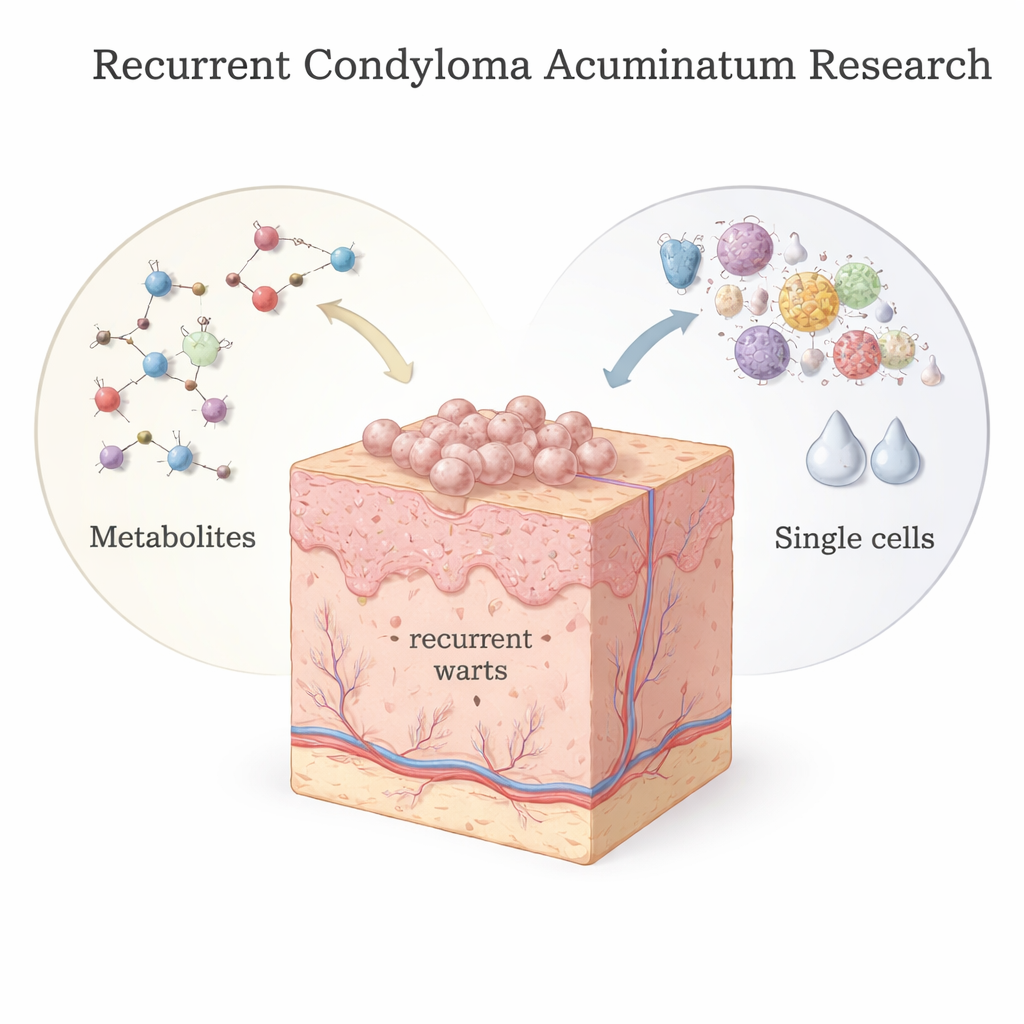
A closer look at a common viral skin problem
Genital warts are caused mainly by “low-risk” types of human papillomavirus (HPV), especially types 6 and 11. These viruses infect the skin’s outer layer, particularly cells called keratinocytes, and push them to grow into soft, cauliflower-like bumps. Although these infections are usually not dangerous in terms of cancer, they can cause pain, itching, and significant emotional distress. Current treatments focus on destroying visible warts or nudging the immune system, but they do not always clear the underlying viral infection. As a result, many patients see new warts appear at the same sites, sometimes within a year of apparently successful therapy.
Reading the chemistry of relapsing skin
The researchers first examined the small molecules, or metabolites, present in skin from people with primary genital warts, people with recurrent warts, and healthy volunteers. They found broad shifts in the chemical “landscape” of the skin, with dozens of metabolites altered in recurrent cases. Changes were especially strong in pathways that handle building blocks of DNA and RNA, vitamin C–related compounds, fats that form cell membranes, and amino acids such as arginine and proline. Some molecules linked to cell growth and energy supply were more abundant, while others involved in normal cellular housekeeping were reduced. These patterns suggest that recurrent warts sit in a metabolically unusual environment that may quietly favor viral persistence and rapid regrowth of lesions.
Single cells reveal a restless, imbalanced epidermis
To see how individual cells were behaving, the team used single-cell RNA sequencing, a technique that reads which genes are switched on in thousands of individual cells at once. In skin samples from people with recurrent warts, they identified all the major skin and immune cell types but noticed a striking shift within the keratinocytes themselves. There were more basal keratinocytes—the “stem-like” cells at the bottom of the epidermis that fuel growth—and fewer fully matured cells at the surface. Genes that drive energy production, stress defenses, and DNA building were ramped up, while genes helping cells complete their normal life cycle and differentiation were dialed down. In particular, enzymes that shape the levels of small growth-supporting molecules called polyamines, and those that guard against a form of cell death tied to fat oxidation, were markedly altered.
Immune cells stuck in an unhelpful state
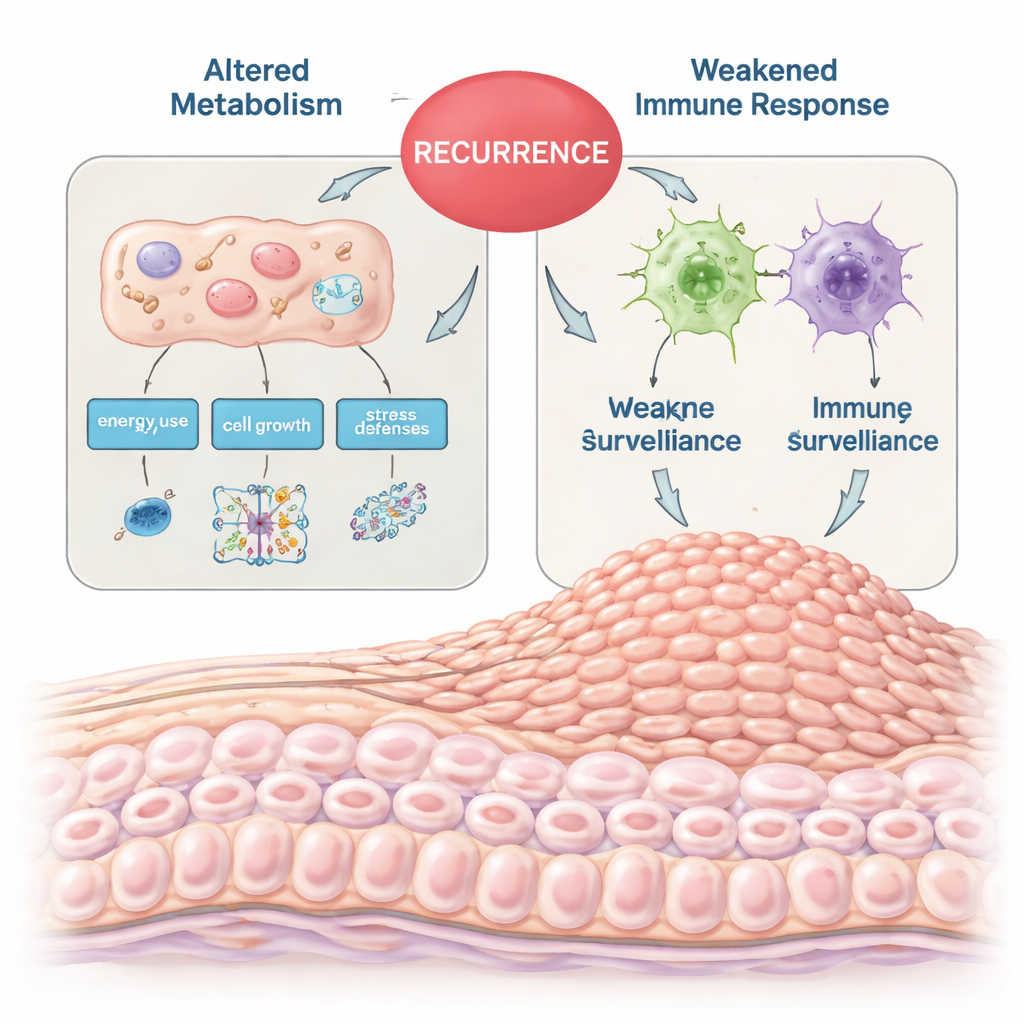
The same single-cell approach also exposed subtle but important changes in the local immune system. Specialized white blood cells, including M2-type macrophages and dendritic cells, were present in both healthy and diseased skin, but their gene activity differed in recurrent warts. In recurrent lesions, these cells showed signatures of altered handling of viral material and cell debris, and reduced activity of key enzymes involved in polyamine metabolism, echoing the metabolic shifts seen in keratinocytes. Rather than mounting a brisk, clearing response, the immune cells appeared to be in a reprogrammed, less effective state that could allow HPV-infected cells to persist while still promoting a tissue environment that encourages growth.
What this means for treatment and prevention
Taken together, the findings paint recurrent genital warts as more than a simple surface infection. They resemble a small, self-sustaining ecosystem in which skin cells and immune cells share a rewired metabolic program that promotes excessive growth, blocks proper maturation, and blunts effective immune surveillance. For patients, the message is hopeful: by identifying molecules and pathways that are consistently disturbed—such as those controlling polyamines, antioxidant defenses, and nucleotide production—this work points to new targets for drugs or topical therapies designed not just to remove visible warts, but to reset the local biology and reduce the risk of them coming back.
Citation: Wei, Y., Xu, Y., Feng, C. et al. Integrative metabolomic and single-cell transcriptomic analysis of recurrent condyloma acuminatum in humans. Sci Rep 16, 7281 (2026). https://doi.org/10.1038/s41598-026-37989-8
Keywords: genital warts, human papillomavirus, skin metabolism, single-cell analysis, immune microenvironment