Clear Sky Science · en
Sustainable urban farming using a smart hydroponic approach using IoT and real time monitoring
Fresh Food Grown Right at Home
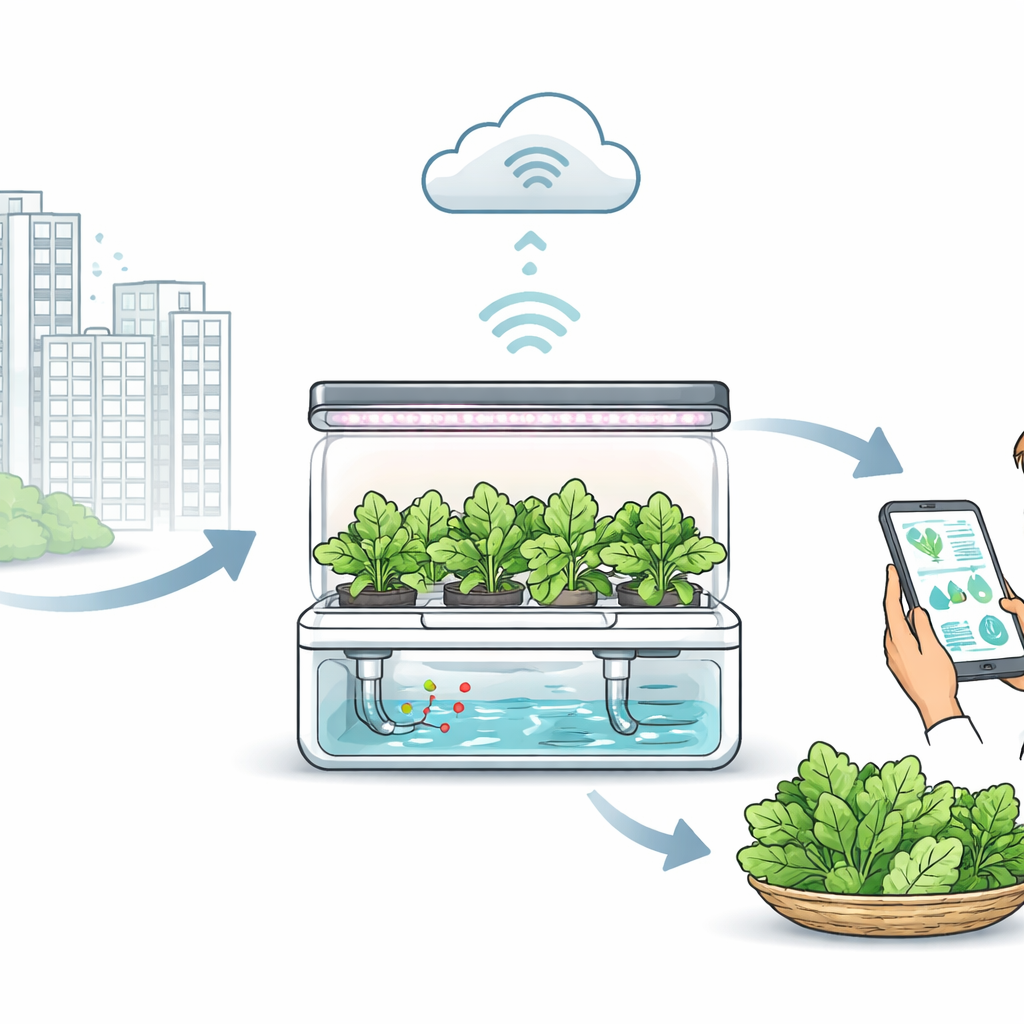
Imagine harvesting crisp kale for dinner without stepping outside or worrying about bad weather, pests, or soil. This study explores a compact, water‑based “indoor garden” that uses simple electronics and an internet connection to keep plants happy on a crowded city countertop. By watching over light and water conditions in real time, the system aims to help urban households grow more food with less space, less guesswork, and more reliability.
Why Cities Need New Ways to Grow
As the world population climbs toward nearly 10 billion, demand for fresh produce is rising while farmland is squeezed by cities and damaged by floods, storms, and soil loss. Traditional farming often relies on large open fields, heavy fertilizer use, and stable weather – things many cities, such as land‑scarce Singapore, do not have. Hydroponics offers a way around these limits by growing plants in nutrient‑rich water instead of soil, inside controlled environments that can sit in a kitchen, on a balcony, or in a small indoor farm. The authors link this idea to national efforts like Singapore’s “30 by 30” plan, which aims to produce a larger share of food locally using smarter technology.
A Small Smart Garden on the Counter
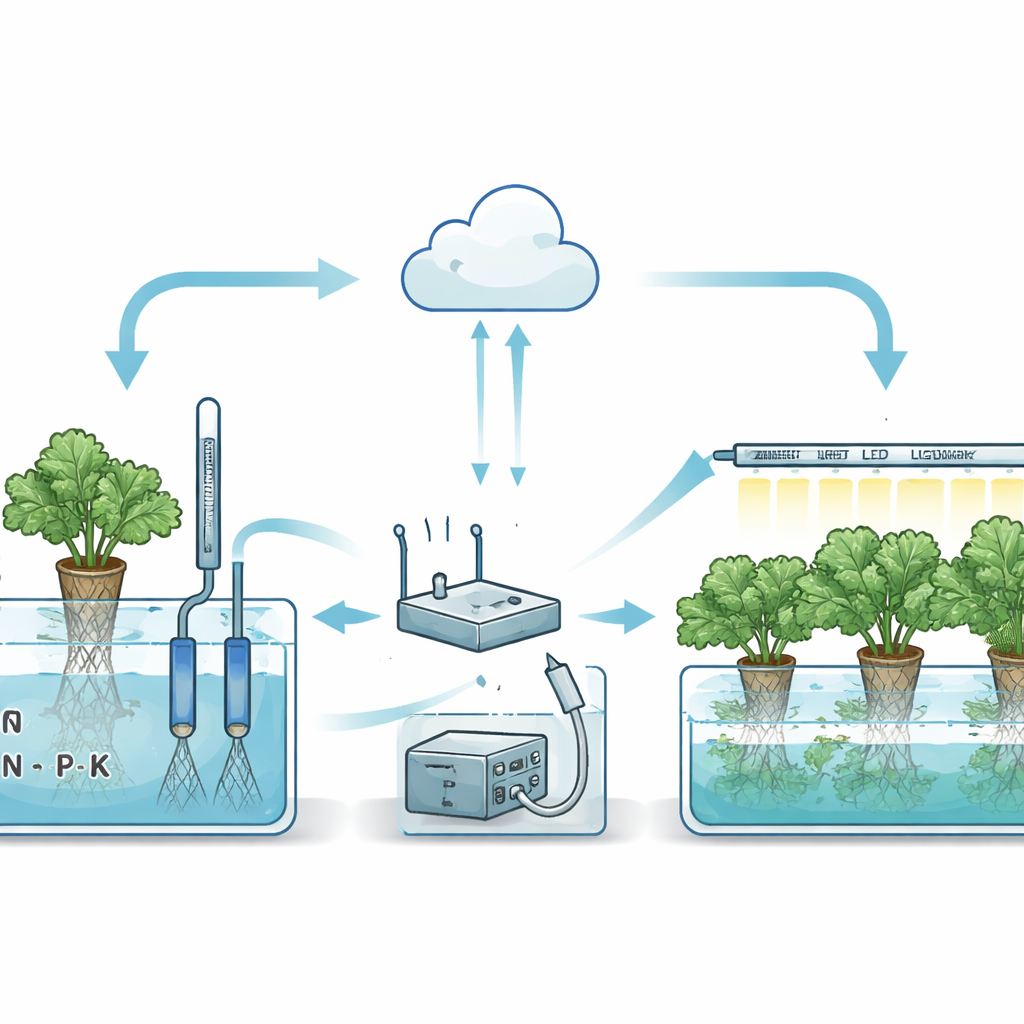
The researchers built a household‑sized hydroponic kit designed specifically for city apartments. The unit is a tidy plastic tank that holds a few liters of nutrient solution and supports nine small baskets of kale. Above it sits an adjustable LED lamp that mimics the sun’s daily cycle, while a low‑power pump keeps the water moving so roots stay oxygenated and evenly fed. Two key electronic “eyes” dip into the tank: a waterproof temperature probe and a pH sensor, which together track how warm the water is and how acidic or alkaline it becomes. An Arduino Wi‑Fi board reads these sensors, drives the light and pump on a programmed schedule, and sends live data to a cloud app so users can check their plants from a phone or laptop.
Putting Light and Temperature to the Test
To see how well this smart garden actually grows food, the team ran four side‑by‑side trials using kale as a model leafy green. They compared two kinds of lighting – steady LED versus changing natural daylight – and two room conditions – normal room temperature versus air‑conditioned. In every case, nine kale plants grew for three weeks in the same nutrient recipe and layout. Throughout the test, the system logged water temperature and pH online, while the researchers regularly counted leaves, and measured stem and root length by hand. This mix of automatic sensing and simple measurements let them connect what the electronics saw with how the plants looked and weighed.
What Helps Indoor Kale Thrive
Clear patterns emerged. The best performer was the setup with LED lighting in a regular‑temperature room. These plants produced about 15–20% more leaves and biomass than the other three setups. In this case, the water stayed in a comfortable range of roughly 28–30 °C and the pH hovered between about 6.5 and 7.0 – conditions that matched faster root growth and thicker stems. In contrast, plants under natural window light grew more slowly, especially during Singapore’s rainy monsoon season, when clouds and cool spells reduced light and chilled the water. The air‑conditioned setups, particularly when combined with natural light, had the poorest growth, shorter roots, and larger swings in pH, partly due to cooler, less stable conditions and algae building up in the tank.
From Prototype to Smarter City Farming
While this tabletop system is only a first step, it shows that low‑cost sensors and a basic internet connection can make home hydroponics more predictable and productive. By automatically tracking water temperature and pH and tying those readings to plant growth, the study identifies practical “sweet spots” for kale and demonstrates that steady LED lighting in a mild room environment clearly outperforms relying on the weather. The authors envision future versions that also measure nutrient strength and light intensity and that can adjust fertilizer and pH on their own. In everyday terms, their work moves indoor gardening closer to a plug‑and‑play appliance – one that helps city dwellers grow a steady supply of fresh greens with minimal fuss, even in the smallest homes.
Citation: En, L.W., Lim, C.L., Kok, C.L. et al. Sustainable urban farming using a smart hydroponic approach using IoT and real time monitoring. Sci Rep 16, 8361 (2026). https://doi.org/10.1038/s41598-026-37971-4
Keywords: urban farming, smart hydroponics, indoor gardening, IoT agriculture, LED grow lights