Clear Sky Science · en
Spatio-temporal trends in COVID-19 morbidity and mortality due to elderly: a global perspective
Why Older People Matter in a Global Pandemic
As the world’s population ages, a crucial question has emerged from the COVID-19 pandemic: how much did having more older people in a country shape the toll of infections and deaths? This study looks across nearly every country on Earth to see how the share of people aged 65 and over was linked to COVID-19 illness and death, and how that relationship changed over the first three years of the pandemic. Its findings shed light on why some regions were hit harder than others and what that means for future outbreaks in an aging world.
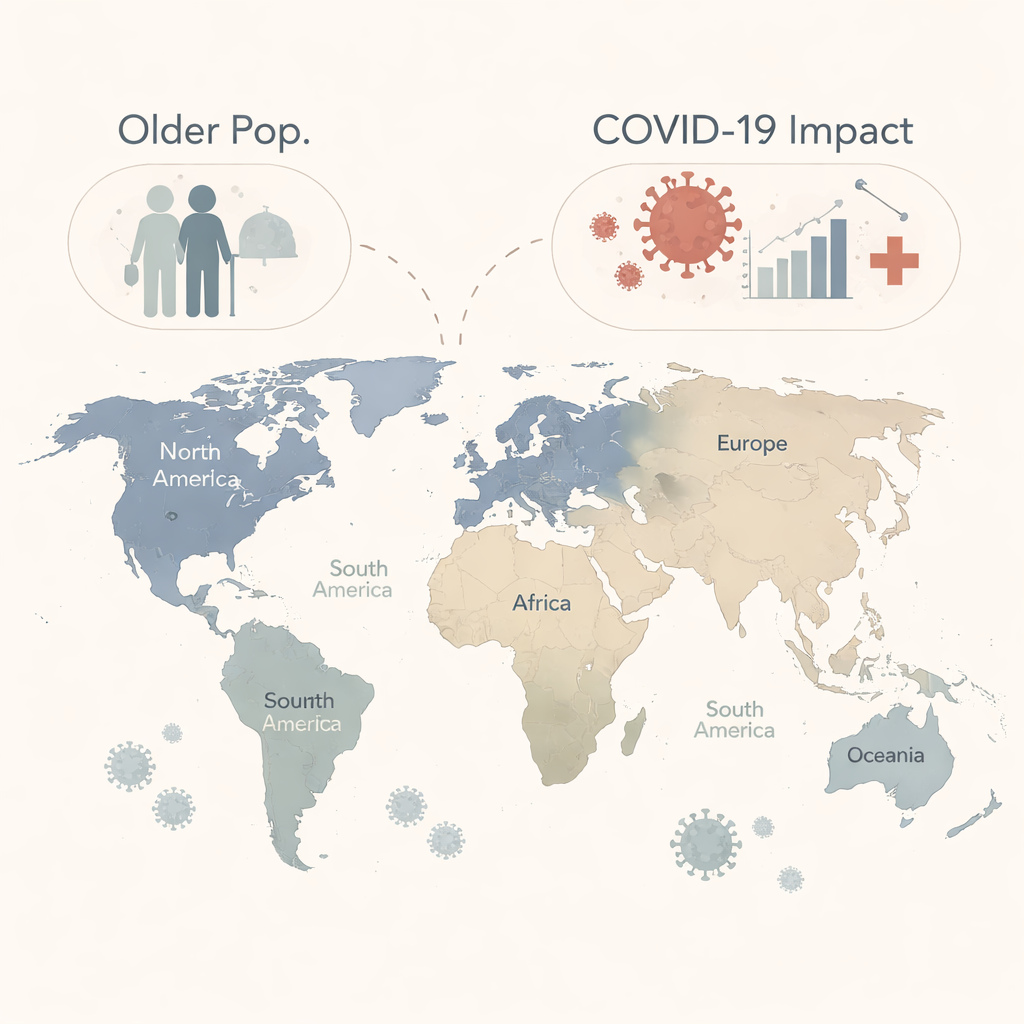
Following the Virus Around the World
The researchers gathered COVID-19 case and death counts from the Our World in Data project and combined them with World Bank figures on national populations and the percentage of people aged 65 and older. After removing countries with missing records, they analyzed data from 179 countries between 2020 and 2022. They converted raw counts into illness (morbidity) and death (mortality) rates per 1,000 people, allowing fair comparisons across countries of very different sizes. Countries were grouped by continent and year so that patterns over time and across regions could be traced.
Turning Big Numbers into Clear Trends
To understand how aging and COVID-19 were connected, the team used statistical models that relate the percentage of older adults in a population to its COVID-19 illness and death rates. First, they applied standard straight-line fits to estimate how much cases or deaths rose for each 1% increase in the elderly share. Because pandemic data are often uneven—some countries report extremely high or low values—they also used a more robust approach called Theil–Sen regression, which is less swayed by extreme outliers. This two-track strategy allowed them to check that their results were not driven by a few unusual countries.
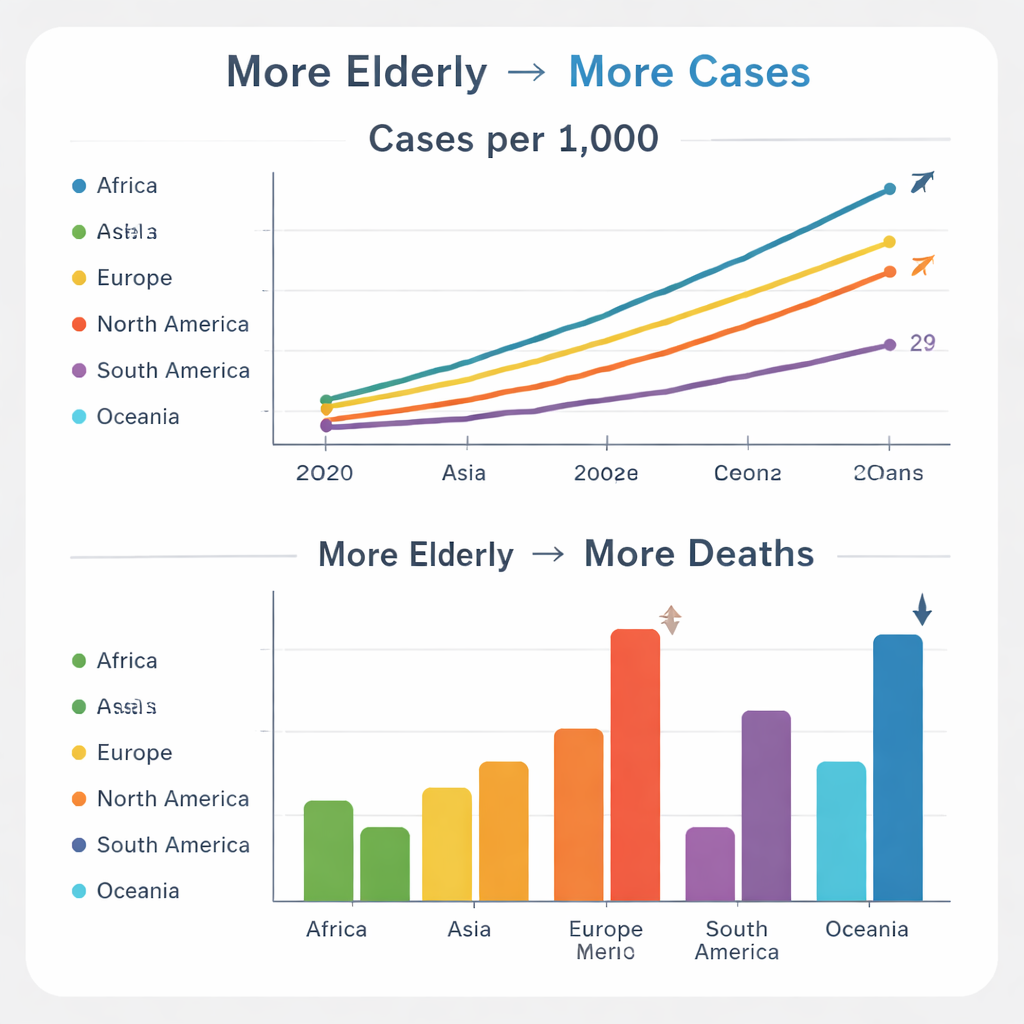
Where Older Populations Paid the Highest Price
The study found that, worldwide, countries with more older people generally suffered higher COVID-19 illness and death rates. Europe stood out with both the highest proportion of elderly residents and the highest average rates of infection and death per 1,000 people, followed by North America and Oceania. When the researchers looked at how quickly illness rates climbed as societies aged, Europe and Oceania showed some of the steepest increases. For death rates, North America and South America showed particularly strong rises as the share of older adults grew, with Europe and Africa also displaying clear links between aging and mortality.
Exceptions That Prove the Rule
Not every country with many older adults fared badly, which highlights the importance of policy and health systems. The United States, for example, combined a large elderly population with high COVID-19 illness and death. But Japan and Australia, also home to many older people, had relatively lower COVID-19 mortality. This contrast suggests that strict containment measures, strong healthcare capacity, and timely public health responses can blunt the impact of a pandemic even in aging societies. In regions such as Africa and parts of Asia, where populations are younger overall, illness and death rates were generally lower, though limited testing and reporting may have hidden some of the true burden.
What This Means for the Future
In simple terms, the study shows that an older population tends to go hand in hand with more COVID-19 cases and deaths, but that smart policies can make a big difference. As the global share of people aged 65 and over continues to climb—especially in Europe, North America, and the Asia-Pacific region—future outbreaks of COVID-19–like diseases are likely to pose particular risks to older adults. By carefully mapping where and when illness and death surged along with aging, this work provides evidence to help governments design stronger protections, from vaccination strategies to hospital planning, that can save lives in the next pandemic.
Citation: Jeasoh, J., Lim, A., Jeharsae, R. et al. Spatio-temporal trends in COVID-19 morbidity and mortality due to elderly: a global perspective. Sci Rep 16, 7399 (2026). https://doi.org/10.1038/s41598-026-37968-z
Keywords: COVID-19 and aging, elderly vulnerability, global pandemic trends, morbidity and mortality, population ageing