Clear Sky Science · en
Machine learning based identification of key predictors and socioeconomic inequalities in the co-existence of diabetes and hypertension among Bangladeshi adults
Why this matters for everyday health
High blood pressure and type 2 diabetes are often treated as separate problems, but many adults live with both at the same time. This double burden sharply raises the risk of heart disease, kidney damage, and other serious complications. Using nationwide data from Bangladesh, this study asks a simple but vital question: who is most likely to face both conditions together, and why? By combining large survey data with modern computer tools, the researchers reveal how age, body weight, wealth, and place of living shape this hidden health crisis—and how it is unevenly shared across society.
Taking the pulse of a nation
The researchers drew on the 2022 Bangladesh Demographic and Health Survey, which collected health information and direct measurements from a large sample of 13,541 adults aged 18 and older. Nurses and technicians measured blood pressure, blood sugar, height, and weight in people’s homes, alongside questions about education, income, family size, water and toilet facilities, and smartphone use. This allowed the team to identify who had high blood pressure, who had diabetes, and who had both. They found that nearly three in ten adults had high blood pressure, about one in six had diabetes, and roughly 7 percent had both conditions together—a sizeable share given the country’s large population. 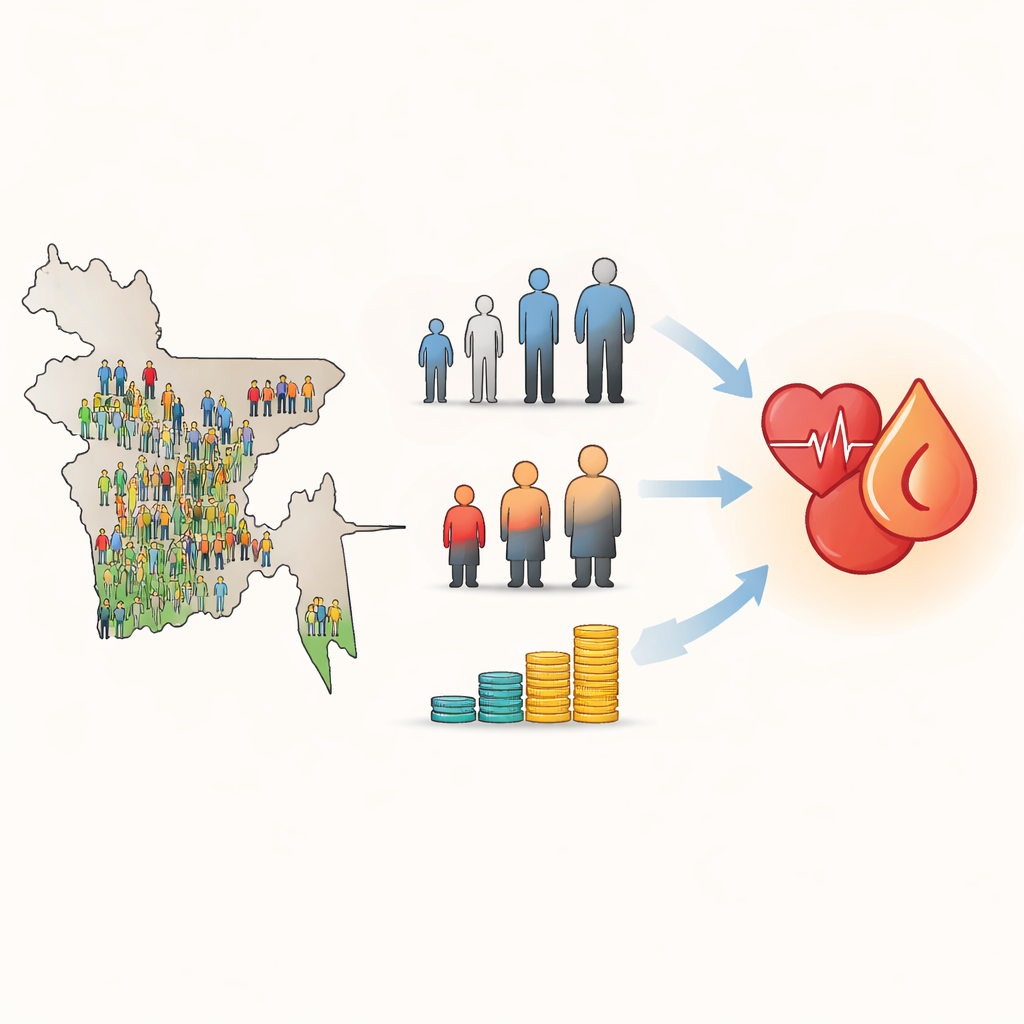
Who faces the biggest risk
Patterns in the data revealed clear groups at higher risk. Adults aged 35 and older were much more likely to have each condition, and especially their coexistence, than younger adults. Extra body weight also mattered: people who were overweight or obese had sharply higher odds of both high blood pressure and diabetes, while underweight adults were less likely to have either. Women showed higher levels of blood pressure, blood sugar, and combined disease than men. Urban residents, people with college-level education, and those from wealthier households were more likely to live with both conditions. Certain regions—particularly Chattogram, Dhaka, and Sylhet—stood out with higher rates than others, pointing to the influence of local environments and lifestyles.
What the computers uncovered
To move beyond simple comparisons, the team used machine learning, a set of computer methods that can sift through many factors at once to see which ones matter most. They trained models to predict who had high blood pressure, diabetes, or both, and then used a technique called SHAP to rank the importance of each predictor. Age emerged as the single strongest driver across all three outcomes, followed closely by body mass index (a measure of weight relative to height). Wealth and region were also influential, while features like toilet type and water source had smaller predictive power, even though some unsafe water sources were linked to higher risk. Interestingly, larger family size appeared to protect against high blood pressure, possibly by spreading stress and responsibilities across more people. 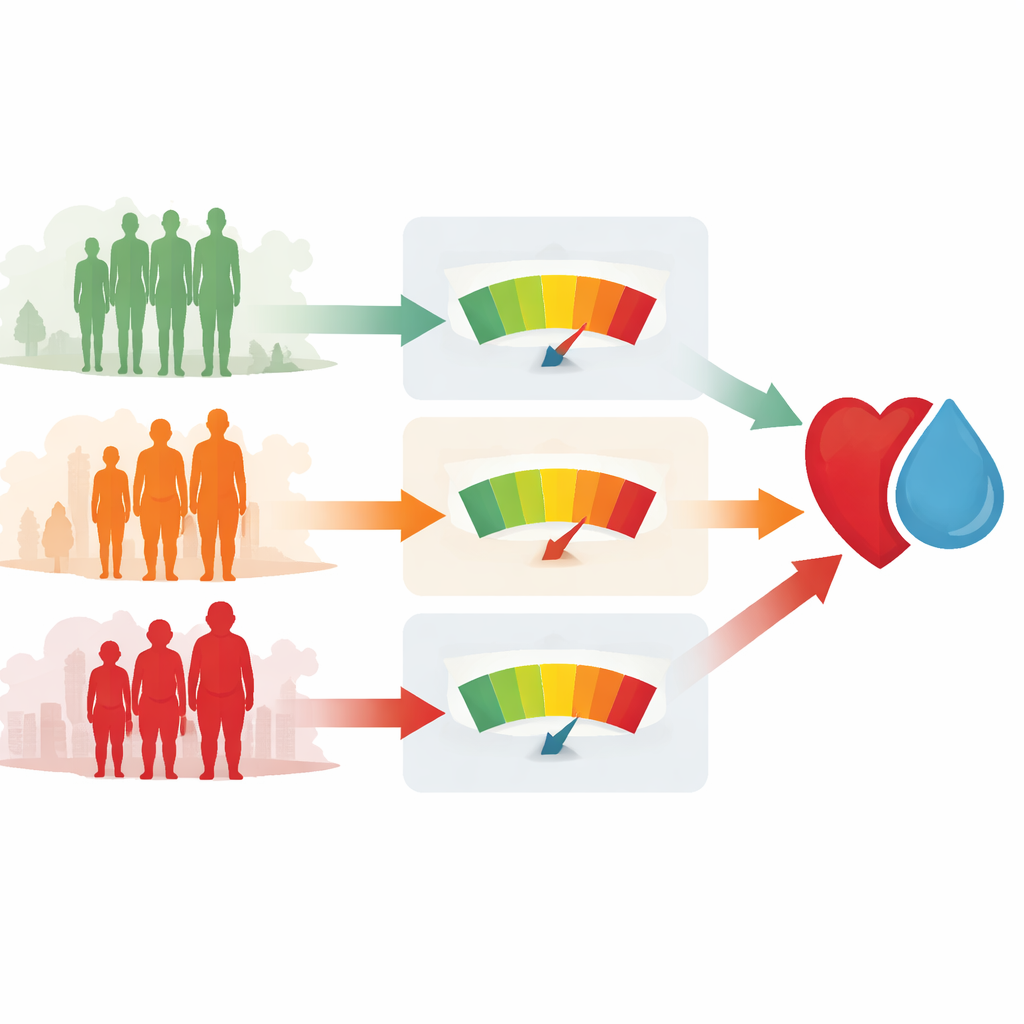
Health problems tilted toward the better-off
The study also examined inequality—whether the combined burden of diabetes and high blood pressure falls more on poorer or richer households. By drawing concentration curves and computing an index of inequality, the researchers showed that coexistence of the two conditions is actually more common among wealthier adults in Bangladesh. This pattern held across all eight administrative divisions of the country, although some, like Sylhet, showed stronger gaps than others. Extra body weight and household wealth together explained a large share of this inequality, with education, region, and urban residence adding smaller pieces. In short, in today’s Bangladesh, older, heavier, and better-off adults are more likely to face this double health threat than the poorest.
What this means for prevention and policy
For a layperson, the take-home message is straightforward: as people age, gain weight, and move into more comfortable urban and affluent lifestyles, their chances of developing both high blood pressure and diabetes rise steeply. This study suggests that health policies should not focus only on the poorest or treat everyone the same. Instead, Bangladesh needs tailored programs that target older adults and high-weight, higher-income groups with regular screening, support for healthy eating and physical activity, and better guidance on safe water and sanitation. By addressing these social and environmental roots—rather than just treating disease after it appears—the country can slow the growing tide of chronic illness and move closer to global goals for longer, healthier lives.
Citation: Ridoy, R.R., Mothashin, M., Hossain, M.A. et al. Machine learning based identification of key predictors and socioeconomic inequalities in the co-existence of diabetes and hypertension among Bangladeshi adults. Sci Rep 16, 8233 (2026). https://doi.org/10.1038/s41598-026-37966-1
Keywords: hypertension, type 2 diabetes, Bangladesh, socioeconomic inequality, machine learning