Clear Sky Science · en
Fit analysis of 3D-printed versus thermoformed clear aligners for labial tooth movement using micro-CT: an in vitro study
Why the fit of clear aligners matters
Clear plastic aligners have transformed orthodontic care by offering a nearly invisible alternative to metal braces, but how closely these trays hug the teeth can make the difference between smooth tooth movement and disappointing results. This study looks under the surface—literally—using high-resolution X‑ray scans to compare how well different kinds of aligners fit around teeth as they are pushed into a new position.
Different ways to make a clear tray
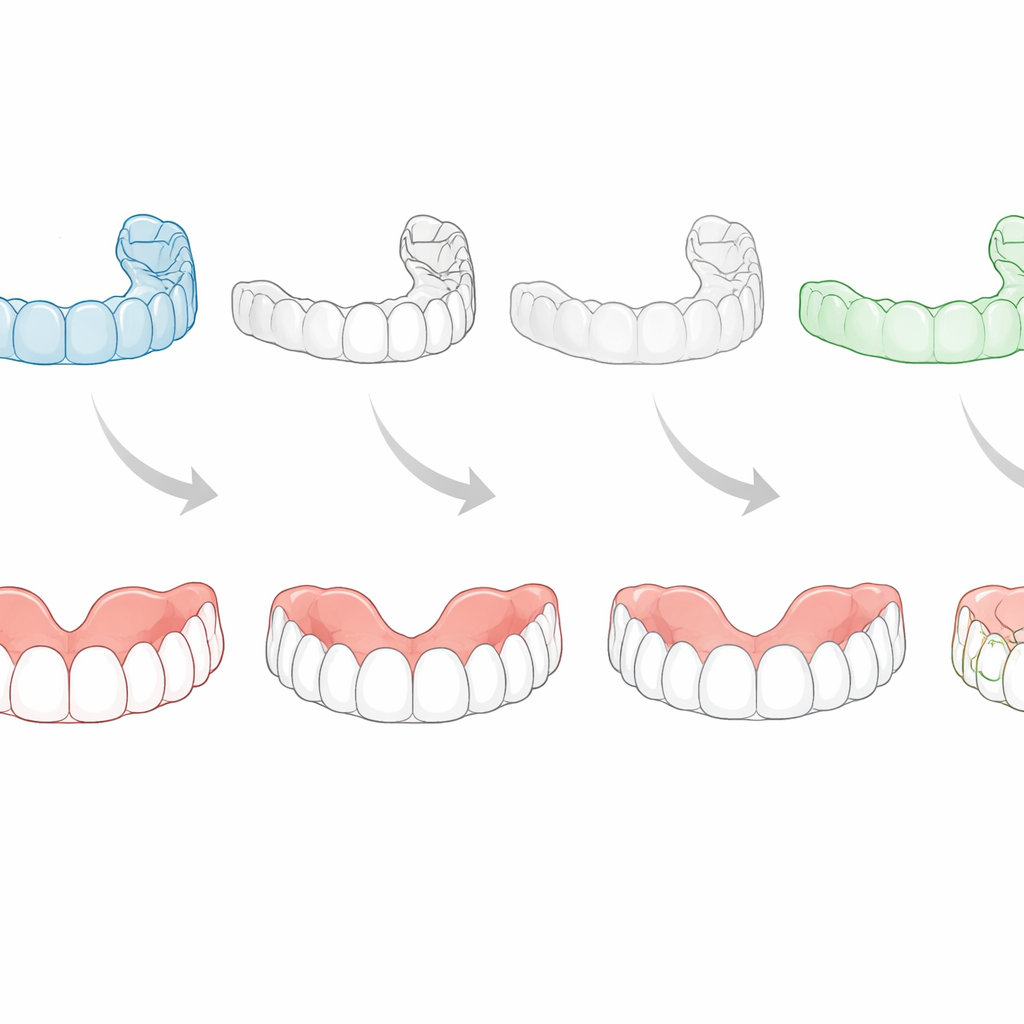
Today’s clear aligners are made in two main ways. Traditional trays are created by heating thin plastic sheets and vacuum-forming them over a tooth model. These can be simple single‑layer plastics or more advanced multi‑layer sheets that sandwich a softer, springier core between stiffer outer shells. A newer approach skips the heating step entirely: aligners are built directly in a 3D printer from a special liquid resin that hardens when exposed to light. Each manufacturing method uses materials with distinct stiffness and “springiness,” which may change how well the tray conforms to teeth and how much force it can deliver.
A closer look using 3D X‑ray scanning
To compare these approaches, the researchers built three precise upper jaw models: one with straight teeth and two in which the upper right front tooth was nudged outward by 0.3 or 0.5 millimeters, mimicking a single treatment step in real orthodontic care. On each model they placed three types of aligners: 3D‑printed trays made from a flexible, shape‑memory resin; single‑layer thermoformed trays made from a rigid plastic; and multi‑layer thermoformed trays that combine a hard shell with an elastic core. Using micro‑computed tomography, a kind of three‑dimensional X‑ray microscope, they measured the tiny gaps between tooth and plastic at many points on front and back teeth.
How the trays behaved as teeth moved
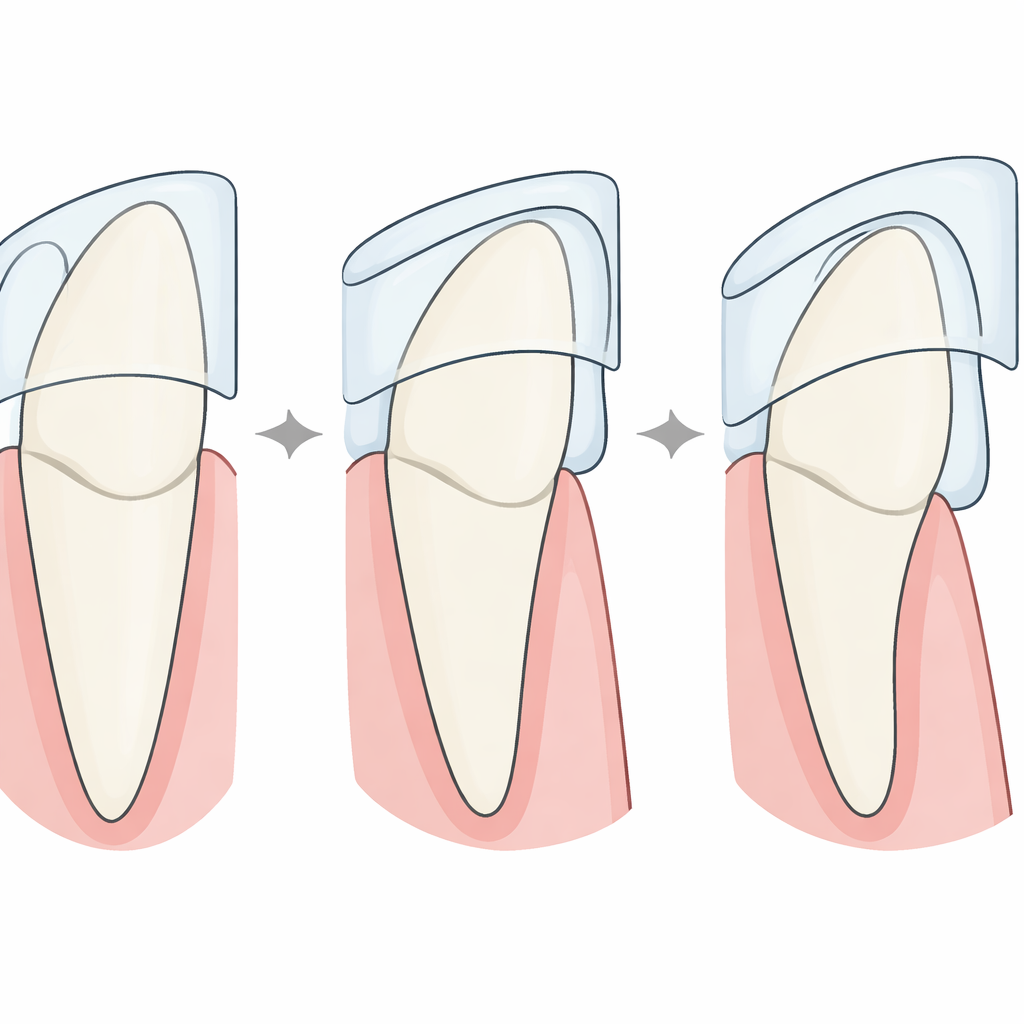
Overall, the 3D‑printed aligners showed the largest gaps between tooth and tray, regardless of how far the tooth was displaced. In other words, they started out fitting more loosely and did not change much as the tooth was pushed further outward. In contrast, both kinds of thermoformed trays fit more snugly at the beginning, especially the single‑layer plastic, but their gaps grew noticeably as the tooth displacement increased—most strongly at the tooth being moved and its neighbors. The back molars, which served as anchors, hardly changed at all. These patterns suggest that stiffer thermoformed plastics deform and lift away from teeth as forces rise, while the more flexible printed resin keeps a steadier, though less tight, fit.
Where the gaps really open up
The micro‑CT images also revealed that not all tooth surfaces behave the same way. For the thermoformed trays, the largest increases in gap were found on the side of the front tooth facing the direction of movement and along the biting edges, where the plastic had to bend the most. The 3D‑printed trays showed a different pattern: some areas on the front teeth actually became closer at higher displacement, hinting that the shape‑memory resin can gradually mold itself around complex contours. However, even with this adaptability, the printed aligners still had larger average gaps than their thermoformed counterparts.
What this means for patients and clinicians
From a practical standpoint, the study shows that how an aligner is made—and how far a tooth is asked to move in a single step—strongly influences how well the tray fits during treatment. Thermoformed aligners may start out hugging the teeth more tightly, but can lose that close contact as they are stressed, especially near moving front teeth. Printed aligners may fit more loosely overall yet maintain their shape better as movement increases. The authors emphasize that this work was done in the lab on rigid models, not in real mouths, but it highlights that aligner materials and step size need to be chosen thoughtfully to balance comfort, control of tooth movement, and treatment time.
Citation: Lim, S.Y., Choi, SH., Yu, HS. et al. Fit analysis of 3D-printed versus thermoformed clear aligners for labial tooth movement using micro-CT: an in vitro study. Sci Rep 16, 7976 (2026). https://doi.org/10.1038/s41598-026-37964-3
Keywords: clear aligners, 3D printing, orthodontics, dental materials, micro-CT