Clear Sky Science · en
Legume cover crops ameliorate soil acidity and enhance nutrient availability in South African sugarcane fields
Why healthy soil matters for sweet crops
Sugarcane sweetens much of the world’s food and drink, but the soils it grows in, especially in Africa, are under growing pressure from climate change and decades of intensive farming. In South Africa’s KwaZulu-Natal province, small-scale farmers depend on rainfed sugarcane, leaving their fields exposed to erratic rainfall, drought, and soil damage from repeated planting and heavy fertiliser use. This study asks a practical question with big consequences: can simple legume cover crops be used to repair acidic, nutrient-poor soils and make sugarcane farming more resilient under a changing climate?
Different coastal lands, different soils
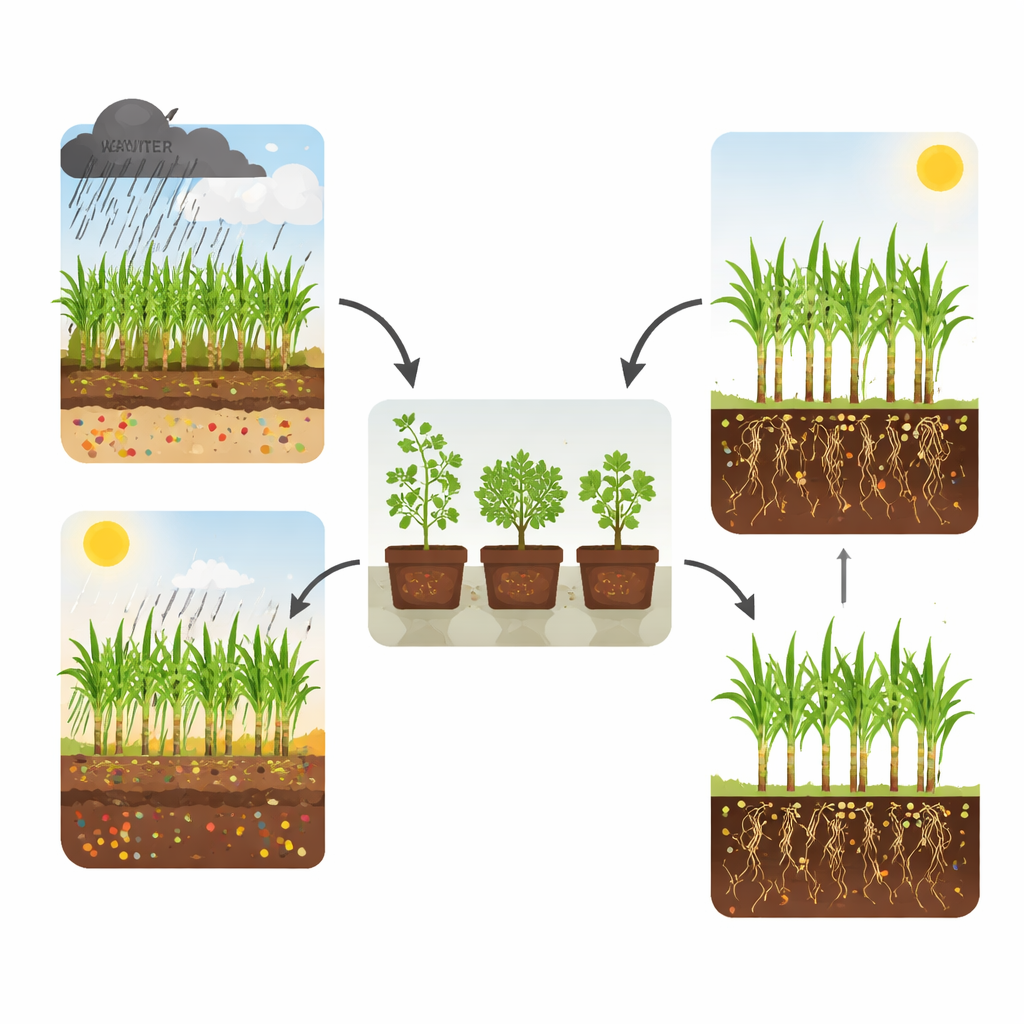
The researchers first compared soils from five rainfed sugarcane plantations spread across two coastal vegetation types: the wetter Maputaland Coastal Belt and the somewhat drier KwaZulu-Natal Coastal Belt Grassland. Using climate data for temperature and rainfall together with detailed soil tests, they found clear patterns. Fields in the higher-rainfall Maputaland belt tended to have more acidic soils that had lost key nutrients such as phosphorus, potassium, calcium, and magnesium. In contrast, the grassland belt, with slightly lower rainfall, generally had less acidic and more fertile soils. This reflects a simple but powerful process: heavy rain can wash nutrients out of the root zone and speed up chemical reactions that acidify soils over time.
Using data tools to read the land
To untangle which factors mattered most, the team applied modern statistical tools, including principal component analysis and random forest models. These approaches allowed them to look beyond simple one-to-one relationships and see how climate, elevation, and location jointly shaped soil conditions. They found that total rainfall and site were strong predictors of the major nutrients and of exchangeable acidity, a measure of how much acid-forming material is held on soil particles. Exchangeable acidity was predicted very well by the models, and it rose sharply in wetter sites. Soil pH, a more familiar indicator of acidity, was harder to predict, but still clearly linked to rainfall and location. Overall, the message was that where the field is, and how much rain it gets, strongly influences whether it will tend toward fertile, neutral soils or acidic, nutrient-leached ones.
Legume helpers in pots
The second part of the study moved into the greenhouse, where the team tested six legume species—including hairy vetch, common vetch, cowpea, groundnut, pigeon pea, and velvet bean—grown in soils collected from the five plantations. Legumes are often praised for their ability to fix nitrogen and improve soil, so the expectation was that they would enrich the soil with nutrients. Instead, all six legumes lowered the amounts of nitrogen, phosphorus, and potassium left in the soil by the end of the trial. This likely reflects the plants’ high demand for these nutrients while they are growing: they pull nutrients from the soil into their leaves and roots, with the benefits to the soil coming later, after the plant material decomposes. Not all nutrients behaved the same way, however. Two species, common vetch and hairy vetch, clearly increased soil calcium, and four species raised magnesium levels, both of which are important for plant health and for buffering acidity.
Turning sour ground a little sweeter
Perhaps the most striking result was how consistently the legumes improved soil acidity. Across all six species, exchangeable acidity dropped, and pH rose compared to the original, pre-planting soils. Starting from an average pH just under 5 (quite acidic), the legume treatments pushed soils into a less acidic range between about 5.2 and 6.2. Velvet bean produced the largest pH increase, while the two vetch species caused the biggest reductions in exchangeable acidity, cutting it by about half. These shifts are important because less acidic soils make nutrients such as phosphorus and potassium easier for crops to absorb and reduce toxic forms of aluminium that can damage roots. The improvements were especially meaningful for soils from the wetter Maputaland belt, which began with stronger acidity and higher exchangeable acidity than those from the grassland belt.
What this means for farmers and food
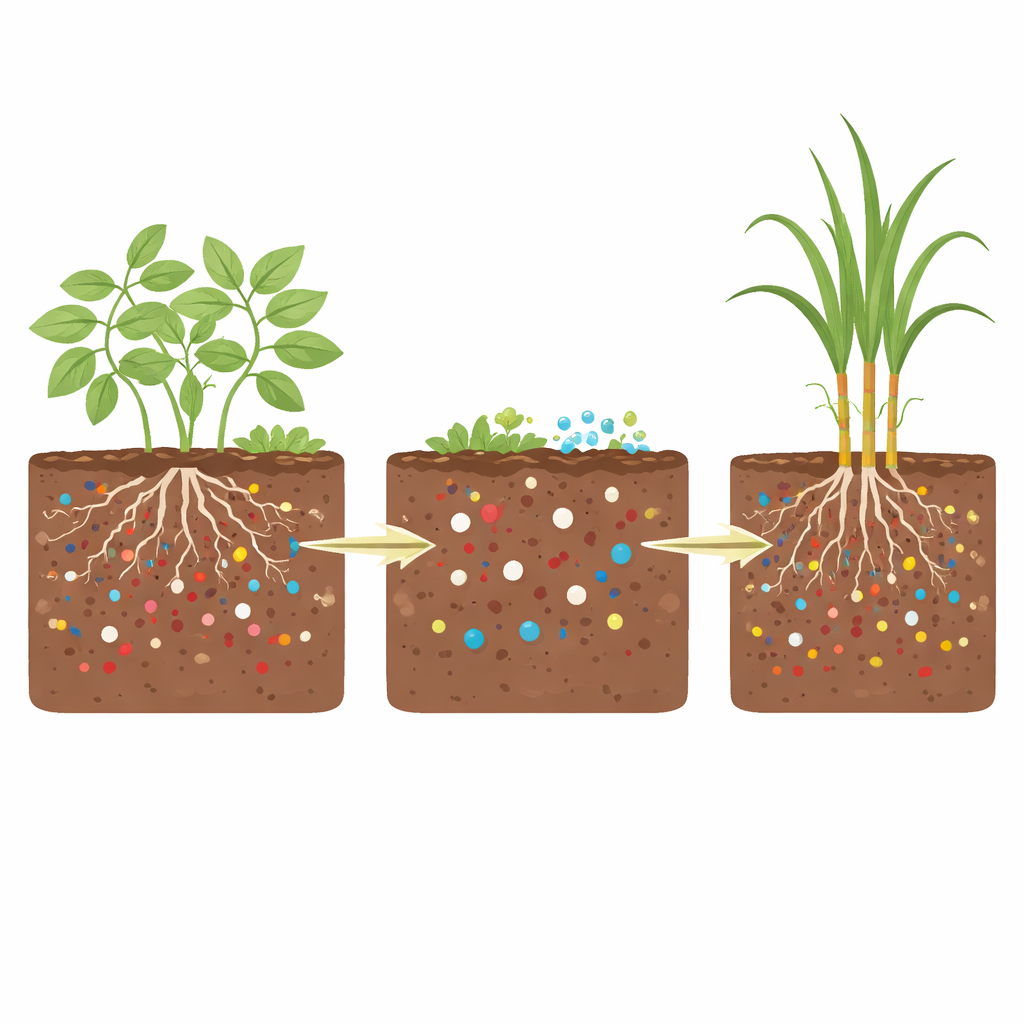
For farmers and decision-makers, the study delivers a clear, accessible message: climate and location set the stage for soil health, but smart use of legume cover crops can nudge even sour, tired fields in a better direction. While the tested legumes did not immediately boost soil nitrogen, phosphorus, or potassium in this short trial, they did reliably reduce harmful acidity and, in the case of common vetch and hairy vetch, raised calcium and magnesium. Because these plants also produce biomass that will later break down and recycle nutrients, their long-term benefits may be greater than the snapshot seen here. Given its drought tolerance and strong performance in easing acidity, common vetch stands out as a promising option to help small-scale sugarcane growers build more fertile, climate-resilient soils without relying solely on lime and synthetic fertiliser.
Citation: Zama, N., Khwela, S., Motaung, M. et al. Legume cover crops ameliorate soil acidity and enhance nutrient availability in South African sugarcane fields. Sci Rep 16, 8789 (2026). https://doi.org/10.1038/s41598-026-37961-6
Keywords: sugarcane, legume cover crops, soil acidity, rainfed farming, climate-resilient agriculture