Clear Sky Science · en
Monitoring public reaction to an unnecessary earthquake early warning alert
Why a False Alarm Matters
Imagine waking up to a blaring siren warning of an earthquake—only to learn later that there was no quake at all. Would you still trust the next warning? This study explores exactly that question. After Israel’s new earthquake early warning system mistakenly treated a huge military explosion as a major quake, more than a million people received an unnecessary alert. Researchers seized this rare real‑world accident to see how such a mistake affects people’s trust, stress, and willingness to follow future warnings.
A Country Living with Sirens
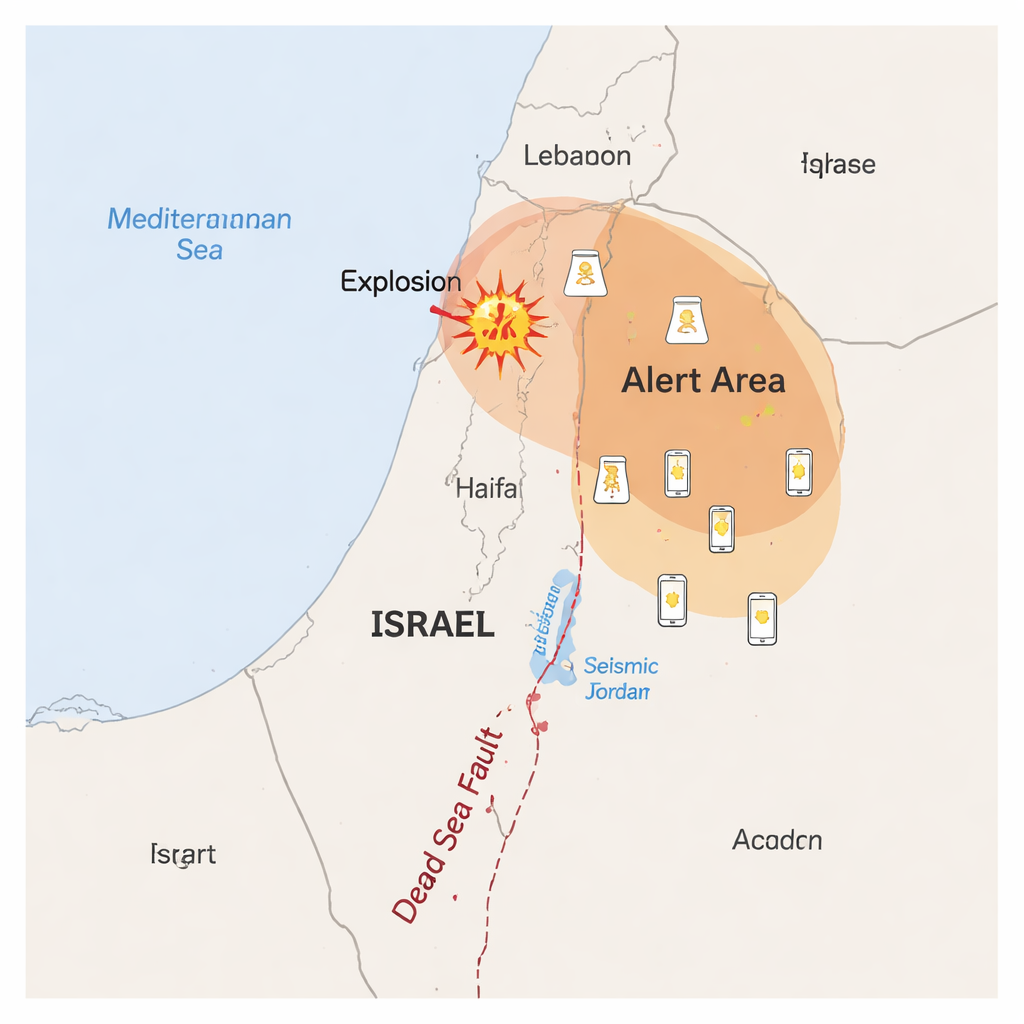
Israel sits on a major fault line capable of producing powerful earthquakes, so the country recently built an earthquake early warning network called Truaa. At the same time, Israelis are already very familiar with missile alerts, which sound often during times of conflict. Both warning types use similar sirens and phone alerts, but they are meant for different dangers and behaviors: missile alerts send people into shelters, while earthquake alerts may urge them to leave older buildings or move to safer spots inside. This overlapping alarm environment makes Israel an unusually good place to study how people react when sirens go off—especially when they turn out to be unnecessary.
The Morning of the False Quake
On October 26, 2024, the Israeli military detonated about 370 tons of explosives in southern Lebanon to destroy underground infrastructure. The blast shook the ground strongly enough that the earthquake warning system misread it as a magnitude 5.2 quake. Because this passed the system’s alert threshold, sirens and phone alerts were triggered across northern Israel. It was the first public earthquake warning the country had ever issued—and it was wrong. Within two days, researchers surveyed over 1,000 adults, including people who had received the alert and others who lived elsewhere and did not, creating a natural side‑by‑side comparison of how a false alarm influences attitudes.
What People Want from Warnings
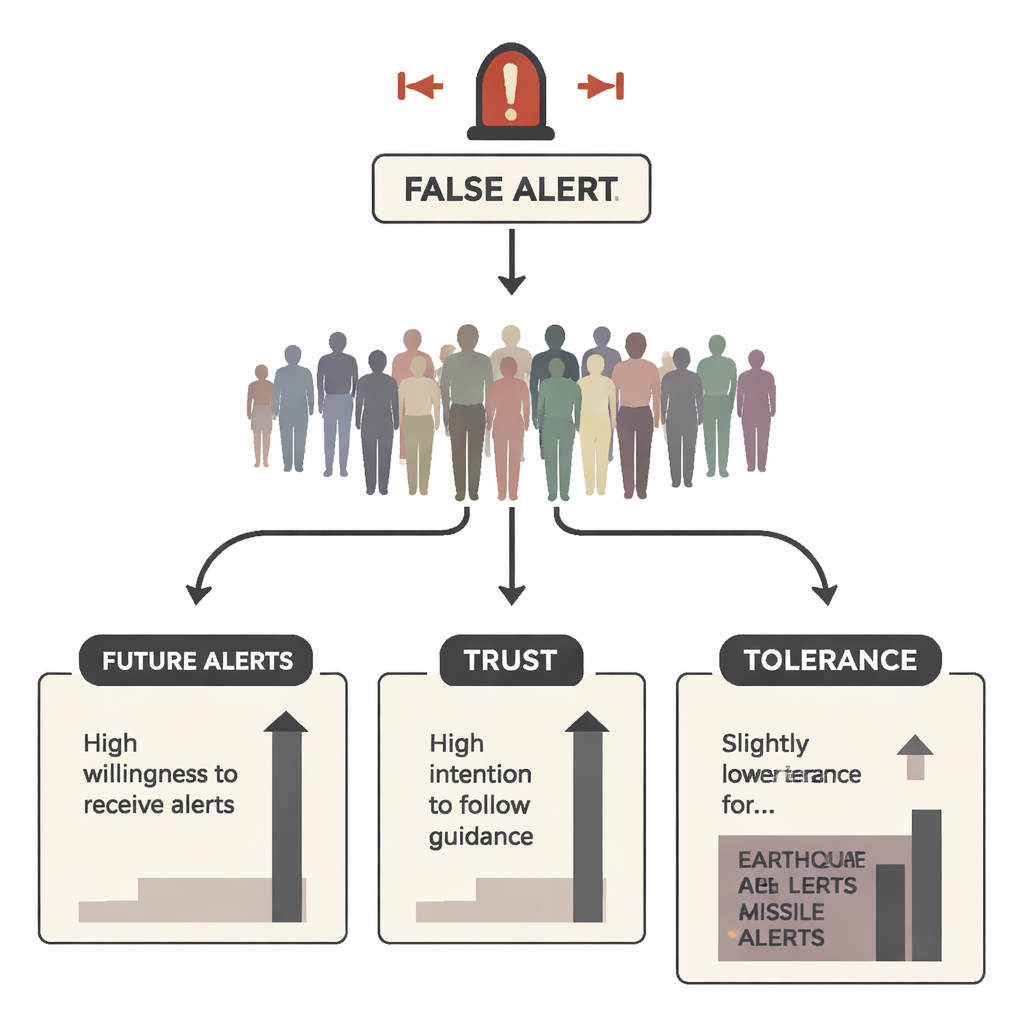
Contrary to fears of a “cry wolf” effect, most respondents wanted more warnings, not fewer. About seven in ten preferred a “non‑conservative” strategy—getting alerts even for earthquakes that are simply felt, not just those likely to cause serious damage. Many favored alerts tailored to their own region, rather than only nationwide notices, suggesting the public values both sensitivity and precision. These views were actually less cautious than in a similar survey done in 2023, before the war and before any earthquake alerts were sent, indicating growing support for early warnings despite a year of frequent missile sirens.
Trust, Tolerance, and Future Behavior
How did the mistaken alert affect trust? People did see false earthquake alerts as a bit less acceptable than false missile alerts, likely because missile threats are more familiar and visibly dangerous. Still, tolerance for both types of mistakes was generally high. Importantly, those who received the false alert were just as trusting and tolerant as those who did not. Around 92% of all respondents said they would probably or definitely follow official guidance in future earthquake alerts, a clear increase over the 2023 survey. Older adults, in particular, tended to view false alerts as more legitimate and were more willing to comply. Among those who got the alert, nearly four out of five took some action—most often going to a fortified room or outside—although many were unsure whether the siren was for missiles or an earthquake, reflecting confusion between the two systems.
What This Means for Everyday People
For the public, the core message is reassuring: one mistaken earthquake warning did not cause people to tune out future alerts. Instead, most said they still want to be warned early, even if that sometimes means false alarms or alerts for minor events. At the same time, the study highlights a need for clearer instructions and better ways to distinguish different types of alerts so people know exactly how to respond. Overall, the findings suggest that early warning systems can afford to err on the side of caution without immediately losing public trust—so long as officials communicate openly, educate the public, and keep improving how warnings are delivered.
Citation: Yagoda-Biran, G., Nof, R.N. & Zwebner, Y. Monitoring public reaction to an unnecessary earthquake early warning alert. Sci Rep 16, 4715 (2026). https://doi.org/10.1038/s41598-026-37958-1
Keywords: earthquake early warning, false alarms, public trust, emergency alerts, risk communication