Clear Sky Science · en
The difference in light intensities during culture affects the production of health-beneficial metabolites in a diatom used in producing aquaculture feed
Why tiny algae matter for our dinner plates
Much of the seafood we enjoy ultimately depends on microscopic plants called microalgae. These tiny organisms are already being grown as a more sustainable alternative to traditional fishmeal in aquaculture feeds. This study shows that by simply changing how brightly we shine light on one common microalga, Chaetoceros gracilis, we can tune the kinds of health‑related substances it produces—potentially improving the nutritional value of farmed fish and shellfish for both animals and people, without sacrificing overall yield.
Lighting up a greener source of feed
Aquaculture now supplies nearly half of the world’s fish and shellfish, but it still relies heavily on feeds made from wild‑caught fish, which puts pressure on oceans and is hard to sustain. Microalgae, which grow using just light, water, and carbon dioxide, offer a promising replacement. Beyond basic nutrients, microalgae also make compounds that can benefit health. Famous examples include astaxanthin, the pigment that gives salmon its pink color and acts as an antioxidant. Because such compounds move up the food chain and accumulate in fish and shellfish, tailoring what microalgae make could add considerable value to aquaculture products.
Turning the light dial instead of changing the cells
The researchers focused on Chaetoceros gracilis, a marine diatom already widely used to feed shrimp larvae and young shellfish. They grew the algae under two steady light levels: a “normal” light similar to typical culture conditions and a “high” light five times brighter. Importantly for farmers, both lighting setups produced almost the same number and size of cells, meaning that overall biomass yield was not compromised. 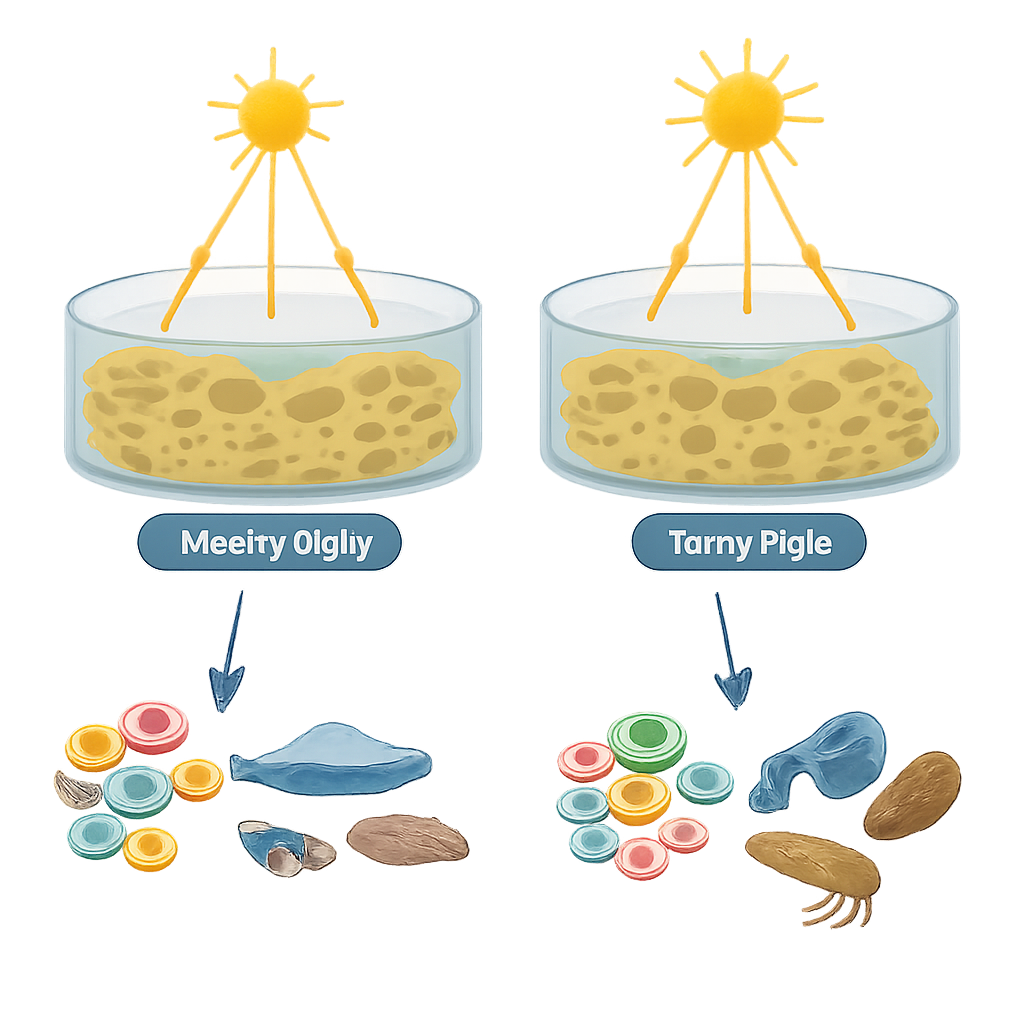
Peeking inside with molecular fingerprints
To map these chemical changes, the team used advanced metabolomics tools that separate and weigh hundreds of substances at once. They analyzed both water‑soluble and fat‑soluble small molecules across the growth period, paying special attention to day nine, when the algae would typically be harvested as feed. Statistical analyses showed that the overall “fingerprint” of compounds differed clearly between normal and high light, especially for water‑soluble molecules. Some substances appeared only under one light condition, while others were present under both but at much higher levels in one or the other. This confirmed that light intensity can steer which health‑related compounds accumulate in the cells by harvest time.
Building different kinds of nutritional value
Under high light, Chaetoceros gracilis was enriched in a suite of compounds often marketed in sports drinks and functional foods: essential amino acids like leucine, isoleucine, threonine, tryptophan, and valine; exercise‑related molecules such as creatine and beta‑alanine; citrulline for muscle and metabolic health; and several antioxidants, including citric acid, carnosine, GABA, theanine, and piperine. Many of these were significantly more abundant, or detected only, in the high‑light cultures. Normal light favored a different set of beneficial molecules, including fucoxanthin (a well‑known antioxidant pigment), anti‑inflammatory fats such as palmitoleic and linolenic acids, and rarer compounds linked to antiviral, anti‑ulcer, or anti‑inflammatory effects, such as ribavirin, cholestenone, nobiletin, and prostaglandin D2. 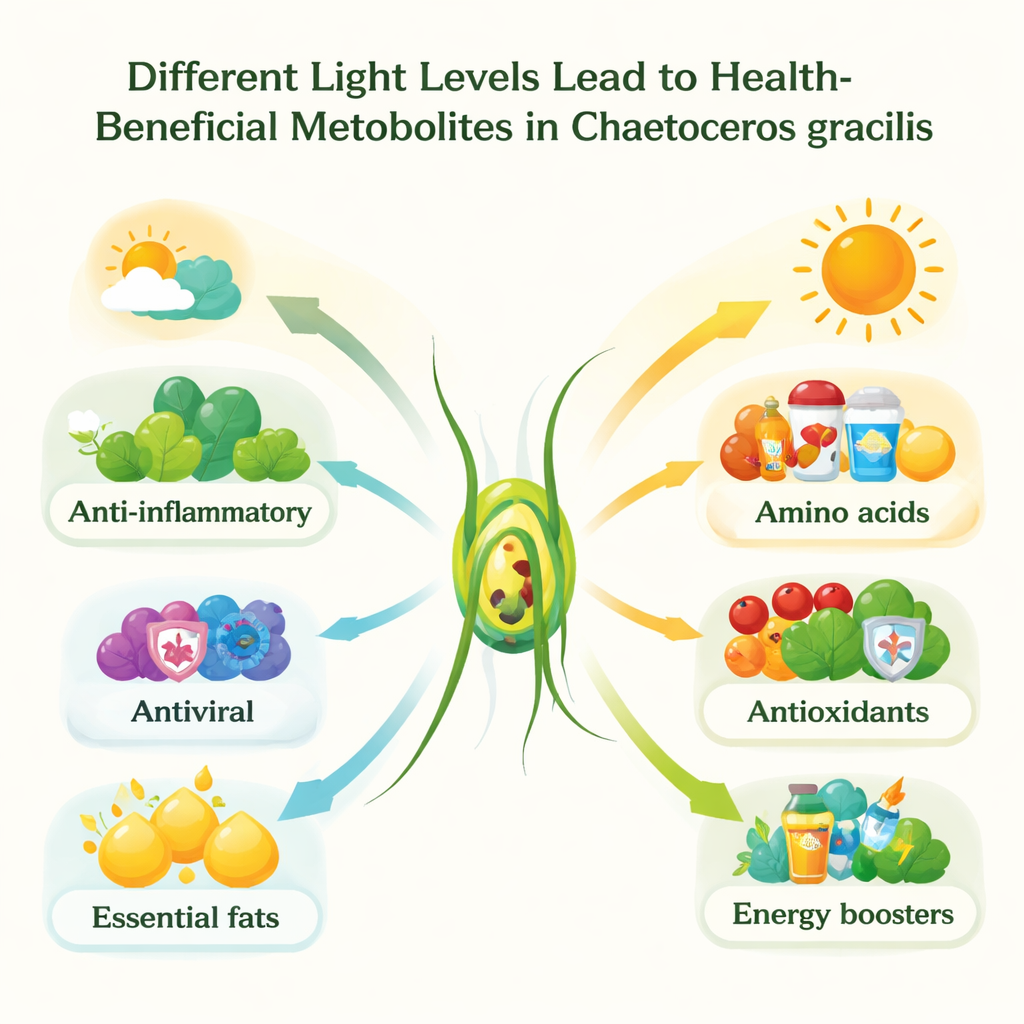
Simple control knob with broad potential
For non‑specialists, the key takeaway is straightforward: by adjusting light intensity alone, growers can shift microalgae toward producing different mixes of health‑supporting compounds, much like choosing between “performance,” “anti‑inflammatory,” or “immune‑supporting” profiles, without reducing how much feed they grow. The work does not yet prove that these substances reach people in meaningful doses through seafood, and some unexpected molecules may come from complex or even contaminating sources. Still, this light‑tuning strategy is easy to apply with existing ponds and photobioreactors, avoids genetic modification, and could be combined with other culture tweaks to further enrich beneficial compounds. In the long run, such approaches may help make aquaculture not only more sustainable, but also a more powerful source of everyday nutritional and health benefits.
Citation: Takebe, H., Sakurai, A. & Imamura, S. The difference in light intensities during culture affects the production of health-beneficial metabolites in a diatom used in producing aquaculture feed. Sci Rep 16, 6817 (2026). https://doi.org/10.1038/s41598-026-37956-3
Keywords: microalgae feed, aquaculture nutrition, light intensity, health-beneficial metabolites, Chaetoceros gracilis