Clear Sky Science · en
Association of bedroom particulate matter, sleep quality and next-day physical performance
Why the air in your bedroom matters
Most of us think of air pollution as something we face outdoors—on busy streets or during smoggy days. This study shows that the tiny particles drifting around your bedroom at night may quietly shape how well you sleep and how strongly you perform physically the next day. By tracking bedroom air quality, sleep, and official fitness test results in university students, the researchers reveal an invisible link between nighttime air and daytime endurance that could matter for anyone who wants to stay healthy and active.
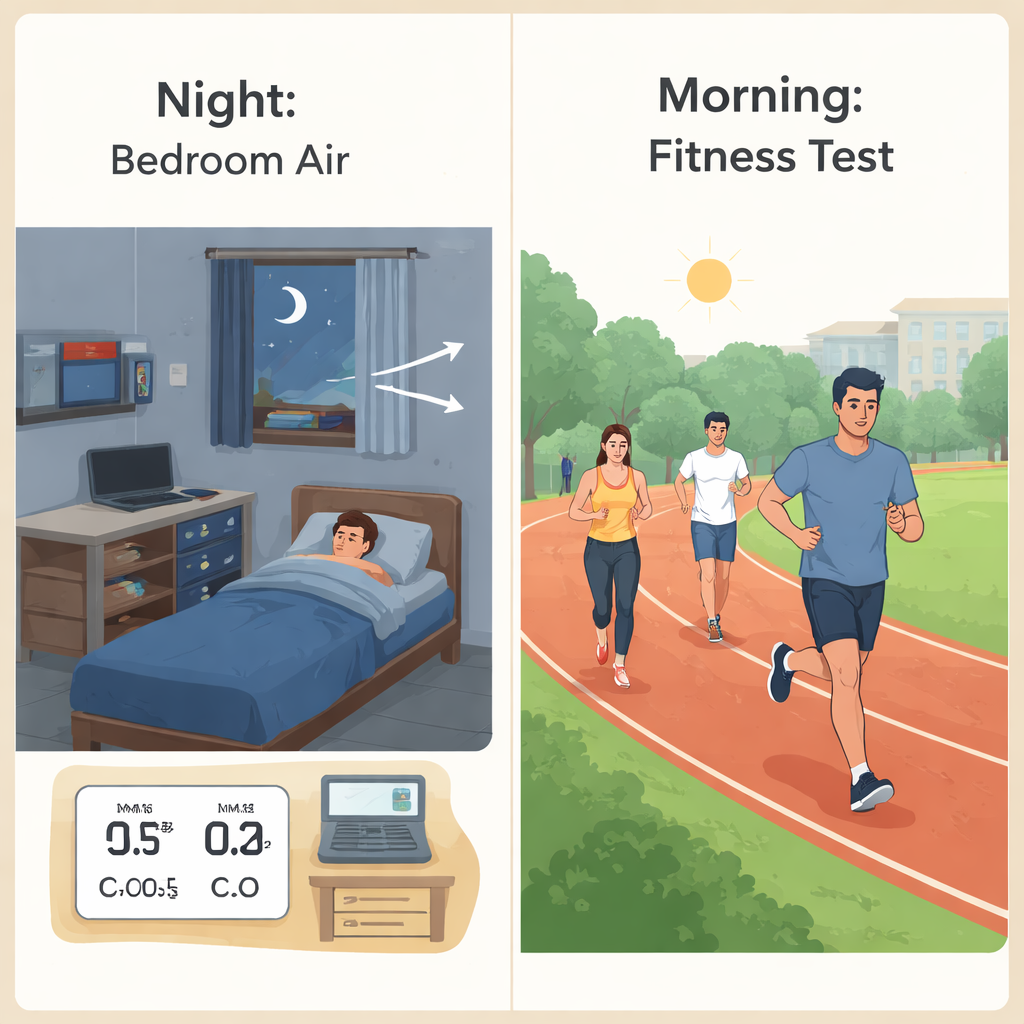
A closer look at students in their dorm rooms
The research followed 163 undergraduates living in standardized dormitories at a major university in Shanghai. These students were already scheduled to complete mandatory fitness tests that included long-distance running, sprinting, jumping, and strength exercises. On the night before their tests, the team placed small devices at the head of each bed to continuously record temperature, humidity, carbon dioxide (a sign of how well the room is ventilated), and fine particulate matter known as PM2.5—particles so small they can travel deep into the lungs. At the same time, students wore wrist sleep trackers that logged how long they slept and how much of that time was spent in light, deep, and dream (REM) sleep.
What the monitors revealed about sleep
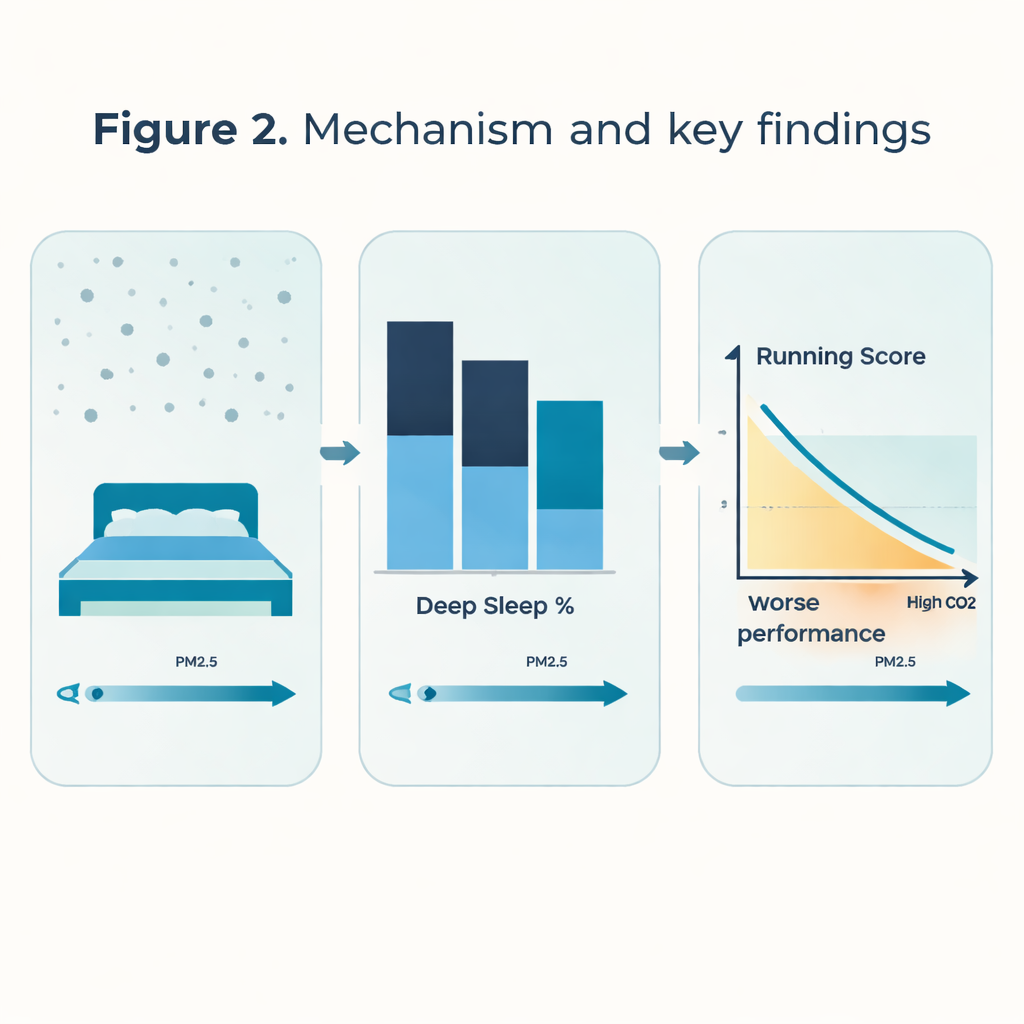
The students’ rooms were, on the surface, fairly comfortable: moderate temperatures, middling humidity, and only modest levels of air pollution. Yet the measurements uncovered clear patterns. When PM2.5 levels in the bedroom were higher, students spent a smaller share of the night in deep sleep—the stage thought to be most important for physical recovery and repair. Higher carbon dioxide levels, which signal stale indoor air and poor ventilation, were linked to more light sleep, a shallower and more easily disturbed stage. Within the relatively mild temperature range of 16–26 °C, slightly warmer conditions were actually associated with more deep sleep, suggesting that cool-to-neutral but not chilly bedrooms may best support restorative rest.
Nighttime air and next-day endurance
The next morning, all participants completed their official outdoor fitness tests under standardized conditions. When the researchers compared bedroom conditions to test scores, one result stood out: students who had slept in rooms with higher PM2.5 performed worse on long-distance runs, even after accounting for factors such as gender, body weight, lifestyle habits, baseline fitness, and the weather during the test. Short, explosive efforts like sprints, jumps, sit-ups, and pull-ups were much less affected. Humidity in the bedroom also showed an interesting pattern: long-distance running performance was best when humidity hovered around 60 percent, and declined when the air was either too dry or too damp.
A double hit from stuffy, polluted rooms
The study further found that poor ventilation can amplify the harm from particles. When carbon dioxide levels during sleep were very high—indicating that windows were closed and fresh air was limited—the negative link between PM2.5 and running performance became stronger. In other words, breathing polluted and stuffy air all night appeared to leave students less capable of sustaining a hard run the following day. Surprisingly, changes in sleep quality did not fully explain this effect, suggesting that direct strain on the lungs, heart, and circulation from polluted air may also play a role, alongside any loss of deep, restorative sleep.
What this means for everyday life
For healthy young adults, a single night’s bedroom air quality was enough to measurably influence both deep sleep and endurance performance the next day. While the study cannot prove cause and effect, its message is straightforward for anyone who lives in a city or shares a small bedroom: cleaner, fresher night air is not just a comfort issue—it may help you sleep more deeply and move more easily the next morning. Simple steps such as improving ventilation when outdoor air is clean, using effective air filtration when pollution is high, and avoiding stuffy, overcrowded rooms could quietly support both better sleep and better physical health over time.
Citation: Lin, X., Ji, T., Guo, R. et al. Association of bedroom particulate matter, sleep quality and next-day physical performance. Sci Rep 16, 7117 (2026). https://doi.org/10.1038/s41598-026-37949-2
Keywords: indoor air quality, sleep and health, particulate pollution, student fitness, bedroom environment