Clear Sky Science · en
Improved sleep quality is independently associated with decision-making recovery in panic disorder: a longitudinal study
Why Sleep Matters for Everyday Choices
Panic attacks are often described as out-of-the-blue waves of terror, but their impact doesn’t end when the episode is over. Many people with panic disorder also struggle to think clearly, make decisions, and sleep through the night. This study asked a simple but powerful question: as sleep improves during ordinary psychiatric care, do thinking and decision-making skills also bounce back—even beyond the relief of anxiety and low mood?
The Hidden Cost of Poor Sleep in Panic Disorder
Panic disorder involves sudden surges of fear, racing heart, and a sense of impending doom. Although trouble sleeping is not part of the official diagnostic checklist, up to half of people with panic disorder report severe insomnia and poor-quality sleep that spill over into daytime life. Research has long shown that broken sleep can blunt attention, memory, and flexible thinking. Yet treatments for panic disorder usually focus on stopping panic attacks, not on repairing sleep or the thinking problems that may follow.
How the Researchers Tested Sleep and Thinking
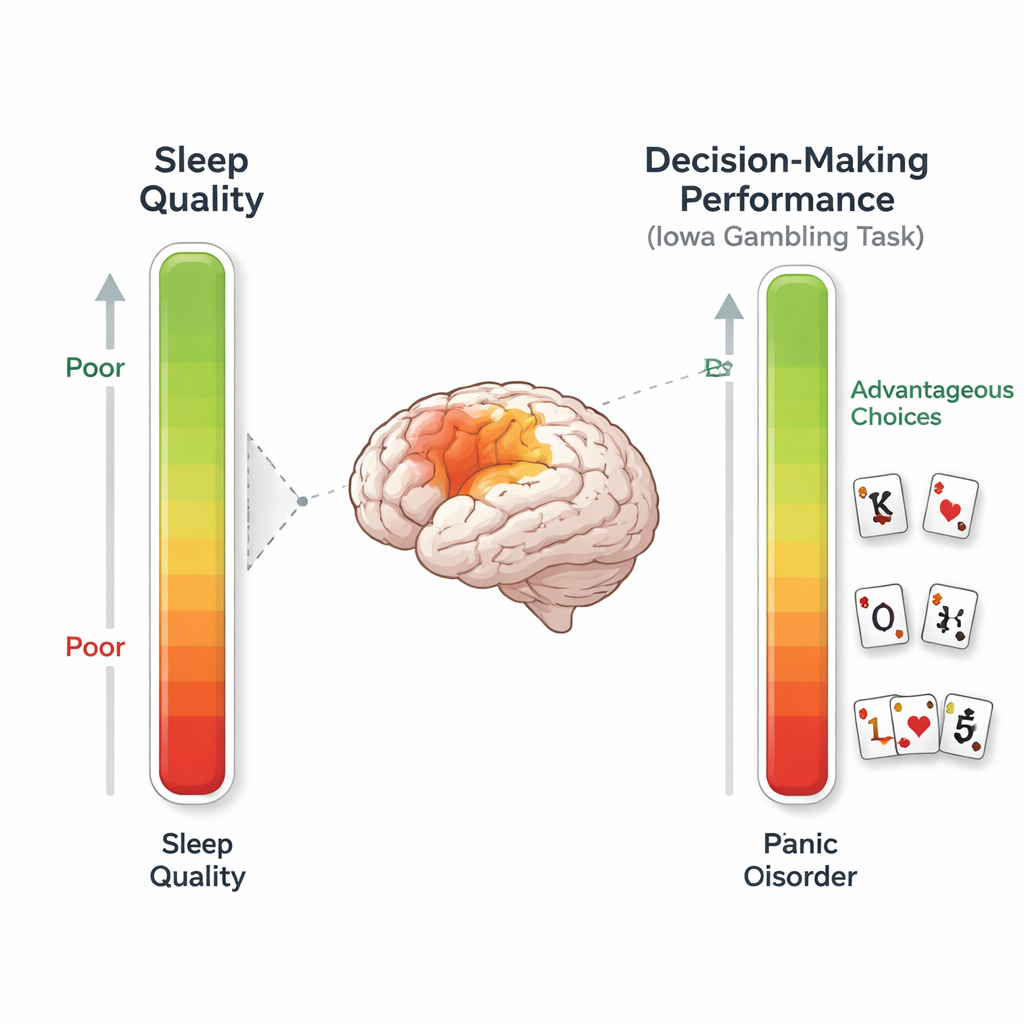
To explore these links, the authors followed 81 adults with panic disorder and 81 similar adults without psychiatric diagnoses. Everyone completed questionnaires on sleep quality, panic and depression severity, and took two computer-based thinking tests. One test, the Wisconsin Card Sorting Test, probed flexible thinking, planning, and problem-solving. The other, the Iowa Gambling Task, mimicked real-life decisions under uncertainty by asking people to pick from virtual card decks that carried different mixes of reward and risk. Patients with panic disorder then continued with routine outpatient care—mostly standard antidepressant treatment and supportive visits—without any special sleep program. After three months, 38 of these patients repeated the sleep and thinking assessments.
What the Study Found About Sleep and Decision-Making
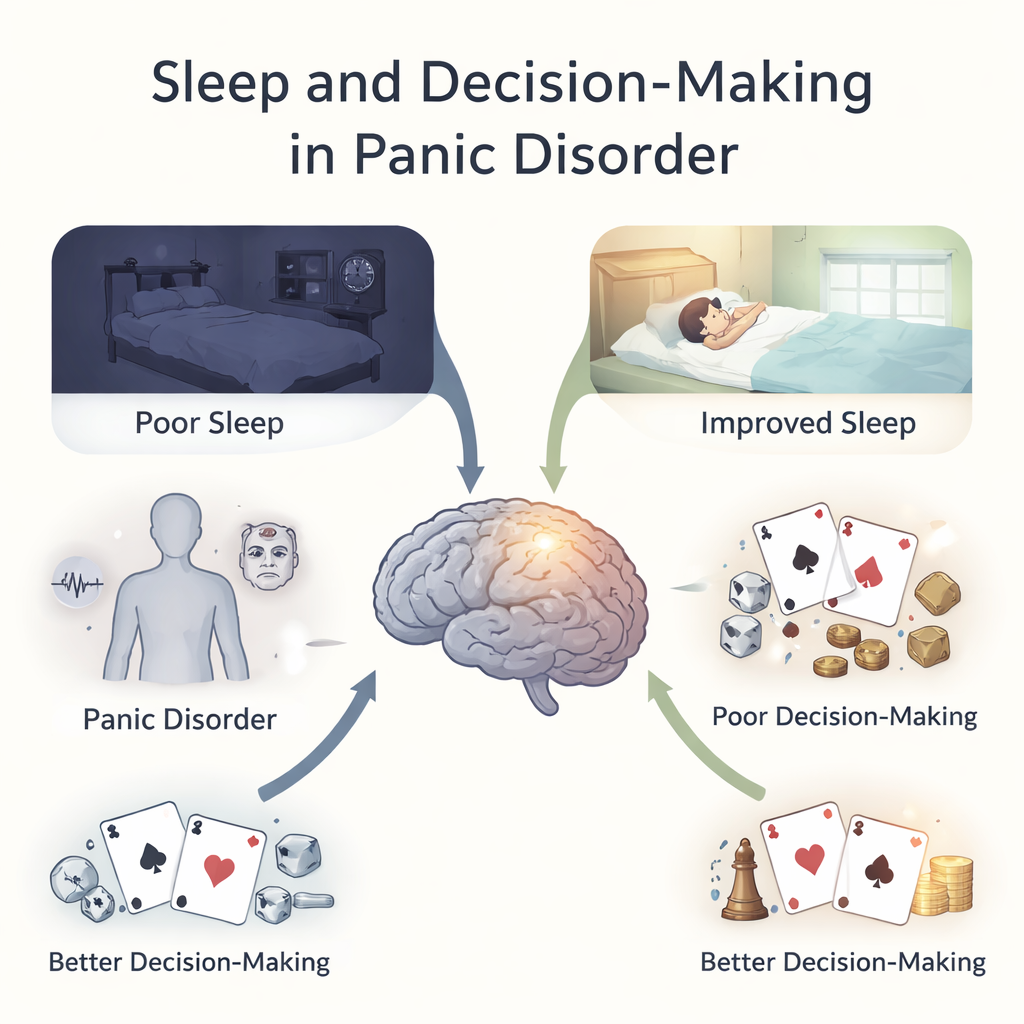
At the start, patients with panic disorder reported much worse sleep, more severe panic and depressive symptoms, and weaker performance on both thinking tests than healthy controls. They made more mistakes, had more trouble shifting strategies, and chose riskier card decks overall. Over three months of usual treatment, the subgroup of patients who were reassessed showed broad improvement: panic and depressive symptoms eased, sleep became more refreshing, and performance on both tests improved. Crucially, when the researchers used a statistical model that accounted for changes in anxiety and depression, they found that better sleep quality was still independently tied to better decision-making on the Iowa Gambling Task. For each step up in sleep quality, patients shifted toward safer, more advantageous choices. Improvements in flexible thinking also trended in a positive direction, but this relationship with sleep was weaker and did not clearly reach significance.
Sleep as a Missing Piece in Treatment
These findings suggest that panic disorder is not only about fear and physical symptoms; it also affects how people weigh risks and rewards in everyday life. The study supports earlier work showing that poor sleep can push people toward short-term gains and risky decisions, while a good night’s rest helps them pay more attention to long-term consequences. Here, better sleep quality appeared to help patients move away from impulsive, loss-avoiding choices and toward more balanced, thoughtful decisions—even when their panic and mood symptoms were already improving. In other words, sleep may be a distinct lever for cognitive recovery, not just a side effect of feeling less anxious.
What This Means for People Living With Panic
For patients and clinicians, the message is straightforward: treating panic attacks alone may not be enough. Sleep problems in panic disorder are common, can quietly undermine thinking and decision-making, and deserve focused attention in their own right. Simple sleep questions should become a routine part of care, and evidence-based sleep treatments—such as cognitive behavioral therapy for insomnia—may play a key role in restoring day-to-day functioning. While the study has limits, including a modest follow-up sample and reliance on self-reported sleep, it points to sleep quality as a changeable factor that can support clearer thinking and better choices. For people living with panic disorder, improving sleep may help not only calm the nights, but also sharpen the decisions that shape their days.
Citation: Okucu, H.H., Alçı, D. Improved sleep quality is independently associated with decision-making recovery in panic disorder: a longitudinal study. Sci Rep 16, 7201 (2026). https://doi.org/10.1038/s41598-026-37946-5
Keywords: panic disorder, sleep quality, insomnia, decision-making, cognitive function