Clear Sky Science · en
Effects of icon semantic distance and cultural background on visual search efficiency in vehicle control interfaces
Why the little pictures in your car matter
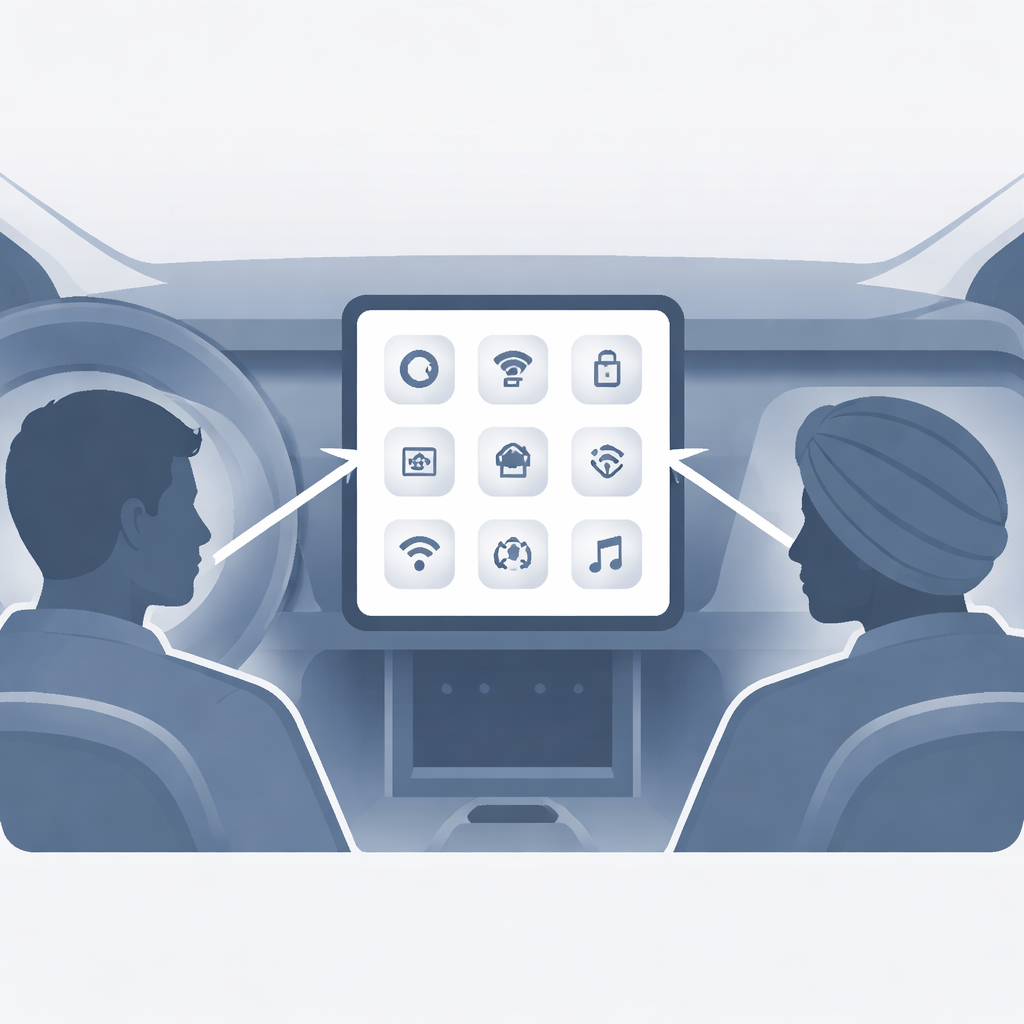
Modern cars are full of tiny pictures. From heating the steering wheel to turning on a child lock, we now tap icons instead of pressing big mechanical buttons. These pictures are meant to be universal, but they are not always understood the same way around the world. This study asks a simple, high-stakes question: when every second of attention on the dashboard is time taken away from the road, do people from different cultures find and understand these icons equally quickly and accurately?
Small symbols in a crowded cockpit
Today’s in-car touchscreens pack many functions onto a few panels. Drivers must quickly spot the right icon among many look-alikes, often while the vehicle is moving. The researchers focused on a key idea called “semantic distance”—how closely an icon’s picture matches the function it is supposed to represent. A simple example: a lock symbol on a window button feels “close” in meaning, while a vague abstract shape for nap mode may feel “remote.” The team wanted to know how this distance, together with a driver’s cultural background, changes how fast and how well people can find and recognize icons.
Testing drivers from two worlds
Because Chinese car brands are expanding quickly into South Asia, the study compared users from these two regions. First, in an online survey, 339 Chinese and South Asian participants rated how well different icons matched 11 common vehicle functions, such as steering wheel heating, screen cleaning, charging, nap mode, and assisted driving. For each function, the highest-rated icon was treated as “close” in meaning and the lowest-rated as “remote.” This step revealed that Chinese participants generally felt the icons fit their meanings better than South Asian participants did, and that in several icon sets the two groups did not even agree on which picture was the best match.
Watching how people search and remember
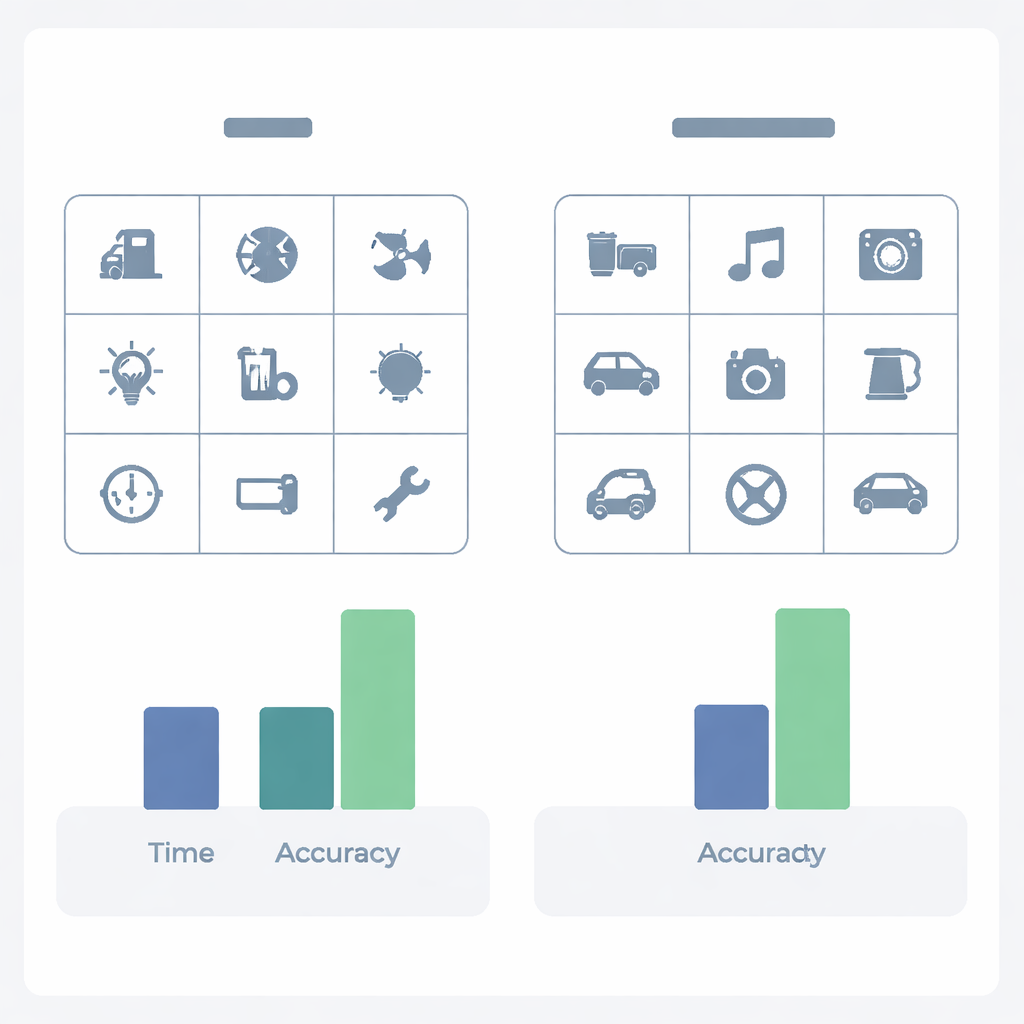
In a second experiment, 48 university students (half Chinese, half South Asian) completed two computer-based tasks in a lab. In the visual search task, they first saw a function name (such as “window lock”) and then a grid of nine icons where they had to click the correct one as quickly and accurately as possible. In the recognition task, they briefly saw a row of icons, then a function name, and had to decide whether the matching icon had appeared. These tasks mimic what happens in the car: spotting the right control in a crowded interface and remembering what each picture stands for.
When distance in meaning slows you down
The results show that “closer” icons—those whose pictures clearly fit their functions—made people faster and more accurate at recognizing what the icon meant, and faster at finding it in a grid. However, culture also played a strong role. On average, Chinese participants found and confirmed icons more quickly and with higher search accuracy than South Asian participants. Most strikingly, when icons were more “remote” in meaning, South Asian users’ search times increased sharply, while Chinese users were affected much less. In other words, confusing or culturally unfamiliar symbols cost South Asian drivers more time when hunting for the right control.
Designing safer, fairer dashboards
For a layperson, the key message is that there is no such thing as a truly universal car icon. A picture that feels obvious to a driver in China can be puzzling to a driver in South Asia, especially for newer functions like nap mode or head-up displays that lack everyday physical counterparts. The study concludes that car makers should not rely on one symbol set for all markets. Instead, they should measure how well different cultures understand each icon, favor pictures with short “semantic distance,” and especially fix those that different groups rate very differently. Doing so can shave precious fractions of a second off drivers’ eyes-off-road time, improving both usability and safety as vehicles go global.
Citation: Liu, Y., Liu, Z., Tang, X. et al. Effects of icon semantic distance and cultural background on visual search efficiency in vehicle control interfaces. Sci Rep 16, 7066 (2026). https://doi.org/10.1038/s41598-026-37943-8
Keywords: in-vehicle icons, cultural differences, visual search, human–machine interfaces, driver safety