Clear Sky Science · en
Multi-objective optimization of ice-based thermal storage for enhanced combined cycle power plant performance under hot climate conditions
Keeping Power Plants Strong in Scorching Heat
When summer heat waves roll in, our demand for electricity soars just as many gas-fired power plants quietly lose strength. Hot air makes their turbines less efficient, so they produce less power exactly when we need it most. This paper explores a clever solution: using ice made at night to cool the air feeding the turbines during the day, boosting power output, cutting fuel use, and easing strain on power grids in hot regions.
Why Hot Air Weakens Electricity Production
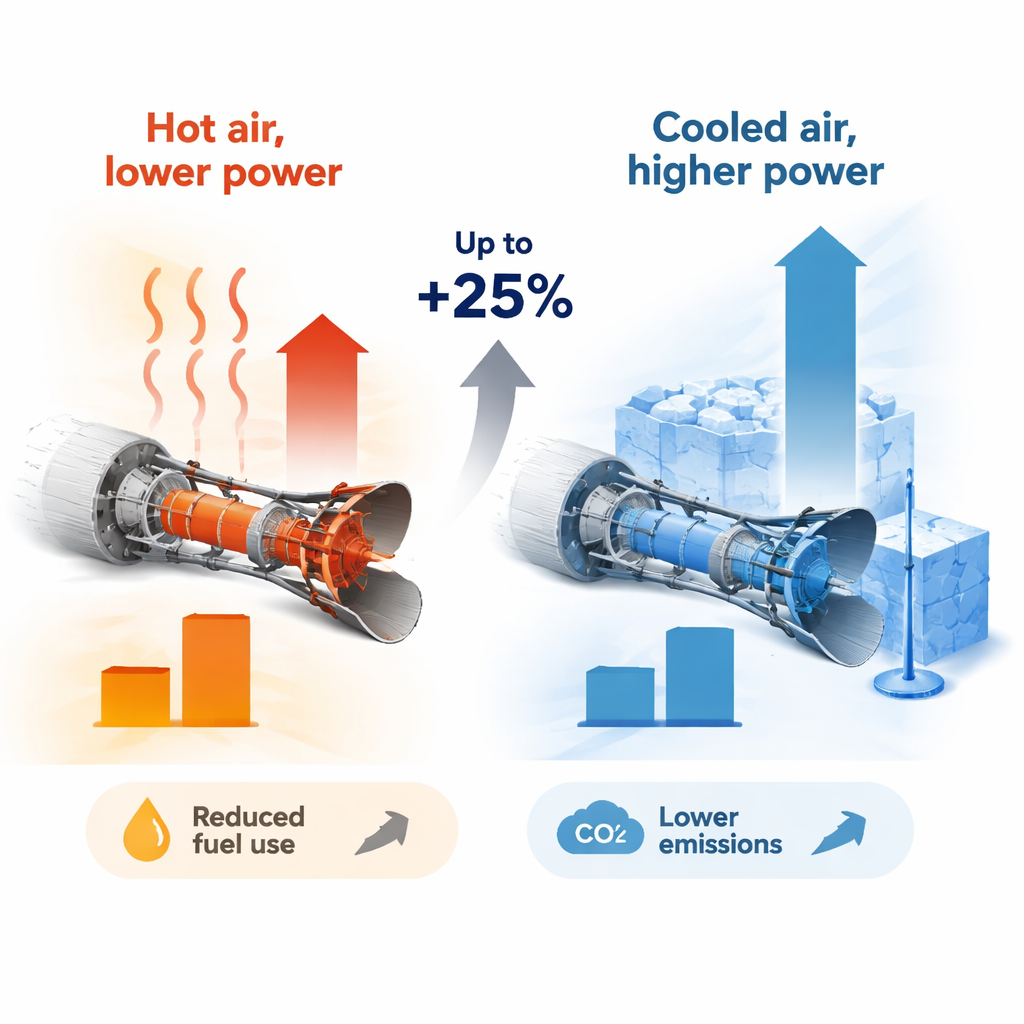
Gas turbines work by sucking in outside air, compressing it, mixing it with fuel, and burning the mixture to spin a turbine. The key problem is that hot air is less dense than cool air. On very hot days, the turbine pulls in fewer air molecules and must spend more energy compressing them. That means less useful power on the shaft and more fuel burned for each unit of electricity. In hot climates, this seasonal drop can be so large that expensive plants cannot deliver their rated capacity for much of the year, even as air conditioners drive record demand.
Storing Cold as Ice to Use When It Counts
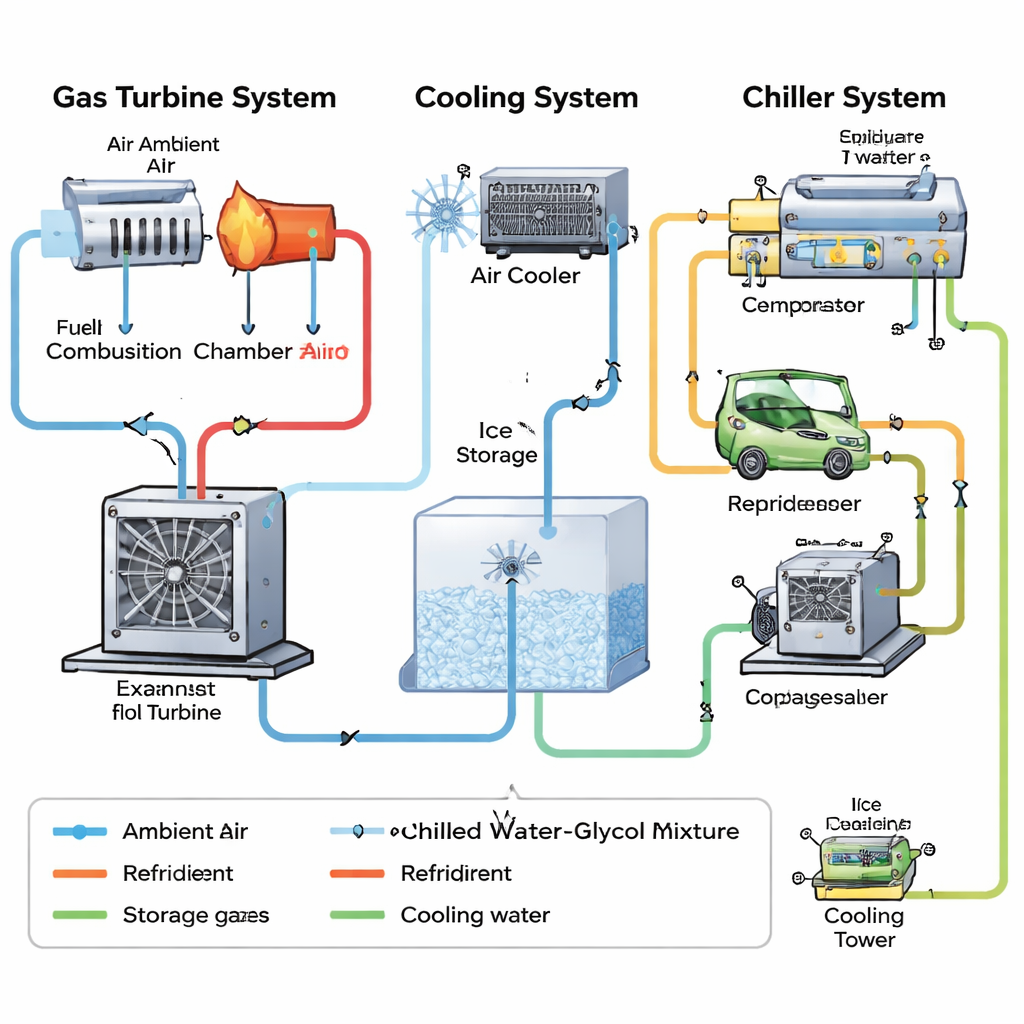
The study looks at an “ice-based thermal energy storage” system designed to counter this heat penalty. During cool, off-peak night hours, a refrigeration unit freezes water into ice in a large insulated tank. A mixture of chilled water and glycol then circulates between the tank and an air cooler placed in front of the gas turbine’s compressor. During daytime peak hours, this chilled loop cools the incoming air back toward standard conditions, making it denser and easier to compress. In effect, the plant shifts part of its cooling effort to nighttime when electricity is cheaper and demand is lower, then “spends” the stored cold during the day to deliver more power from the same turbine.
Balancing Efficiency, Cost, and Pollution
Because such a system adds equipment and complexity, the authors do not just check whether it works; they examine how well it works, what it costs, and how it affects emissions. They build a detailed thermodynamic model, tracking where useful energy is lost inside components such as the compressor, combustor, turbine, ice tank, evaporator, condenser, and cooling tower. They combine this with economic formulas for equipment cost, fuel and electricity prices, and maintenance, and with estimates of damage costs from carbon dioxide and other pollutants. Using a genetic algorithm—an optimization method inspired by natural selection—they search for design settings that simultaneously increase overall efficiency and reduce the total hourly cost, rather than focusing on a single goal.
What the Optimized Designs Can Deliver
The analysis covers gas turbines ranging from 25 to 100 megawatts, sizes commonly used in combined cycle plants. For each size, the algorithm tunes key choices such as pressure in the compressor, how hot the turbine inlet runs, and the operating temperatures of the refrigeration system and ice tank. The results show that, under the hot conditions studied for Tehran, cooling the inlet air with stored ice can raise turbine power output by roughly 4% to 25%, with the largest units seeing the biggest percentage gains. At the same time, because more electricity is produced from the same fuel flow, overall fuel consumption per kilowatt-hour drops and emissions of pollutants decline. The study estimates that the extra investment in ice storage and cooling equipment can be paid back in about 4.5 to just over 8 years, depending on unit size and operating pattern, well within a typical 15‑year economic lifetime.
Limits, Practical Issues, and Real-World Fit
The authors also consider real-world constraints. Large ice tanks can require thousands of cubic meters of space, which may be hard to find at crowded existing plants. The cooling tower used to dump heat to the atmosphere needs extra water, a concern in dry regions. And operating the refrigeration unit, storage tank, and air cooler as a coordinated system demands more advanced controls than simple direct cooling. Even with these caveats, sensitivity tests—where assumptions about heat losses, storage temperature, and equipment aging are varied—show that the benefits remain substantial, with power gains staying above 20% and payback times under about six years for a 100‑megawatt turbine.
What This Means for Everyday Electricity Users
For non-specialists, the takeaway is straightforward: in very hot climates, power plants can use ice made at night to stay stronger during the day. By pre‑making and storing cold, operators can boost output when the grid is under stress, without building entirely new generating units. This approach can deliver more electricity, lower fuel use per unit of power, and reduce emissions, all with payback times that fit comfortably inside a plant’s service life. While not a universal solution—space, water, and complexity matter—it offers a promising tool for keeping lights and air conditioners running reliably in the world’s hottest regions.
Citation: Azmoun, M., Jooneghani, H.D., Salehi, G. et al. Multi-objective optimization of ice-based thermal storage for enhanced combined cycle power plant performance under hot climate conditions. Sci Rep 16, 7149 (2026). https://doi.org/10.1038/s41598-026-37942-9
Keywords: ice thermal energy storage, gas turbine inlet cooling, combined cycle power plants, hot climate power generation, energy efficiency and exergy analysis