Clear Sky Science · en
Clinical impact of the methylation status of SMAD4 and AKR1B1 genes in a liquid biopsy sample as a prognostic marker for breast cancer
Why a Simple Blood Test for Cancer Matters
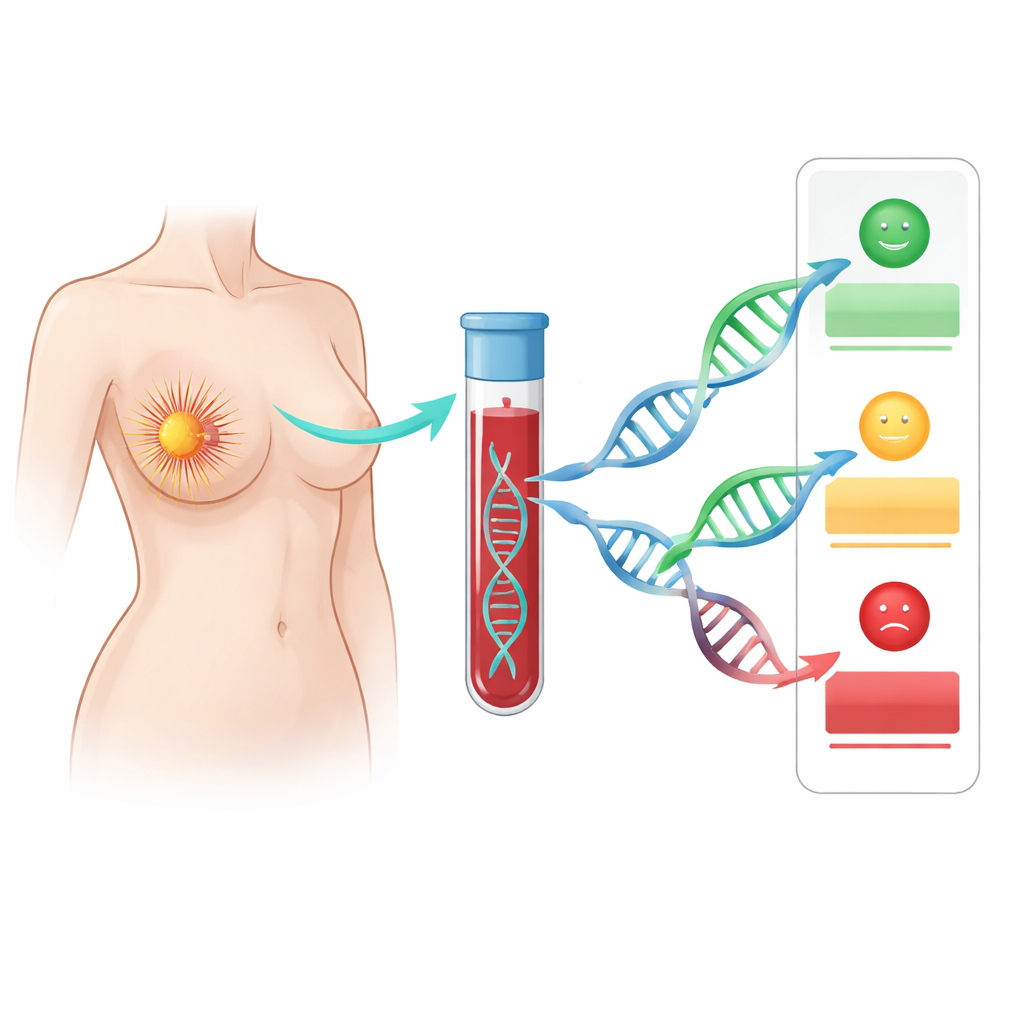
For many women, one of the scariest questions after a breast cancer diagnosis is, “How aggressive is my disease, and will the treatment work?” Today, doctors rely on tissue biopsies and blood markers that often miss early warning signs or fail to predict who will relapse. This study explores whether a simple blood test that reads subtle chemical tags on DNA could give a clearer picture of how serious a woman’s breast cancer is and how she is likely to respond to therapy.
Tiny Chemical Tags with Big Consequences
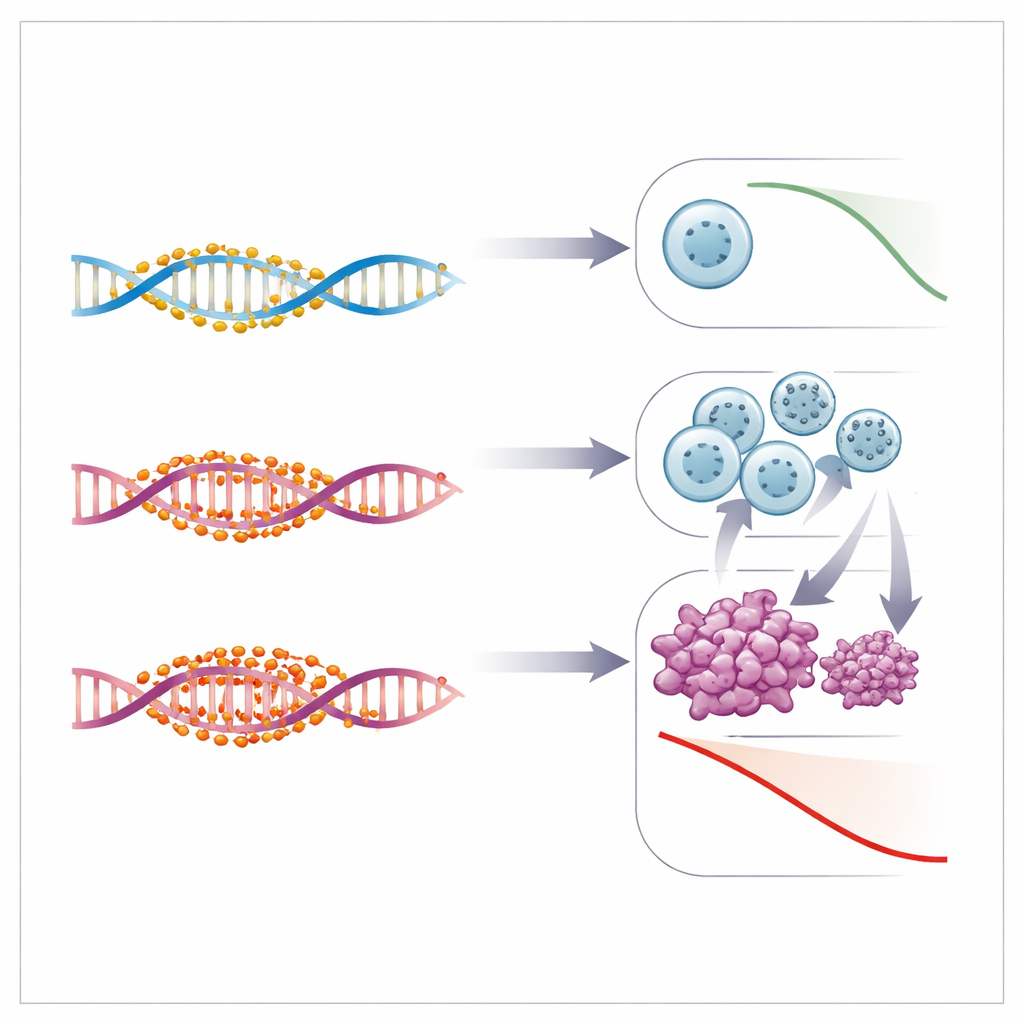
Inside every cell, genes can be switched on or off not only by mutations, but also by small chemical tags added to DNA, a process called methylation. These tags do not change the genetic code, but they can silence genes that normally keep cell growth in check. The researchers focused on two such genes, SMAD4 and AKR1B1, which help regulate cell growth, inflammation, and pathways known to be important in breast cancer. When these genes become heavily methylated, their protective roles may be weakened, potentially allowing cancer cells to grow, spread, and resist treatment.
Turning Blood into a Window on the Tumor
The team studied 120 Egyptian women divided into three groups: those with breast cancer, those with benign breast lumps, and healthy volunteers. Instead of relying only on tissue samples from surgery, they used a “liquid biopsy” — a regular blood draw — to measure how methylated the SMAD4 and AKR1B1 genes were in circulating DNA. They compared these measurements with standard blood markers already used in clinics, as well as with each patient’s tumor type, stage, grade, lymph node involvement, treatment response, and long-term follow-up.
Stronger Signals than Traditional Markers
The results were striking. Women with breast cancer had much higher methylation levels of both SMAD4 and AKR1B1 than women with benign conditions or healthy controls. These methylation changes were present in nearly all cancer patients, but rarely seen in non-cancer groups. When the researchers tested how well each marker distinguished cancer from non-cancer, the two DNA methylation markers far outperformed traditional blood tests such as CEA and CA15-3. They were especially powerful at flagging early-stage and low-grade tumors that often go undetected or are underappreciated by conventional markers.
Clues to How Aggressive the Cancer Will Be
The chemical tagging patterns also tracked closely with how dangerous the tumors were. Higher methylation of SMAD4 and AKR1B1 was linked with invasive ductal carcinoma, more advanced stages, higher tumor grade, and the presence of cancer cells in lymph nodes. Patients whose tumors showed the heaviest methylation were more likely to have poor responses to therapy, including disease that continued to grow despite treatment. Over a follow-up period of more than three years, these women also had worse disease-free and overall survival, suggesting that the methylation markers reflect underlying tumor aggressiveness.
What This Could Mean for Patients
In plain terms, this work suggests that a routine blood draw could one day help doctors sort breast cancer patients into lower- and higher-risk groups, using the methylation status of SMAD4 and AKR1B1 as a guide. Because the test is noninvasive and based on circulating DNA, it might be repeated over time to monitor how a tumor is changing and whether treatment is working. While more research is needed to confirm these findings in larger and more diverse populations, the study points toward a future in which simple blood-based epigenetic tests help tailor breast cancer care, identify women at risk of relapse earlier, and ultimately improve survival.
Citation: Swellam, M., Ramadan, A., Sobeih, M.E. et al. Clinical impact of the methylation status of SMAD4 and AKR1B1 genes in a liquid biopsy sample as a prognostic marker for breast cancer. Sci Rep 16, 7933 (2026). https://doi.org/10.1038/s41598-026-37937-6
Keywords: breast cancer, DNA methylation, liquid biopsy, prognostic biomarkers, epigenetics