Clear Sky Science · en
Effect of root canal filling techniques and materials on endodontic treatment outcomes: a systematic review and meta-analysis
Why This Matters for Your Teeth
Most of us think of a root canal as a last-resort procedure to save a painful tooth. What happens after the dentist cleans the inside—how the empty space is actually filled and sealed—might seem like a small detail, but it has long been suspected to influence whether that tooth stays healthy for years. This study pulled together results from nearly twelve thousand treated teeth to ask a practical question: do modern filling methods and high-tech materials really make root canals more successful, or do other factors matter more?
Different Ways to Seal a Cleaned Tooth
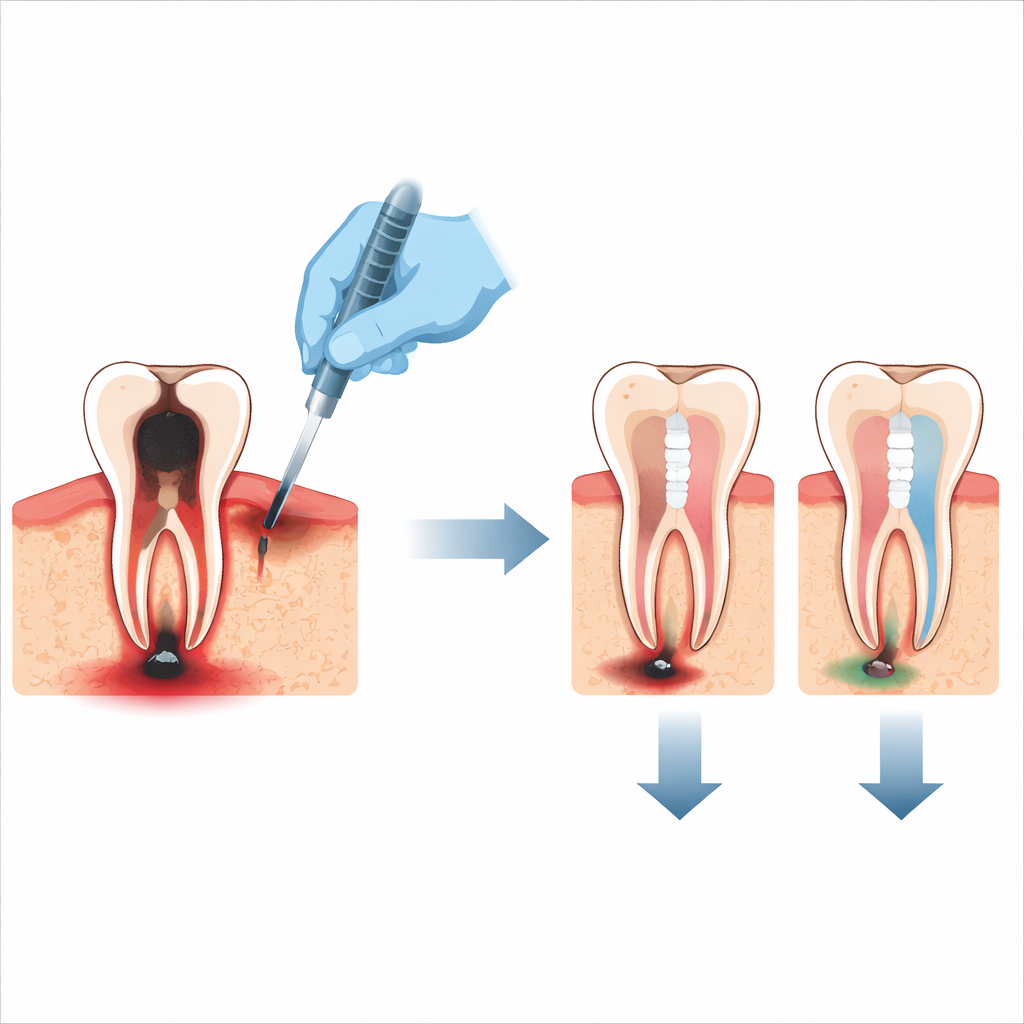
After the diseased tissue and bacteria are removed from a tooth, the hollow root canal must be packed and sealed so germs cannot sneak back in. Dentists can do this in several ways. A long-established method, called cold lateral condensation, packs many thin cones of a rubber-like material into the canal. Newer “warm” approaches soften this material so it can be compacted more closely against the canal walls, while carrier-based systems use a solid core coated with filling material. A simpler single-cone method has become popular alongside new bioceramic sealers that promise strong, biologically friendly seals. With so many options, it has been hard to know whether any one approach truly keeps teeth healthier over time.
How the Researchers Looked for Answers
The authors conducted a systematic review and meta-analysis, which is like taking the pulse of all the best available studies at once. They searched major medical databases and grey literature without language limits, ending up with 84 clinical studies that followed teeth for at least six months, often much longer. These studies covered both first-time root canal treatments and retreatments of teeth that had previously failed. The team evaluated not only whether teeth felt comfortable, but also whether X-rays showed healing around the tip of the root. They also rated the quality of each study and the overall strength of the evidence, checking for bias and differences in how the research was done.
What They Found About Success Rates
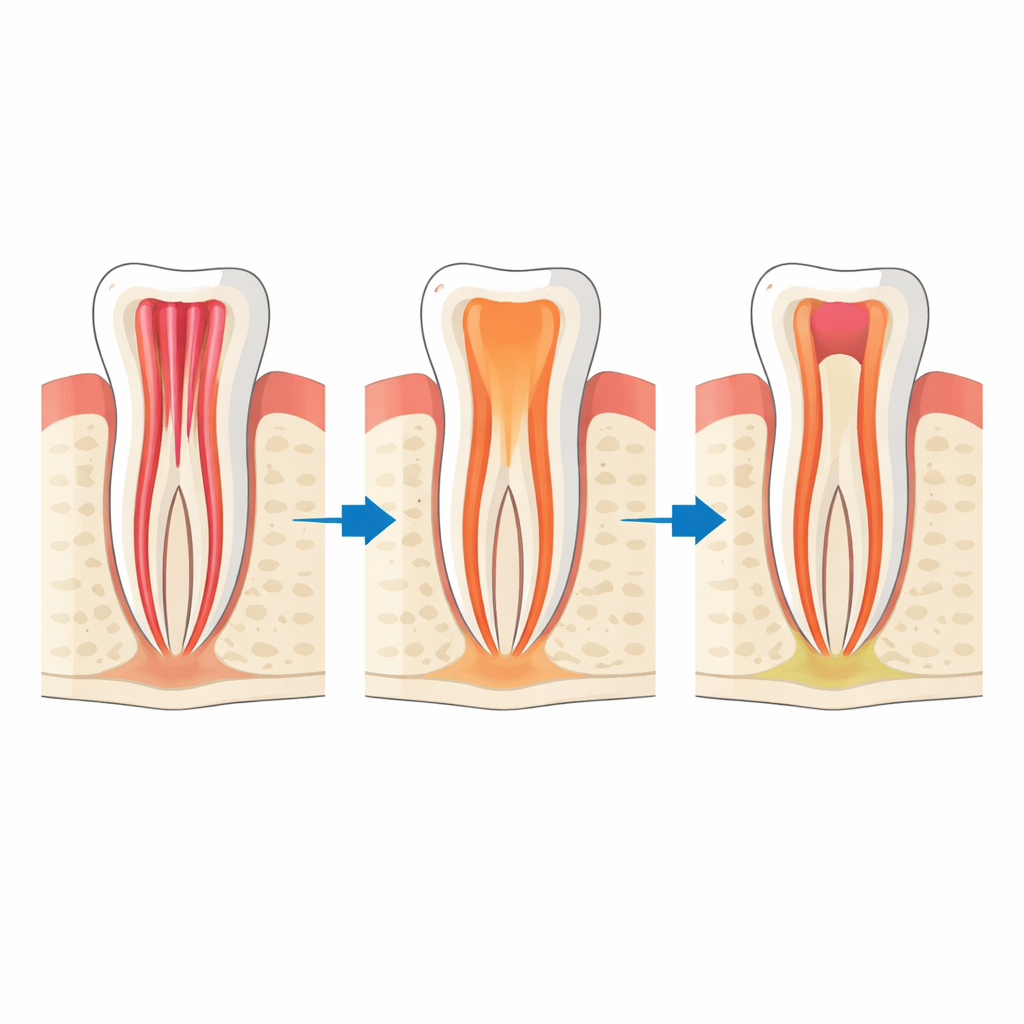
Across all techniques, most treated teeth did well. For first-time treatments, about 87 out of 100 teeth were successful at both six and twelve months, and around 92 out of 100 at two years. At that two-year mark, teeth filled with cold lateral condensation or carrier-based methods showed slightly higher success than those treated with the single-cone technique. However, when follow-up extended beyond three years, differences between all techniques faded and overall success settled around 85 percent. Retreatments—fixing earlier root canals that had failed—started out with high short-term success but showed lower rates over time, and again no filling method clearly and consistently outperformed the others.
More Than Just the Filling Method
When the researchers dug deeper, other influences stood out more strongly than the choice of filling technique or sealer. Teeth in the upper jaw tended to do better than those in the lower jaw, likely because they are often easier to reach and treat. Most striking was the role of the operator: teeth treated by endodontic specialists had clearly higher success rates than those treated by general dentists or students. The much-discussed bioceramic sealers, frequently used with the single-cone approach, did not yet show convincing advantages in real-world long-term outcomes, and they may make future retreatment more difficult because they are hard to remove once set.
What This Means for Patients
For someone facing a root canal, this study offers reassuring news: several established ways of filling the tooth can achieve similarly high success, especially in the first few years. The fine print is that the available evidence, particularly for the longest follow-ups and for retreatments, is still of low certainty. The data suggest that who treats your tooth, how carefully your case is planned, and the condition of the tooth itself probably matter more than the exact brand of sealer or filling technique. In everyday terms, choosing an experienced clinician and following through with recommended care are likely more important for long-term tooth survival than whether they use a warm, cold, or carrier-based method to fill your canal.
Citation: Mushtaq, A., Alsanafi, S., Elmsmari, F. et al. Effect of root canal filling techniques and materials on endodontic treatment outcomes: a systematic review and meta-analysis. Sci Rep 16, 9552 (2026). https://doi.org/10.1038/s41598-026-37936-7
Keywords: root canal treatment, endodontic outcomes, filling techniques, bioceramic sealers, dental retreatment