Clear Sky Science · en
Nonlinear relationship between innovation input and intelligent manufacturing from an absorptive capacity perspective
Why smarter factories matter to everyone
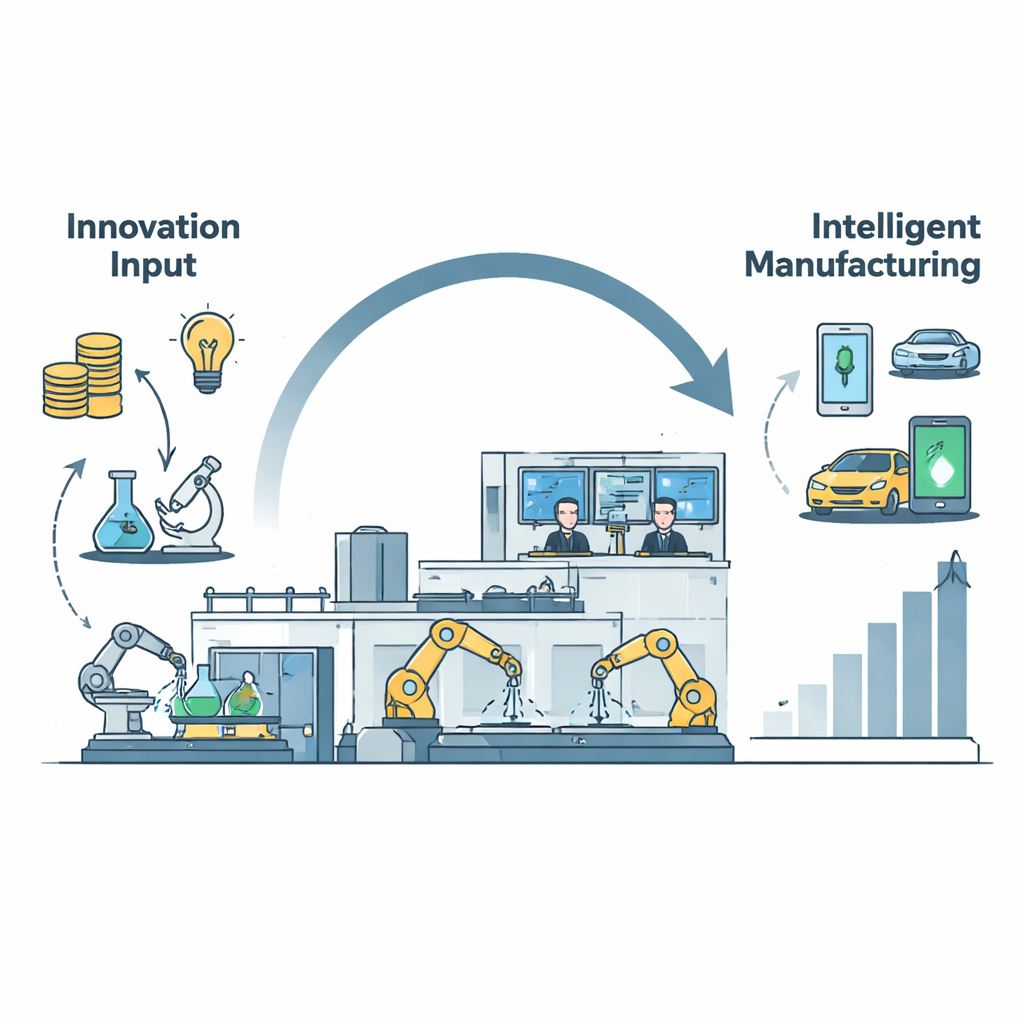
From the phones in our pockets to the cars on our streets, almost everything we use is made in factories. Around the world, manufacturers are racing to upgrade from traditional assembly lines to "intelligent" factories packed with sensors, robots, and data-driven decision systems. This article looks at a simple but crucial question: how much should companies invest in innovation to make that leap, and when does more spending actually stop helping? Using data from thousands of Chinese manufacturing firms, the authors uncover a non‑linear story with important lessons for policy makers, business leaders, and workers alike.
Finding the sweet spot for innovation spending
The researchers examined listed manufacturing companies in China from 2008 to 2022, asking how their innovation input—mainly research and development (R&D) relative to sales—relates to their progress in intelligent manufacturing. Instead of assuming that "more is always better," they tested whether the relationship might bend or even turn negative at high spending levels. To measure how far firms had moved toward smart production, they used text analysis on annual reports, counting how often companies discussed robots, fully automatic production, intelligent systems, and related ideas. This allowed them to build a large-scale, quantitative picture of how digital and intelligent technologies are actually being adopted on the ground.
When too much of a good thing backfires
The central finding is that the link between innovation input and intelligent manufacturing follows an inverted U-shaped curve. At first, higher R&D effort helps companies master new technologies, redesign products, and introduce intelligent equipment, so their smart manufacturing level rises quickly. But beyond a certain threshold, extra spending brings shrinking returns and can even slow transformation. Very high innovation budgets may overload managers, scatter resources across too many projects, or generate complex knowledge that firms cannot absorb and put into practice. In those cases, money is locked into long, risky projects instead of supporting practical upgrades to existing production lines.
How digital push, ownership, and spare resources change the outcome
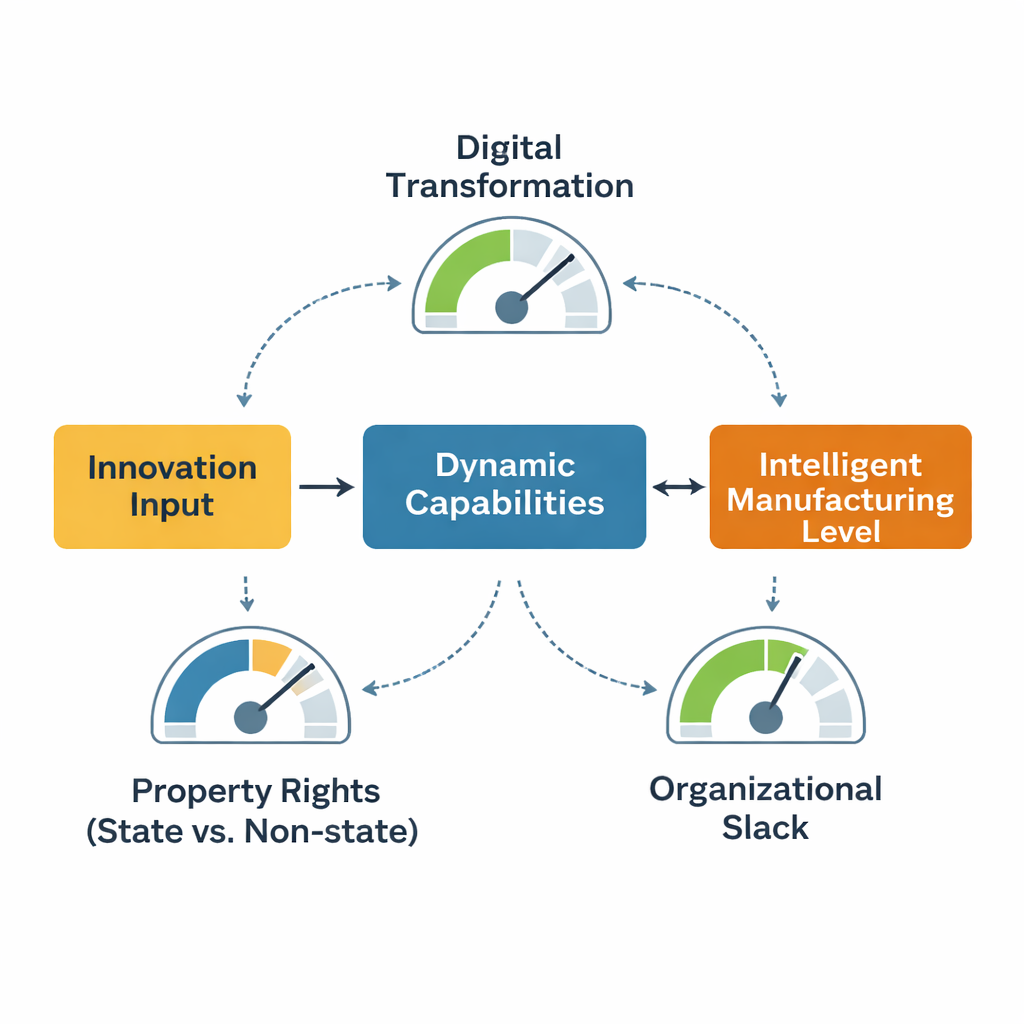
The study also asks why some firms turn innovation spending into smart factories more effectively than others. Three factors stand out. First, companies that are already far along in digital transformation—using big data, cloud computing, and artificial intelligence—gain more from each unit of R&D, because their systems are better at collecting, sharing, and applying new knowledge. Second, ownership matters: non‑state‑owned firms, which face tougher competition and have fewer guaranteed policy supports, tend to use innovation spending more aggressively to drive intelligent manufacturing than state‑owned firms, where stable structures and policy dependence can blunt the incentive to change. Third, firms with moderate "organizational slack"—extra financial and organizational resources—can cushion the risks of experimentation and invest in smart equipment and new processes, but excessive slack raises costs and encourages wasteful projects.
The hidden engine: learning and adaptation inside the firm
To explain these patterns, the authors draw on the idea of "absorptive capacity"—a company’s ability to notice useful outside knowledge, absorb it, and turn it into value—and on "dynamic capabilities," meaning the skills needed to sense opportunities, reconfigure resources, and grow in a shifting environment. They show that innovation input strengthens firms’ dynamic capabilities over time by expanding staff skills, digital responsiveness, and the stock of intangible assets. In turn, stronger dynamic capabilities act as a bridge between R&D spending and actual intelligent manufacturing outcomes. Where this bridge is strong, innovation budgets translate into smarter factories; where it is weak, even heavy spending may leave production methods largely unchanged.
What this means for the future of smart factories
For a general reader, the takeaway is that building intelligent factories is not just about pouring more money into R&D or buying the latest robots. There is an optimal range of innovation spending, and its impact depends heavily on how digitally prepared, flexible, and resourceful a company is, as well as how it is owned and governed. Policies that simply push firms to invest more can miss the mark if they ignore these limits and differences. Instead, the authors argue, governments and managers should focus on improving firms’ ability to learn and adapt, nurturing digital foundations, and using slack resources wisely. Done well, this balance can speed the shift toward cleaner, more efficient, and more competitive manufacturing that ultimately shapes the quality, price, and environmental footprint of the products we all rely on.
Citation: Xu, Z., Shan, X., Pan, R. et al. Nonlinear relationship between innovation input and intelligent manufacturing from an absorptive capacity perspective. Sci Rep 16, 7269 (2026). https://doi.org/10.1038/s41598-026-37926-9
Keywords: intelligent manufacturing, innovation investment, digital transformation, dynamic capabilities, China manufacturing