Clear Sky Science · en
Enhanced detoxification and valuable metal extraction from electroplating sludge via ultrasonic-assisted ferric sulfate bio acid
Turning Toxic Sludge into a Resource
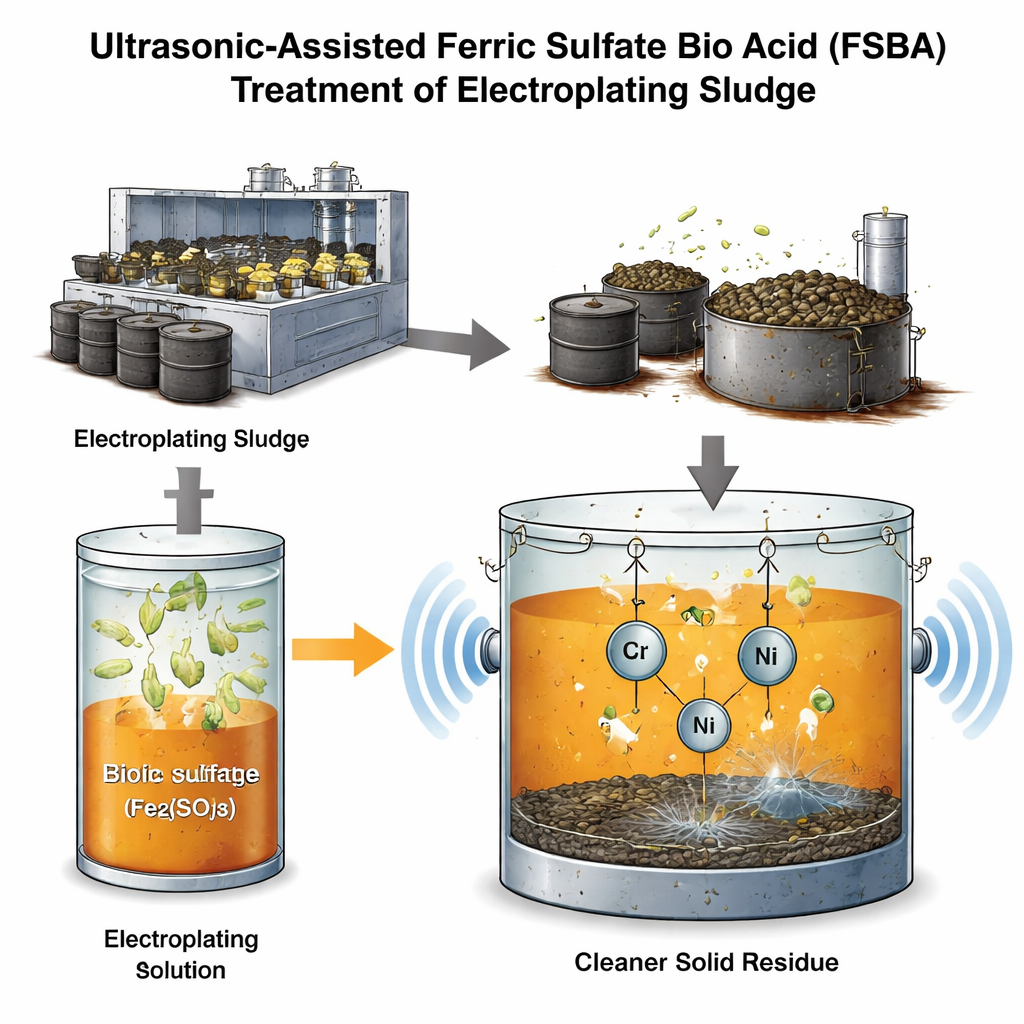
Electroplating, the process that coats metals to make them shiny and corrosion‑resistant, leaves behind a dirty secret: tons of hazardous sludge loaded with toxic metals like chromium, nickel, and copper. Around the world, this waste is piling up in landfills and storage ponds, threatening soil and water. Yet the same sludge is also a hidden mine of valuable metals needed for products such as batteries and electronics. This study explores a new way to clean up that waste while recovering useful metals quickly and with far less chemical input than many current methods.
A Fresh Look at Industrial Waste
Electroplating sludge is typically produced by adding lime to wastewater, which traps dissolved metals in a thick, mud‑like residue. Traditional recycling methods can recover some metals, but they often require strong acids, high temperatures, complex equipment, and long processing times. Biological “bioleaching” methods, where microbes slowly dissolve metals using the acids they produce, are gentler and greener but can take days or weeks and require careful adaptation of bacteria to survive the toxic conditions. The authors set out to combine the strengths of biology and physics to create a faster, more flexible way to treat this challenging waste.
Borrowing from Bacteria, Not Keeping Them
Instead of letting bacteria work directly on the sludge, the researchers grew a well‑known metal‑loving microbe, Acidithiobacillus ferrooxidans, in a separate tank. These microbes convert iron and sulfur into a strongly acidic, iron‑rich liquid. Once this broth had reached peak strength, the cells were spun out, leaving behind a clear solution called ferric sulfate bio acid, or FSBA. This liquid behaves much like a man‑made leaching solution, but it is produced biologically and can be used without exposing the bacteria to the toxic sludge itself. The sludge, which contained substantial amounts of chromium, copper, and nickel, was then mixed with this FSBA under controlled conditions and exposed to intense sound waves.
Shaking Metals Loose with Sound
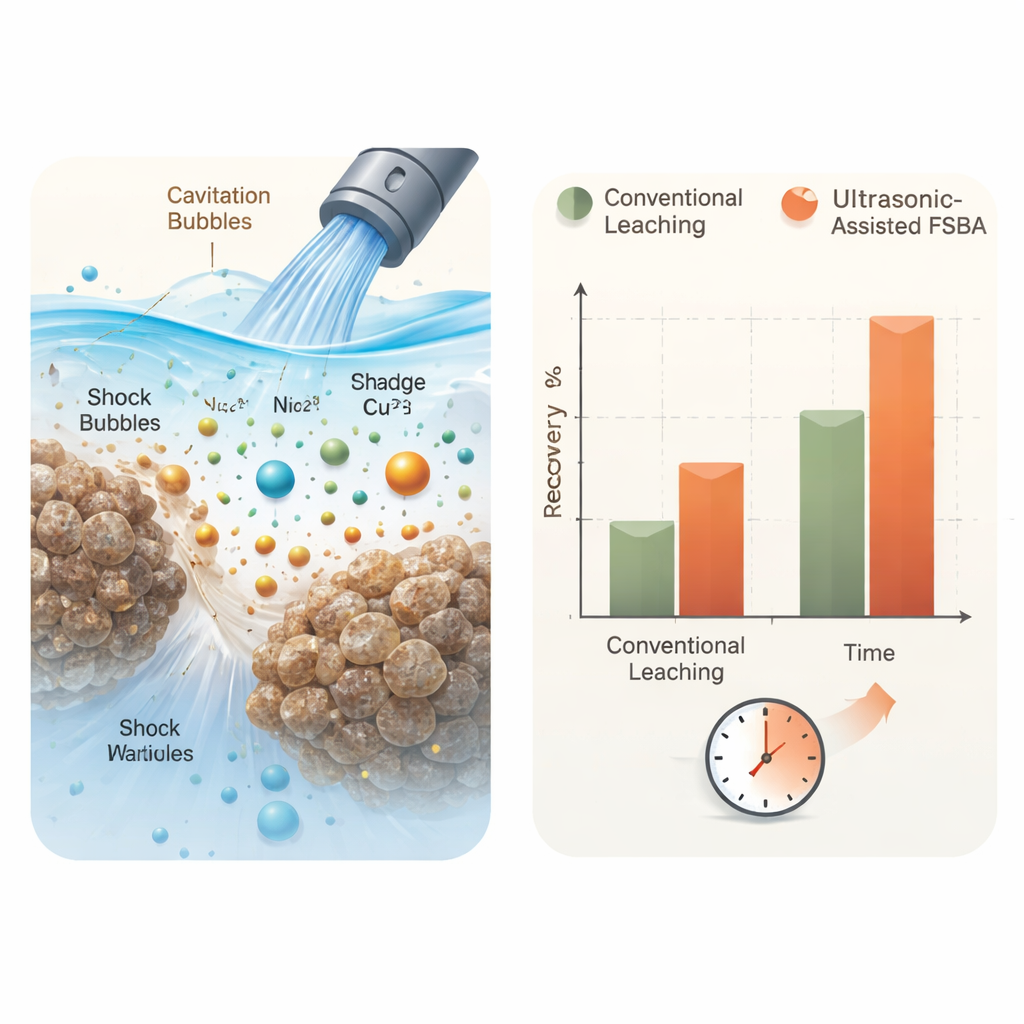
The heart of the new method is ultrasonic treatment: sound waves above the range of human hearing focused into the leaching solution. These waves create tiny bubbles that rapidly form and collapse, generating brief bursts of high temperature and pressure on the surface of particles. This “cavitation” roughens and cracks the sludge grains, exposing fresh surfaces and helping the acidic solution reach trapped metals more easily. By systematically varying stirring speed, the amount of sludge in the liquid, temperature, and reaction time, the team found that a moderate stirring rate and a relatively dilute mixture gave the best results. At about 45 °C, using an ultrasonic bath and a low solid‑to‑liquid ratio, the process dissolved over 90% of chromium and nickel and nearly 87% of copper in just 8 minutes—performance that conventional methods would need hours to approach.
Understanding What Happens to the Leftovers
Peering at the solid residues with X‑ray and electron‑microscope techniques, the researchers found that new minerals formed on the particle surfaces as leaching progressed, especially at higher temperatures. One key product was hydronium jarosite, a yellowish iron‑sulfate mineral known to trap metal ions inside its crystal structure. As the temperature was raised toward 75 °C, these jarosite crystals became larger and more abundant, and some of the chromium, nickel, and copper became locked inside them instead of entering the liquid. This explained why pushing the temperature too high actually reduced metal recovery after the first few minutes, and it highlighted 45 °C as the sweet spot: warm enough to speed reactions, but not so hot that jarosite formation stole back the metals.
From Hazardous Waste to Safer Landfill Material
To test whether the treated sludge would still be dangerous if buried, the team used standard environmental tests that mimic acidic landfill conditions and acid rain. Before treatment, the electroplating sludge released nickel and chromium at levels above regulatory safety limits, marking it as hazardous. After the ultrasonic‑assisted FSBA process, these metals were greatly reduced in the leachate, and under simulated rainfall conditions both fell below the threshold levels, indicating effective detoxification. While some stricter landfill scenarios still flagged nickel as a concern, the overall risk was substantially lowered. In plain terms, the process both strips out a large share of valuable metals for potential reuse and makes the remaining solid much safer to dispose of, offering a promising path toward cleaner factories and a more circular use of critical metals.
Citation: Kordloo, M., Jafari, N., Rezaei, A. et al. Enhanced detoxification and valuable metal extraction from electroplating sludge via ultrasonic-assisted ferric sulfate bio acid. Sci Rep 16, 6799 (2026). https://doi.org/10.1038/s41598-026-37924-x
Keywords: electroplating sludge, heavy metal recovery, bioleaching, ultrasound treatment, waste detoxification