Clear Sky Science · en
High proportion of pneumonia morbidity and risk factors in sick under-five children, northwest Ethiopia: a health facility based cross-sectional study
Why this matters for every family
Pneumonia remains one of the deadliest illnesses for young children worldwide, yet many of its triggers are found in ordinary homes—how we cook, feed, and care for children day to day. This study from northwest Ethiopia looks closely at sick children under five who came to local health centers and asks a pressing question: how many had pneumonia, and what parts of home life made it more or less likely? The answers point to practical changes that caregivers, communities, and health planners can act on right now.
How the study was carried out
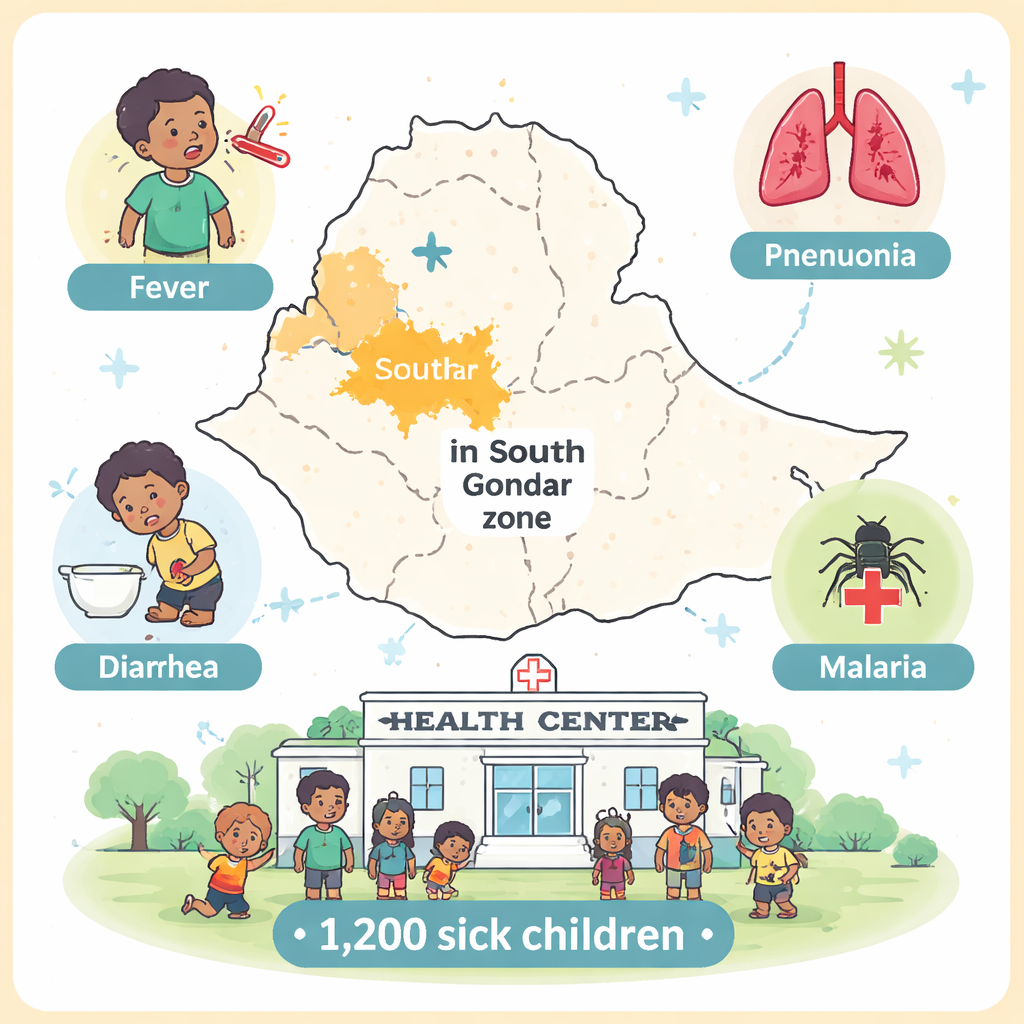
Researchers followed 1,200 sick children under the age of five who visited 20 public health centers in the South Gondar zone of northwest Ethiopia between March and July 2023. Instead of relying only on parents’ memories of symptoms, trained health workers re‑examined each child using a World Health Organization checklist for pneumonia. Caregivers were also interviewed just after the visit, in a private space, about family living conditions, feeding and hygiene habits, cooking practices, and use of health services. This approach allowed the team to link a precise medical diagnosis with detailed information about each child’s home environment.
How common pneumonia was
The findings were sobering: more than one in four sick children—28.3 percent—were diagnosed with pneumonia, and about one in ten of those cases were severe. Pneumonia was one of the leading reasons for illness among children coming to the clinics, rivaling diarrhea and surpassing malaria. The disease was especially common in infants, and it appeared more often during the rainy season. Taken together, the numbers suggest that pneumonia is not a rare complication but a routine part of childhood illness in this setting, putting a heavy burden on families and local health services.
Everyday conditions that raise or lower risk
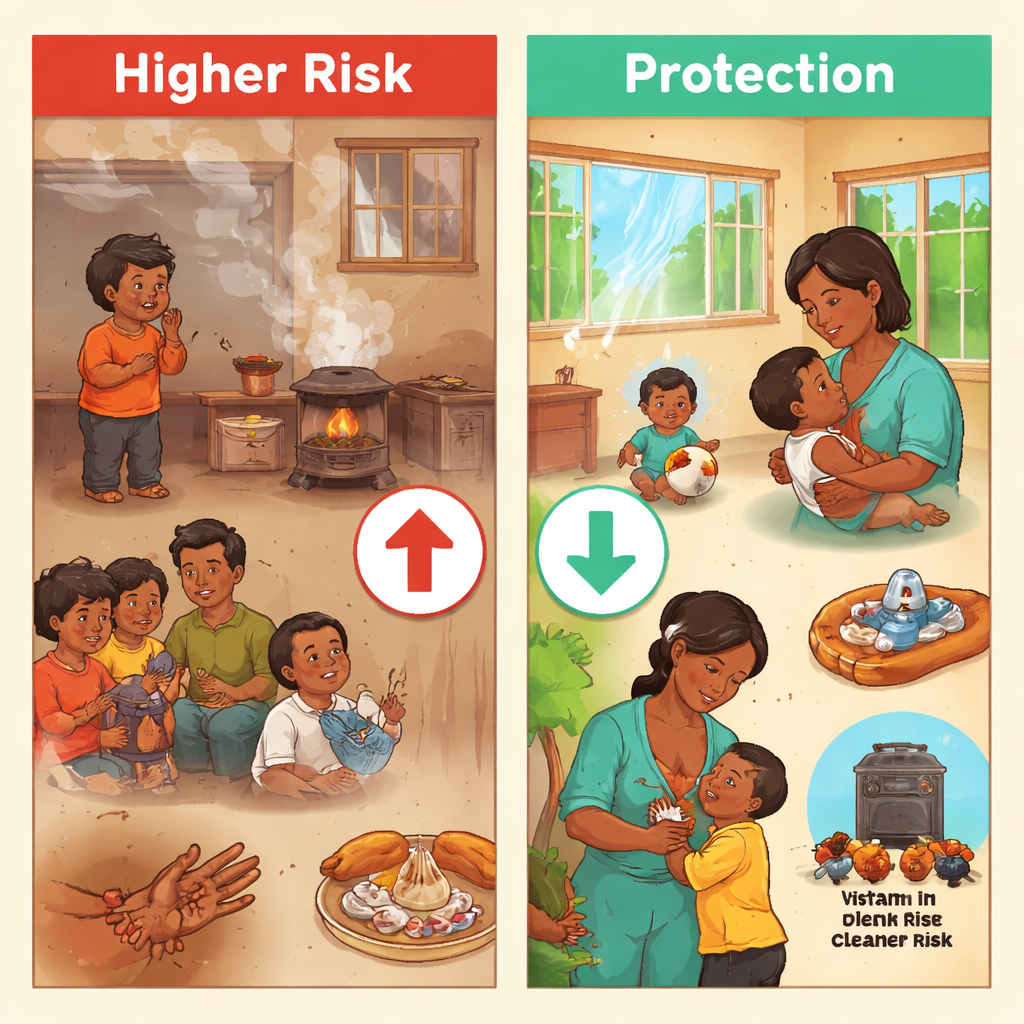
Many of the strongest links to pneumonia were found in ordinary household habits. Children living in homes that used a traditional, unimproved stove burning wood, crop residues, or animal dung were far more likely to have pneumonia than those whose families used cleaner options. Cooking inside the main living house, instead of in a separate kitchen or outdoors, also raised the odds—most likely because smoke and fumes stayed where children live and sleep. Families that rarely opened windows or lived in crowded households, especially where someone had a cough in the past month, were more likely to bring in a child with pneumonia. These patterns highlight the role of indoor air quality and close contact in spreading and worsening lung infections.
Feeding, vitamins, and hygiene
How children were fed also mattered. Both stopping exclusive breastfeeding too early and keeping it for too long, without adding enough solid foods after six months, were tied to higher pneumonia risk. Breast milk alone protects against infections in the first half‑year of life, but after that, children need extra nutrients to keep their defenses strong. Children who had received vitamin A in the previous six months were much less likely to have pneumonia, pointing to the importance of this low‑cost supplement for the immune system and for keeping the lining of the lungs healthy. Simple hygiene practices played a role as well: in households that mostly used soap for hand‑washing, children’s chances of having pneumonia were sharply lower, suggesting that fewer germs were being passed around during daily care.
What this means for families and health planners
The study shows that pneumonia in young children is still very common in this part of Ethiopia, but it is not inevitable. Many of the strongest risk factors—smoky stoves used inside the home, closed windows, crowded rooms, poor hand‑washing, missed vitamin A doses, and poorly timed breastfeeding and complementary feeding—are things that can be changed. By investing in cleaner cooking options, better ventilation, vitamin A and immunization programs, and clear counseling for caregivers on feeding and hygiene, communities can sharply reduce the chances that a simple cough in a young child turns into a life‑threatening lung infection.
Citation: Gelagay, A.A., Azale, T., Gezie, L.D. et al. High proportion of pneumonia morbidity and risk factors in sick under-five children, northwest Ethiopia: a health facility based cross-sectional study. Sci Rep 16, 7039 (2026). https://doi.org/10.1038/s41598-026-37920-1
Keywords: childhood pneumonia, indoor air pollution, under-five health, breastfeeding and nutrition, Ethiopia public health