Clear Sky Science · en
Oxysophoridine promotes osteoarthritis repair via GSH system activation and ROS suppression
Why this matters for aching joints
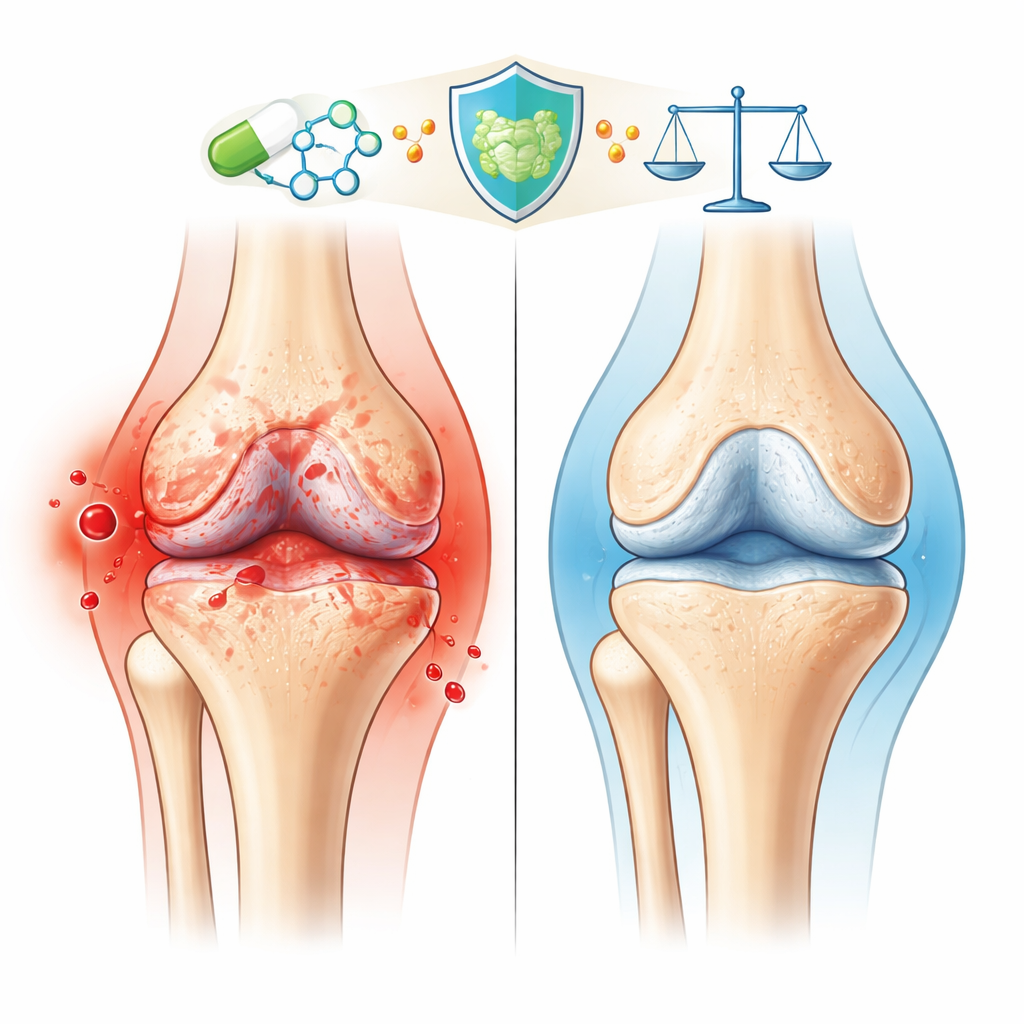
Osteoarthritis, the most common form of arthritis, slowly wears away the smooth cartilage that cushions our joints, causing pain, stiffness, and disability. Most current treatments ease pain but do not truly protect or rebuild the joint. This study explores a plant-derived compound called oxysophoridine (OSR) and asks a crucial question: can it help joints defend themselves from the twin assaults of inflammation and "rust-like" chemical damage, and in doing so actually slow or repair osteoarthritis?
A fresh look at joint damage
Osteoarthritis is not just “wear and tear.” Inflammation and highly reactive molecules known as reactive oxygen species (ROS) play a central role in breaking down cartilage. These unstable molecules damage cell structures and trigger a self-reinforcing loop: they spur inflammatory signals, which in turn generate even more ROS. The authors highlight how this vicious cycle kills cartilage cells, weakens the tissue, and drives the disease forward. Because existing drugs mainly numb pain without addressing this chemistry, the team focused on restoring the joint’s natural chemical balance as a more fundamental way to protect cartilage.
A plant compound with protective promise
OSR is an alkaloid extracted from the plant Sophora alopecuroides, previously shown to calm inflammation and oxidative stress in liver and brain injury models. To see whether it could help osteoarthritis, the researchers first worked with human cartilage cells grown in the lab and an established cartilage cell line. They mimicked an arthritic environment by exposing these cells to an inflammatory messenger used in many arthritis studies. Under these stressful conditions, cell growth and survival dropped sharply. When OSR was added, however, the cells bounced back: they proliferated more, showed fewer signs of injury, and the compound itself did not appear toxic at the tested doses.
Turning up the body’s own chemical shields
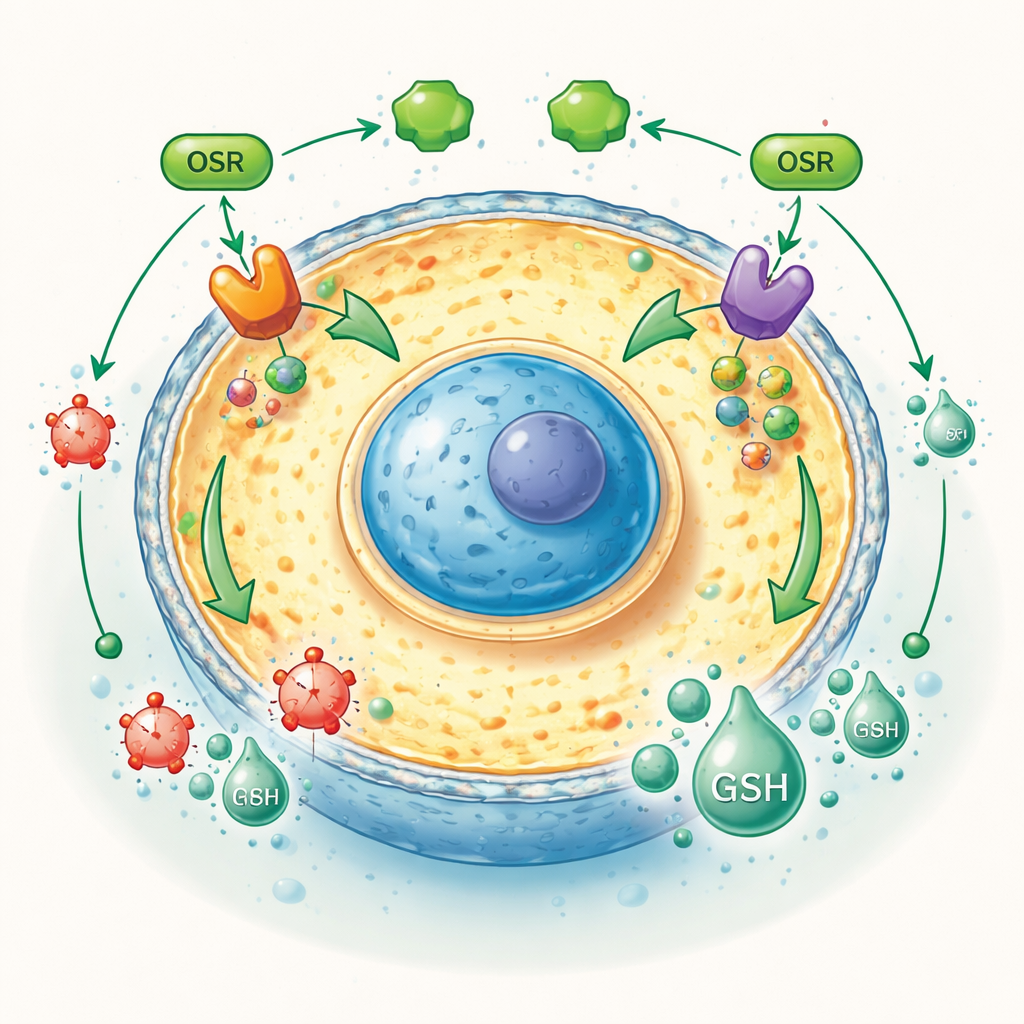
Digging deeper, the team examined two key guardians inside cartilage cells. One is an enzyme called GPX4, which uses the antioxidant molecule glutathione (GSH) to neutralize damaging lipid peroxides—a particularly harmful form of ROS attack on cell membranes. The other is SLC7A11, a transporter that ferries raw materials into the cell so it can make more GSH. Under inflammatory stress, both of these protective components were suppressed. OSR reversed this: it boosted GPX4 and SLC7A11 at both the gene and protein level, increased GSH, and reduced chemical byproducts that signal membrane damage. Computer simulations and a heat-based protein stability test suggested that OSR not only increases GPX4 levels but also physically binds to and stabilizes it, helping the enzyme keep working under stress.
Proof in a living joint
Lab dishes can only tell part of the story, so the researchers turned to a mouse model of osteoarthritis created by a surgical procedure that destabilizes the knee. Some mice received weekly doses of OSR, while others did not. In the untreated osteoarthritis group, cartilage cells died in large numbers, inflammatory markers soared, and chemical signs of oxidative damage accumulated in the joint. In contrast, mice treated with OSR, especially at the higher dose, showed healthier cartilage, fewer dying cells, and lower levels of inflammatory proteins. Their joints had more GPX4 and SLC7A11 activity and higher GSH, along with reduced damage markers. Importantly, body weight and organ examinations suggested that OSR did not cause obvious side effects over the study period.
What this could mean for people with arthritis
The authors conclude that OSR helps restore balance inside osteoarthritic joints by both strengthening the body’s antioxidant defenses and dialing down inflammation. By supporting GPX4 and SLC7A11 and boosting glutathione, OSR cuts down on harmful ROS and protects cartilage cells from dying, which may slow or partially reverse joint deterioration in osteoarthritis. While this work is still at the cell and animal stage—and far from an approved human therapy—it points to a future in which osteoarthritis drugs do more than dull pain. Instead, they could shield cartilage from the chemical “rust” that drives joint failure, offering patients longer-lasting relief and better joint function.
Citation: Tu, J., Peng, Z., Sun, X. et al. Oxysophoridine promotes osteoarthritis repair via GSH system activation and ROS suppression. Sci Rep 16, 7092 (2026). https://doi.org/10.1038/s41598-026-37912-1
Keywords: osteoarthritis, cartilage protection, oxidative stress, antioxidants, plant-derived therapy