Clear Sky Science · en
Surface expression of CD63 and HLA-DR in circulating eosinophils correlates with improved clinical control after treatment optimization in asthma
Why tiny blood cells matter in asthma
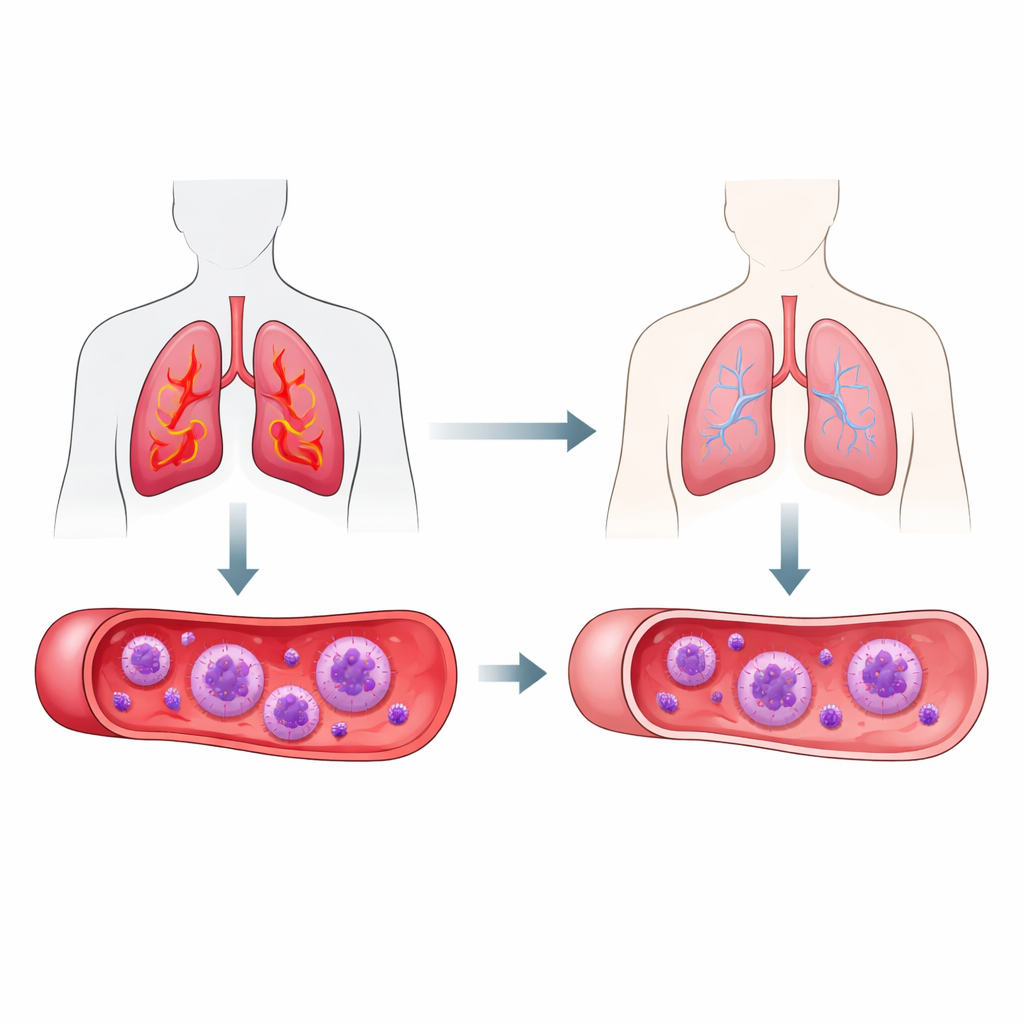
For many people with severe asthma, powerful inhalers and other medicines still leave them short of breath and at risk of attacks. Doctors usually track the disease with simple blood counts, exhaled gas tests, and allergy measures, but these do not always match how patients feel. This study asks whether looking more closely at a particular white blood cell in the blood—the eosinophil—can give doctors a better window into how well asthma treatment is really working.
Looking beyond the usual asthma checkups
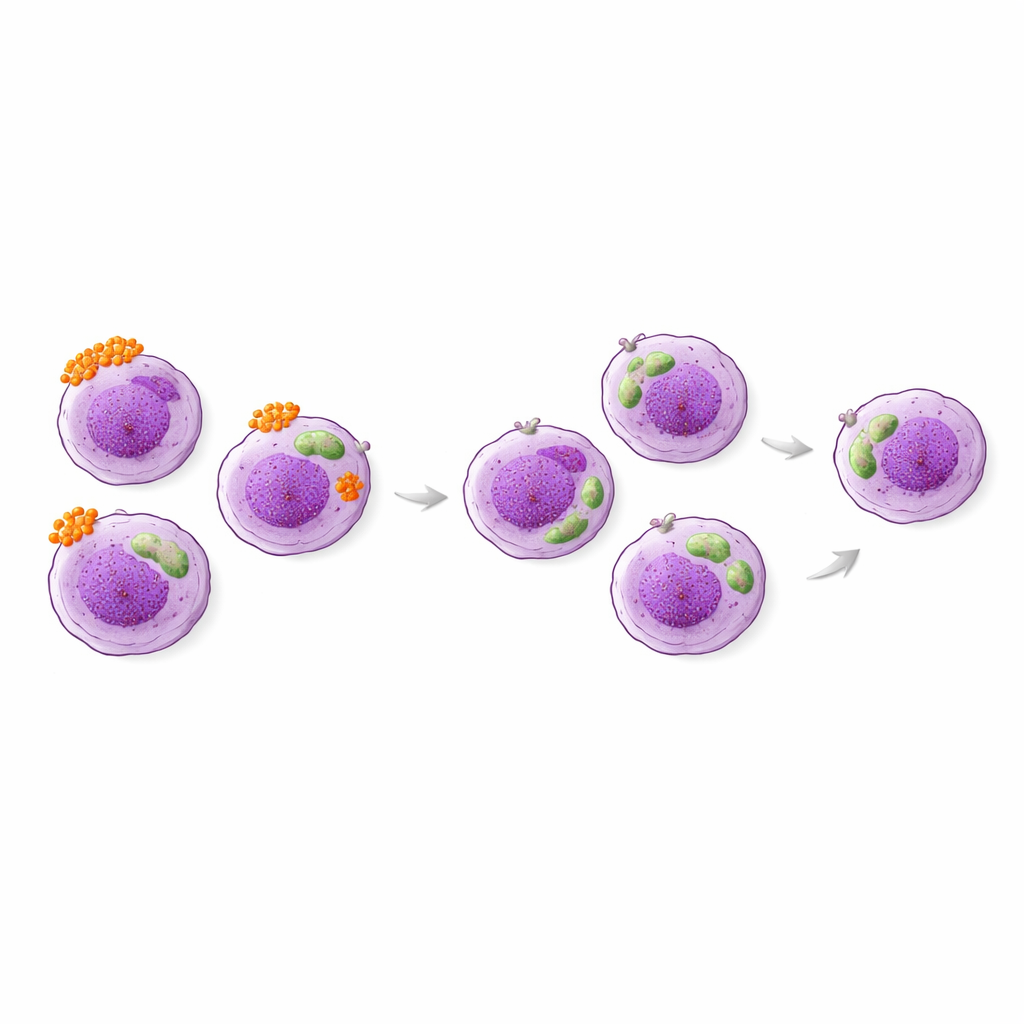
Asthma is driven by chronic inflammation in the airways, and eosinophils are among the main cells involved, especially in a common form called type 2–high asthma. Standard tests mainly count how many eosinophils are present, but not how active they are. The researchers focused on two molecules that can appear on the surface of eosinophils, called CD63 and HLA-DR. When these molecules are present or increased, they signal that the cells are more “switched on” and engaged in the immune battle. The idea was that, even if the number of eosinophils stays the same, changes in these surface markers might mirror whether a patient’s asthma is coming under better control.
How the study followed patients through treatment tuning
The team studied adults with severe asthma who were being evaluated for advanced injections that target eosinophils. Before starting these biologic drugs, patients went through a three‑month “run‑in” period in a specialized clinic, where their usual treatment was carefully fine‑tuned following international guidelines. This meant checking inhaler technique and stepping up medicines such as inhaled steroids, long‑acting bronchodilators, leukotriene blockers, and tiotropium as needed. At the beginning and end of this period, the researchers measured symptoms with the Asthma Control Test, recorded attacks, checked lung function, and drew blood to analyze eosinophils with a high‑detail technique called flow cytometry.
What changed in the blood and what did not
After three months of optimized therapy, patients on average felt better: their control test scores rose, and the share of people with poorly controlled asthma dropped from about half to roughly one in six. The use of oral steroid tablets fell, and asthma attacks became less frequent. Surprisingly, the simple counts of eosinophils in the blood did not shift much, and common markers like exhaled nitric oxide and total IgE were not strongly linked to the changes in symptoms. In contrast, one of the eosinophil surface molecules—HLA-DR—fell clearly during this period, both in how many cells carried it and how strongly it was displayed. CD63, the other activation marker, did not change on average but tended to remain higher in patients whose asthma stayed poorly controlled.
Linking cell behavior to how patients feel
When the scientists looked more closely, they found that patients who still had high levels of HLA-DR and CD63 on their eosinophils after treatment tuning were more likely to have ongoing symptoms. Statistical models suggested that shifts in HLA-DR, in particular, tracked modestly with improvements in symptom scores, even though the total number of eosinophils did not. Neither marker lined up neatly with the usual blood counts, exhaled gas levels, or allergy measurements, implying that these surface features capture a different, more qualitative side of the disease. The authors emphasize that these markers should not yet be used to predict who will respond to a given drug, but they may serve as “associative” signs that the underlying inflammation is calming—or staying active—despite standard therapy.
What this could mean for people with hard-to-treat asthma
The study suggests that watching how eosinophils behave, rather than only how many are present, could help personalize asthma care. A drop in HLA-DR during routine treatment adjustment may indicate that conventional inhaled medicines are successfully damping down immune activity, even before large changes in symptoms appear. On the other hand, eosinophils that continue to display high levels of HLA-DR or CD63 might flag patients whose disease remains smoldering and who could benefit from stepping up to biologic therapies or choosing drugs that target different pathways. While more research is needed before these tests become part of everyday clinics, examining eosinophil “personality” adds a promising new layer to understanding and managing severe asthma.
Citation: Scarlata, S., Mazzuca, C., Vitiello, L. et al. Surface expression of CD63 and HLA-DR in circulating eosinophils correlates with improved clinical control after treatment optimization in asthma. Sci Rep 16, 8289 (2026). https://doi.org/10.1038/s41598-026-37906-z
Keywords: severe asthma, eosinophils, biomarkers, personalized medicine, flow cytometry