Clear Sky Science · en
Risk sources quantitative identification of heavy metals in coal mining hinterland river sediments, Northern China
Why a River near Coal Mines Matters to You
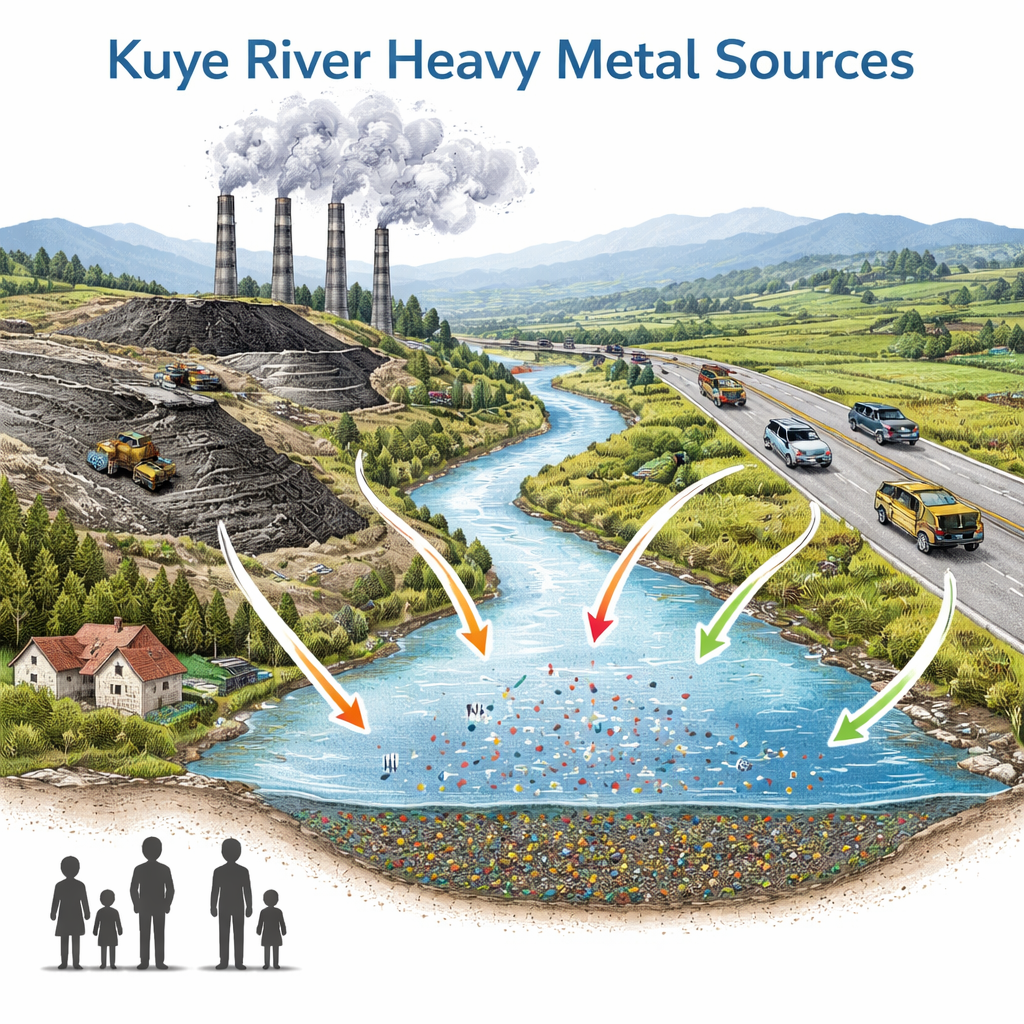
The Kuye River in northern China flows through one of the world’s largest coalfields, supplying water for farms and nearby towns. As coal is mined, transported, and burned, tiny particles of toxic metals—such as mercury and nickel—can wash into the river and settle in its muddy bottom. This study asks a question that concerns anyone living near industry-fed rivers worldwide: which activities are driving the most dangerous pollution, and who is at greatest risk, people or the river’s own plants and animals? The answers help explain how to manage energy development without sacrificing environmental and human health.
Following the Trail of Hidden Metals
Researchers collected 59 sediment samples from the Kuye River during both the dry winter and wetter autumn seasons. They measured eight heavy metals commonly linked to coal and industry—copper, zinc, lead, cadmium, nickel, chromium, mercury, and arsenic—then compared the results with natural background levels in local soils. To move beyond simple averages, they used Monte Carlo computer simulations, which repeatedly shuffle real-world data to estimate how often different levels of pollution and risk might occur. This allowed them to produce probability-based assessments rather than single yes-or-no answers.
Pollution Peaks, Seasons, and Hotspots
The river’s sediments were polluted in both seasons, with total metal levels higher in the dry season when slower water flows allow contaminants to settle out. However, the wet season showed more frequent extreme peaks and a wider spread of pollution sources, so the authors focused much of their risk analysis on that period. They found especially elevated levels of mercury, which showed clear enrichment far above natural background, and moderate enrichment of zinc, nickel, arsenic, and copper. Hotspots tended to cluster near coal mines, industrial parks, and major roads, revealing a tight link between land use and where toxic metals ultimately accumulate in the riverbed.
From Numbers to Ecological Risk
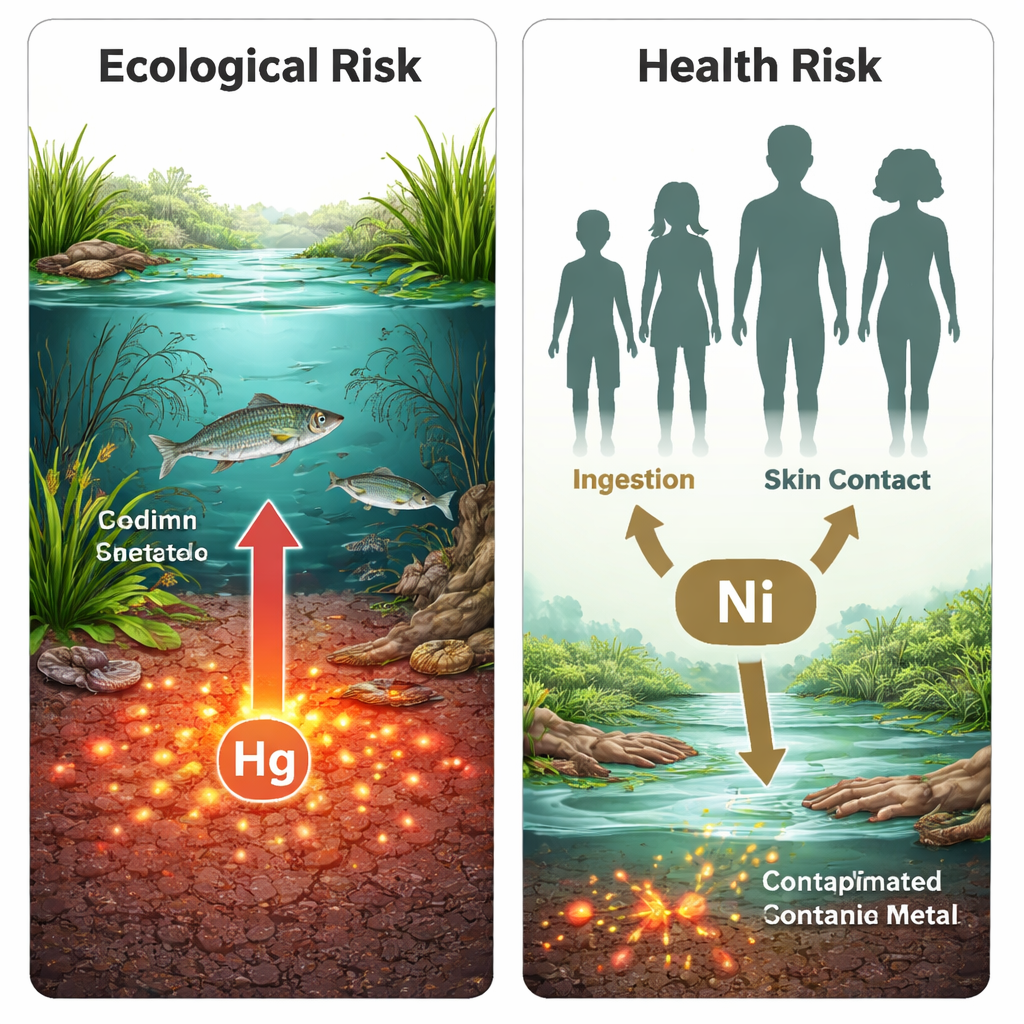
To judge what these concentrations mean for the river ecosystem, the team applied an ecological risk index that weighs both how much of each metal is present and how toxic it is to aquatic life. Monte Carlo simulations showed that roughly three-quarters of sediment samples posed at least a moderate ecological threat. Mercury dominated this picture because of its high toxicity, even when its concentration was not always the highest. By coupling a source-tracking method (positive matrix factorization) with the ecological risk index, the authors could assign risk directly to activities: coal-mining sources accounted for nearly half of the overall ecological risk, with traffic and industry following behind, while agriculture played a smaller role.
Health Risks and Who Bears the Burden
The same sediments that stress river life can ultimately reach people through water, soil, and food. The researchers evaluated human health risks for four groups—boys, girls, adult men, and adult women—considering three exposure routes: swallowing sediment or soil, skin contact, and breathing in dust. Non-cancer health risks were generally low, but the probability of cancer over a lifetime was worryingly high for all groups, especially children. The main danger came from ingesting contaminated material; inhalation was nearly negligible. When risks were traced back to their sources, industrial emissions and traffic clearly dominated cancer risk, while coal-mining played a smaller role despite its large ecological impact. Nickel emerged as the key carcinogenic metal, overshadowing others for human health.
What This Means for Coal Regions Worldwide
In simple terms, the river’s mud acts like a long-term memory of coal-related activity, storing toxic metals that can harm both aquatic life and nearby residents. Mercury from coal-mining is the main threat to the ecosystem, while nickel from industrial processes and traffic poses the greatest cancer risk to people—especially children who are more sensitive and more likely to ingest contaminated material. The study shows that managing heavy metal danger is not just about lowering overall pollution, but about targeting the specific sources and metals that drive the worst outcomes. For policymakers in coal regions, that means stricter controls on industrial discharges, better handling of mine waste, cleaner transport, and long-term ecological restoration along rivers like the Kuye.
Citation: Zhang, Y., He, X., Dong, Y. et al. Risk sources quantitative identification of heavy metals in coal mining hinterland river sediments, Northern China. Sci Rep 16, 7046 (2026). https://doi.org/10.1038/s41598-026-37889-x
Keywords: heavy metals, coal mining, river sediment, health risk, China