Clear Sky Science · en
The unique contributions of adverse childhood experiences to increases in post-traumatic stress symptoms and problematic substance use after trauma exposure
Why Childhood Hardships Still Matter in Adulthood
Many people live through frightening events as adults, from war to terror attacks to serious accidents. Yet not everyone responds in the same way. This study asks a pressing question: how much do painful experiences in childhood shape our chances of developing severe stress reactions and turning to alcohol or other drugs after a later trauma? Using nationwide data collected in Israel before and after the October 7th attacks, the researchers show that early-life adversity leaves long shadows, independently fueling both post-traumatic stress and problematic substance use.
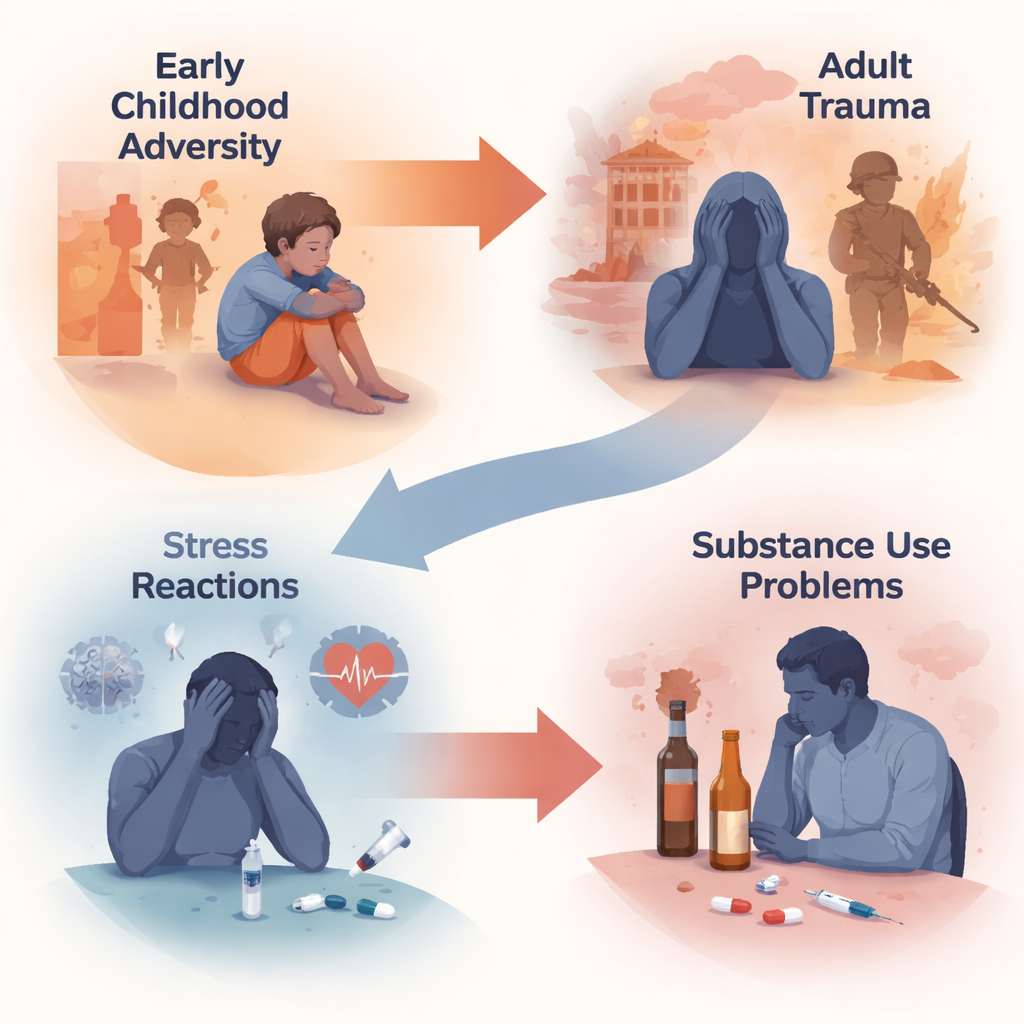
Early Wounds and Later Crises
The researchers focused on “adverse childhood experiences,” or ACEs—harmful events such as emotional, physical, or sexual abuse; neglect; and serious problems at home like parental mental illness, addiction, or violence. Past work has linked ACEs to higher risks of depression, anxiety, and post-traumatic stress disorder (PTSD), as well as unhealthy coping strategies like substance use. Two ideas guided this study. The “sensitization” hypothesis suggests that early adversity makes people more vulnerable—not tougher—when later traumas occur. The “self-medication” hypothesis proposes that people may use alcohol or drugs to numb the distress that follows trauma.
A Natural Experiment Around a National Trauma
Before the October 7th attacks, in April 2022, over 2,600 Jewish Israeli adults completed online questionnaires about their mental health and substance use. After the attacks, in December 2023, more than 4,000 adults were surveyed, including 1,343 who had participated in 2022 and formed the core sample for this study. At both time points, participants reported symptoms of post-traumatic stress over the prior month and described their non-medical use of substances such as alcohol, tobacco, cannabis, sedatives, and prescription painkillers. After the attacks, they were also asked about their childhood experiences and how directly they had been exposed to the October 7th events and the ongoing war.
Tracking Changes in Stress and Substance Use
Because the same people were followed over time, the researchers could examine who showed rising stress symptoms and who developed more serious substance use patterns after the attacks. They used statistical models that accounted for people’s earlier levels of stress and substance use, as well as age, gender, and war exposure. The results supported both key theories. First, higher ACE scores predicted bigger jumps in post-traumatic stress symptoms after October 7th, even after adjusting for how stressed people had felt in 2022. This aligns with the sensitization idea: difficult childhoods seem to prime the nervous system for stronger reactions when fresh trauma strikes. Second, people who had more stress symptoms before the attacks were more likely to increase their substance use afterward, consistent with self-medication.
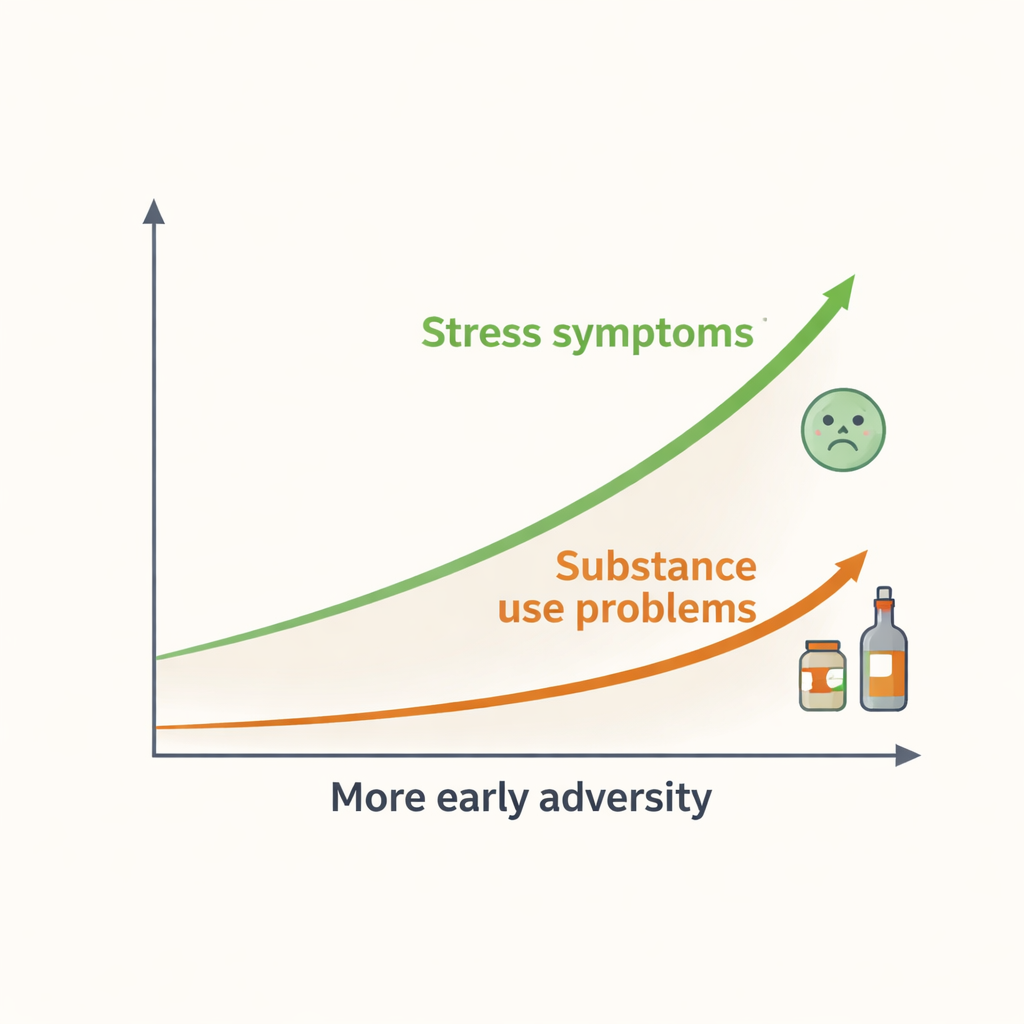
Childhood Adversity Adds Its Own Risk
The most striking finding came when the researchers looked at substance use directly. Childhood adversity did not just work through post-traumatic stress. Higher ACE scores also predicted greater increases in problematic substance use after the attacks, even when current stress symptoms and other factors were taken into account. More advanced modeling, using a technique called structural equation modeling, confirmed that ACEs had a distinct “direct path” to increased substance problems over time. In other words, early adversity appeared to set up a lasting vulnerability that made people more likely to turn to substances following a later national crisis, above and beyond how stressed they felt in the moment.
What This Means for Prevention and Healing
For non-specialists, the takeaway is sobering but actionable: what happens in childhood powerfully shapes how we cope with disasters decades later. People who grew up with abuse, neglect, or chaotic homes are more likely to experience intense stress and to rely on alcohol or drugs when new traumas occur. The study suggests that trauma care cannot focus only on immediate symptoms after an event like October 7th. Instead, health systems and policymakers need trauma-informed approaches that screen for childhood adversity, offer healthier ways to manage distress, and address substance use risks early. Preventing harm in children’s lives—and supporting those who have already experienced it—may be one of the most effective ways to reduce both post-traumatic stress and addiction in future crises.
Citation: Levitin, M.D., Shmulewitz, D., Levine, E. et al. The unique contributions of adverse childhood experiences to increases in post-traumatic stress symptoms and problematic substance use after trauma exposure. Sci Rep 16, 6870 (2026). https://doi.org/10.1038/s41598-026-37883-3
Keywords: childhood trauma, post-traumatic stress, substance use, war and mental health, resilience and vulnerability