Clear Sky Science · en
Cordyceps sinensis enhances the efficacy of anti-PD-1 immunotherapy in Lewis lung adenocarcinoma
Why a mountain mushroom matters for lung cancer
Lung cancer remains one of the deadliest cancers worldwide, and even the newest immunotherapy drugs do not work for everyone. This study explores whether a rare medicinal mushroom, wild Cordyceps sinensis from the high plateaus of China, can make a widely used immunotherapy—anti‑PD‑1 treatment—work better against lung tumors, at least in mice. The findings hint that a traditional remedy might help modern cancer drugs rally the immune system more effectively, while also uncovering the molecular pathways involved.
Harnessing the body’s defenses
Modern immunotherapy drugs called PD‑1 inhibitors work by taking the “brakes” off immune cells, especially T cells, so they can attack tumors. These drugs have transformed treatment for many people with non‑small cell lung cancer, but response rates are still modest and resistance is common. At the same time, traditional Chinese medicines are often used alongside cancer treatments in Asia, with reports that they can ease side effects and sometimes improve outcomes. Cordyceps sinensis, long used to “tonify” the lungs and boost resilience, has shown immune‑boosting effects in patients receiving chemotherapy, suggesting it might be a useful partner for immunotherapy as well.
Testing wild Cordyceps in a lung tumor model
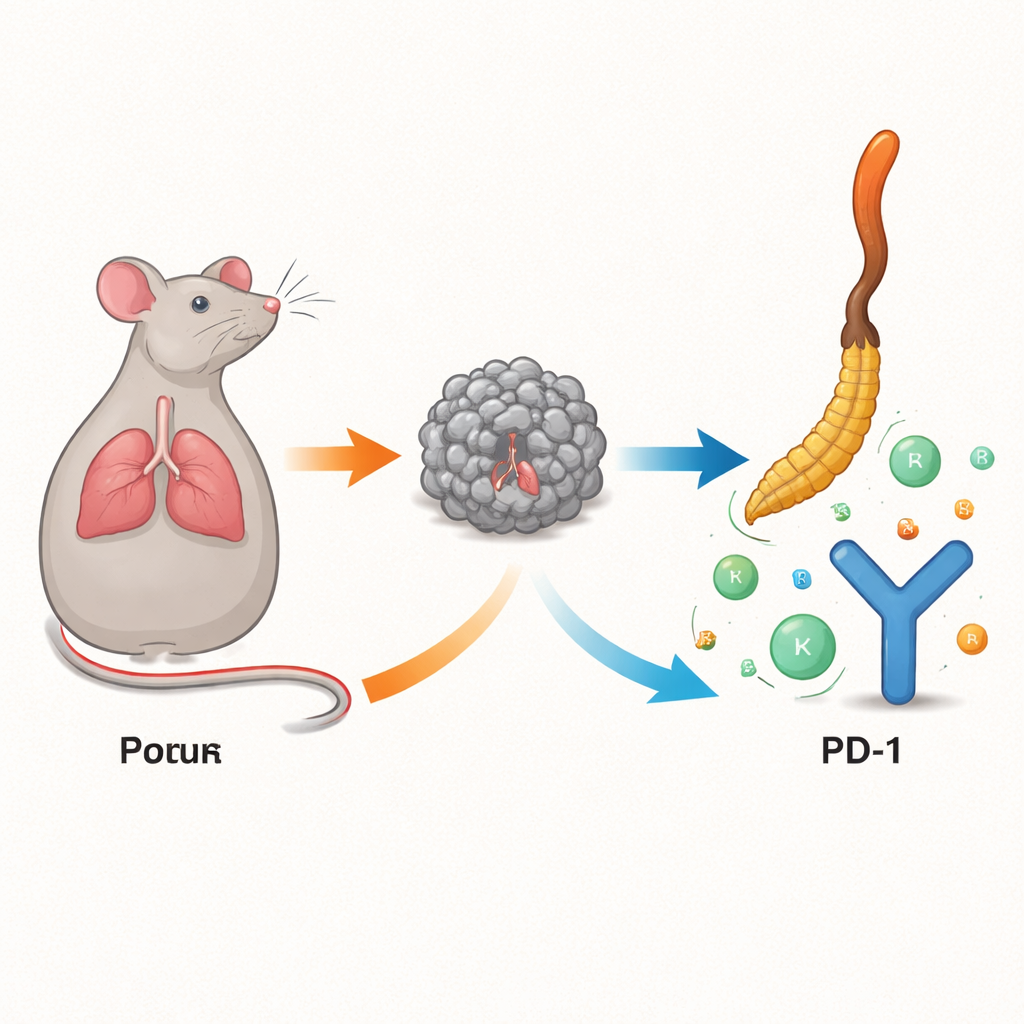
The researchers used a standard mouse model of lung adenocarcinoma called Lewis lung carcinoma. They implanted tumor cells under the skin of mice and divided the animals into groups receiving either a PD‑1‑blocking antibody, various doses of wild Cordyceps sinensis, both together, or a control treatment. Over two weeks they tracked body weight, tumor size, and tumor weight, and examined the cancer tissue under the microscope. All active treatments slowed tumor growth compared with controls, but the combination of anti‑PD‑1 with a medium dose of Cordyceps produced some of the strongest tumor shrinkage, without causing obvious weight loss or overt toxicity.
Rebalancing helpful and harmful immune cells
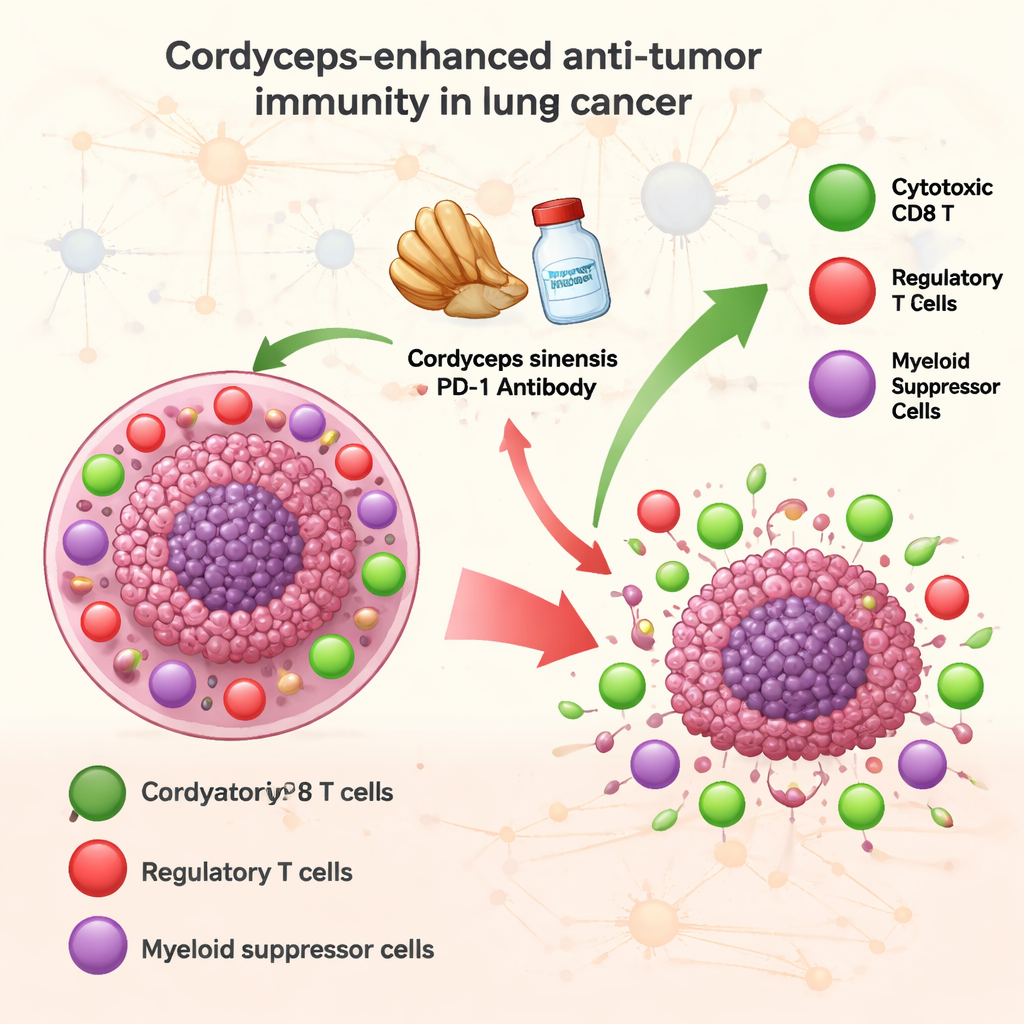
To understand how this combination worked, the team looked closely at immune cells in the blood and within the tumors. They focused on three main players: CD8 “killer” T cells that can destroy cancer cells; regulatory T cells (Tregs), which dampen immune responses; and a group of immature myeloid cells (PMN‑MDSCs) that also suppress anti‑tumor immunity. Mice that received both Cordyceps and anti‑PD‑1 had more CD8 T cells circulating in the blood and infiltrating tumors, and fewer Tregs and PMN‑MDSCs in the tumor tissue. In simple terms, the treatment shifted the tumor environment from one dominated by cells that protect the cancer to one populated by cells that attack it.
Peering under the hood: genes and metabolism
Beyond counting cells, the researchers examined which genes and small molecules changed inside the tumors. Using RNA sequencing, they found that the combination treatment altered the activity of hundreds of genes, particularly those linked to T cell function and immune signaling. At the same time, metabolomics—an analysis of the chemical by‑products of cellular activity—showed that key energy and lipid pathways were rewired. By integrating these datasets, the team highlighted several genes (including DGKA, PLA2G7, AMPD1, ATP8B4, and BST1) and associated metabolic routes such as glycerophospholipid metabolism, the tricarboxylic acid (TCA) cycle, purine metabolism, and nicotinate–nicotinamide metabolism. Together, these changes appear to favor a more energetic, effective T‑cell response and reduce signals that help tumors hide from the immune system.
What this could mean for future treatments
For a non‑specialist, the central message is straightforward: in this mouse model, wild Cordyceps sinensis helped an existing immunotherapy drug work better by both boosting attack cells and disarming cells that shield the tumor. It did so by subtly retuning how tumor and immune cells use and process energy and fats, and by dialing up or down specific genes tied to immune activity. While these results are promising, they are still early and limited to animals; the mushroom preparation is complex, and the active components and safety in humans receiving PD‑1 inhibitors remain to be defined. Nonetheless, the work offers a detailed roadmap for how a traditional remedy might be turned into a scientifically grounded partner for cutting‑edge cancer immunotherapy.
Citation: Liu, Y., Gao, Y., Suonanlamao et al. Cordyceps sinensis enhances the efficacy of anti-PD-1 immunotherapy in Lewis lung adenocarcinoma. Sci Rep 16, 7276 (2026). https://doi.org/10.1038/s41598-026-37878-0
Keywords: lung cancer immunotherapy, Cordyceps sinensis, PD-1 blockade, tumor microenvironment, T cell response