Clear Sky Science · en
An intelligent monitoring system for forecasting and anomaly detection in precision beekeeping
Why Smarter Hives Matter
Honeybees quietly support much of our food supply by pollinating crops, yet beekeepers around the world are seeing lower honey yields and more fragile colonies. This paper introduces BeeViz, a digital monitoring system that treats each hive a bit like a patient in intensive care—continuously watched by sensors and algorithms. For anyone interested in food security, technology in agriculture, or the fate of pollinators, BeeViz shows how data and artificial intelligence can help beekeepers spot trouble early and keep their colonies healthier.
A New Way to Watch Over Hives
Traditional beekeeping depends on a beekeeper’s experience and occasional visits to the apiary. Inspections are manual, notes are often written on paper, and problems such as swarming or food shortages may only be noticed after damage is done. Recent surveys in Europe and France show that most beekeepers still do not use digital tools, but those who are interested mainly want clear dashboards, simple summaries, and timely alerts rather than complex analytics. BeeViz responds directly to these expectations by offering a user-friendly web platform that displays live hive conditions, sends warnings when something looks odd, and keeps a history of what has happened inside each hive over time. 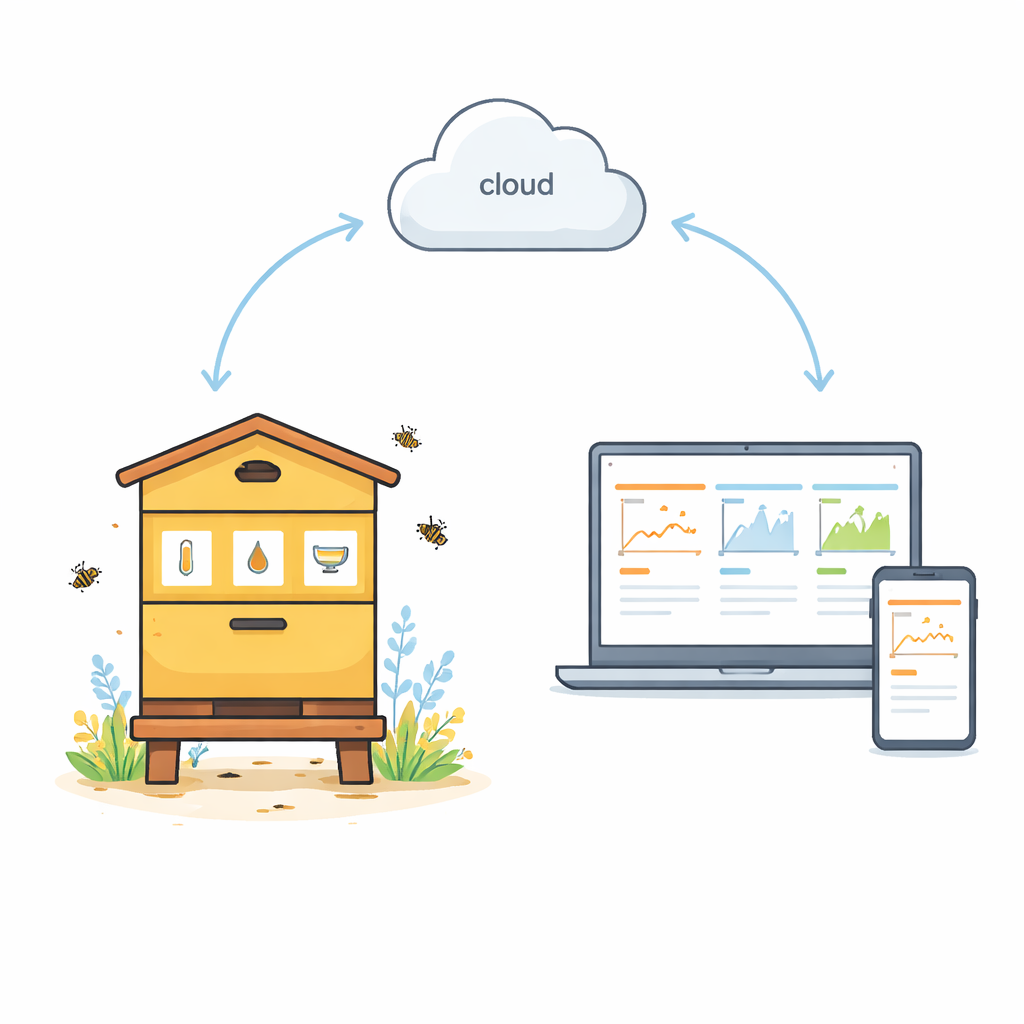
From Sensors in the Hive to Insights in the Cloud
The BeeViz system connects physical hives to a cloud-based data pipeline. Each “smart hive” is fitted with sensors that measure internal temperature, humidity, and weight—three basic signals strongly linked to brood health, honey quality, and nectar intake. These readings are sent to an online database, where they are stored and processed. On top of this, the authors build intelligent modules that both forecast how these measurements are likely to change in the short term and flag measurements that look abnormal. Beekeepers access everything through a web dashboard that shows clean graphs: past measurements, predicted future values, bands representing typical behavior, and markers where the system suspects an anomaly.
Teaching the System to Predict the Near Future
To make useful forecasts, the researchers trained two families of models on a large public dataset from instrumented hives in Germany. One family uses recurrent neural networks, a type of artificial intelligence designed to learn patterns over time; the other uses Prophet, an open-source forecasting tool originally built for business data. They focused on predicting internal temperature every hour and humidity and weight each day. The data were carefully cleaned, resampled, and split so that one hive was used for training and another, from a different location, was kept aside for testing. The best models, all based on recurrent neural networks, could predict hive temperature within roughly half a degree Celsius and weight within about a kilogram, even on a hive they had never “seen” before. This suggests that the learned patterns are not just memorizing one colony, but can transfer to others in similar environments. 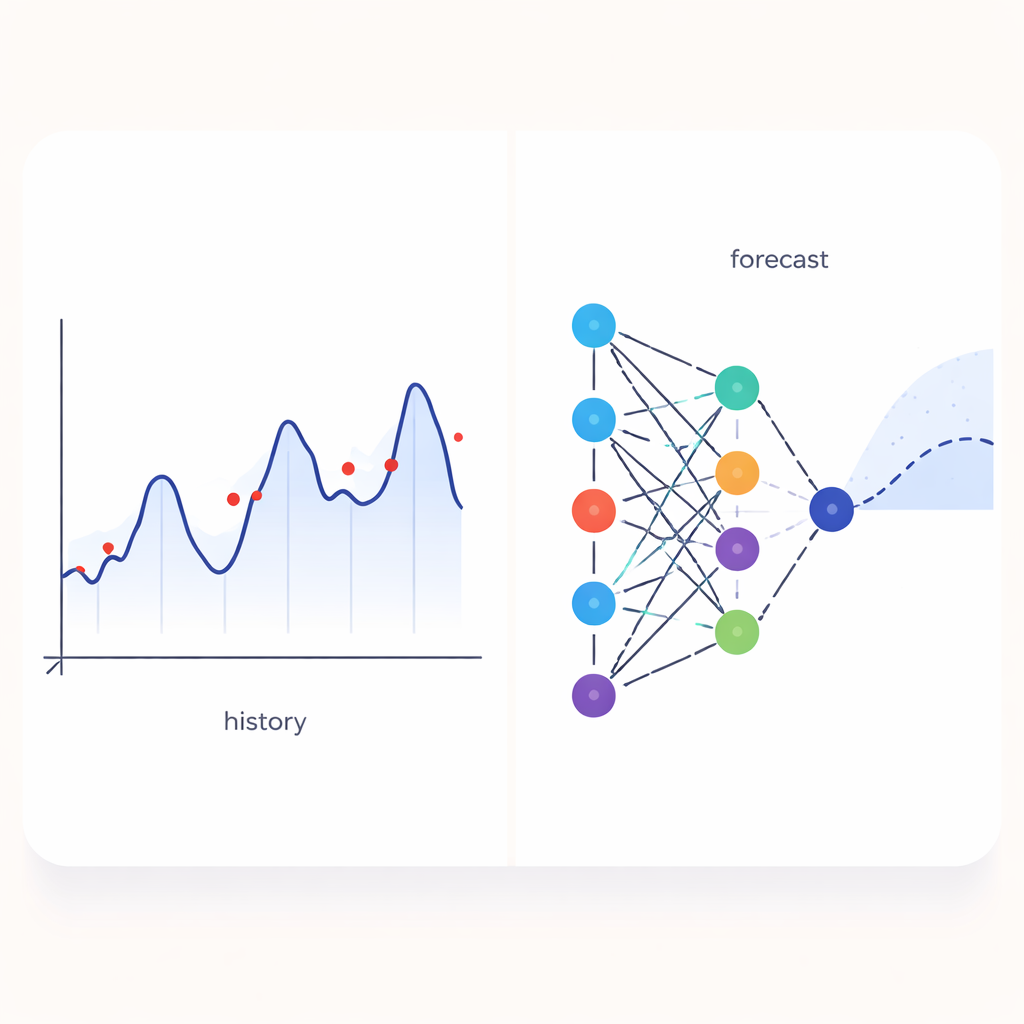
Spotting When Something Is Wrong
Forecasts alone are not enough; beekeepers also need to know when the data suddenly depart from what is considered normal. Because there was no labeled record of past “incidents,” the team relied on unsupervised methods that look for unusual behavior rather than specific known events. They tried several approaches, including comparing live data to forecast-based confidence bands, checking deviations from typical statistical profiles, and using clustering methods that treat rare patterns as suspicious. By comparing how many anomalies each method found across different hives, they could estimate sensitivity and consistency. Some techniques, such as the confidence-band method, were highly sensitive but still behaved similarly on both training and test hives. Others, like isolation forests, reacted very differently from one hive to another and were excluded from the final prototype. In the BeeViz dashboard, the beekeeper can choose the method and adjust how sensitive it should be, balancing between catching subtle issues and avoiding too many false alarms during routine inspections.
What This Means for Beekeepers and Beyond
In practical terms, BeeViz offers beekeepers a kind of “early warning radar” for their apiaries. Instead of discovering problems only when bees are lost or honey production collapses, they can watch trends, receive alerts when conditions drift into risky territory, and decide when to intervene—for example by adding food, adjusting hive ventilation, or inspecting for predators. The current system focuses on three core measurements, but the same framework could be extended to include other signals such as carbon dioxide levels or flight activity, and could learn collectively from many connected hives over time. For a layperson, the takeaway is simple: by combining basic sensors, cloud computing, and machine learning, it is now possible to turn beehives into connected living systems that “speak up” when they are under stress, helping to safeguard both bees and the crops that depend on them.
Citation: Huet, JC., Bougueroua, L. & Metidji, S.A. An intelligent monitoring system for forecasting and anomaly detection in precision beekeeping. Sci Rep 16, 7080 (2026). https://doi.org/10.1038/s41598-026-37877-1
Keywords: precision beekeeping, hive monitoring, anomaly detection, time series forecasting, pollinator health