Clear Sky Science · en
Genetic variability in thrombopoietin receptor and GATA1 influences response to eltrombopag in dengue-induced thrombocytopenia
Why some dengue patients bounce back faster
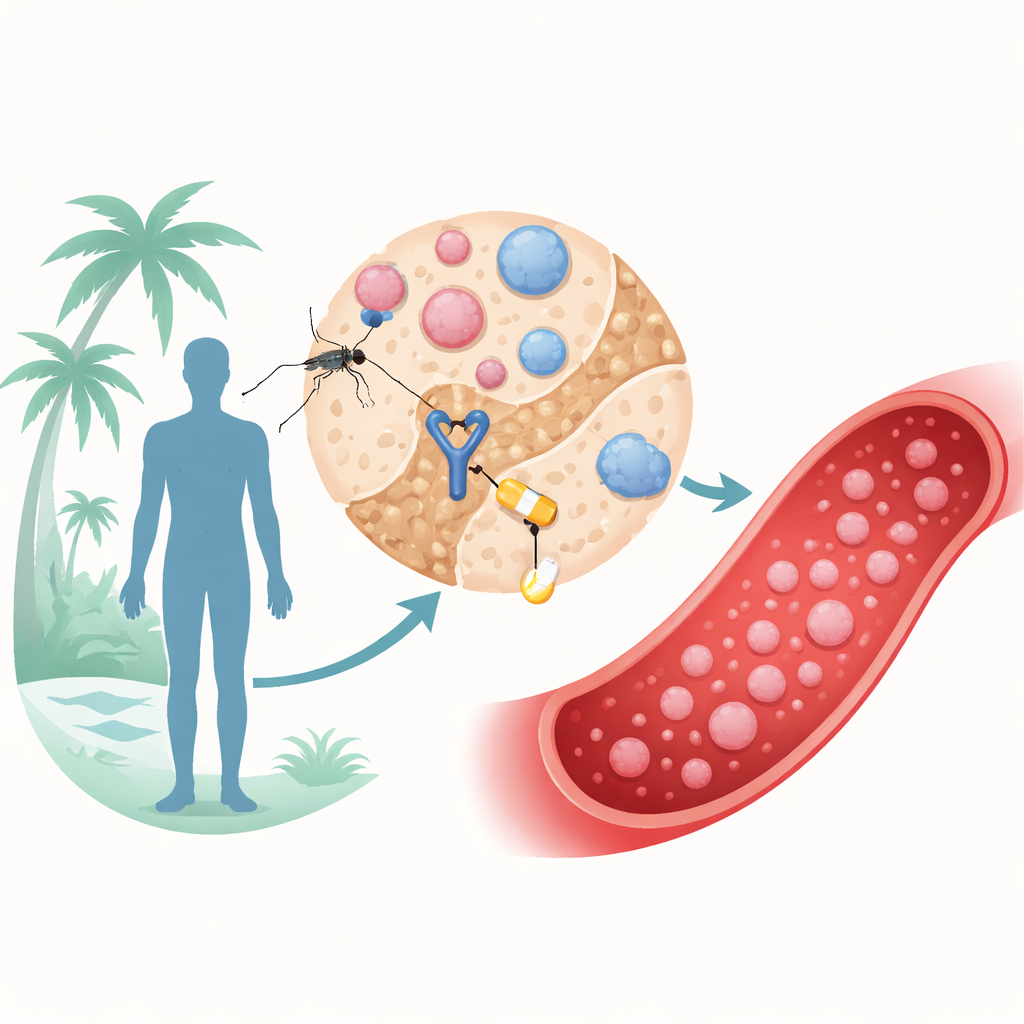
Dengue fever can dangerously lower the number of platelets, the tiny blood cells that help stop bleeding. Doctors sometimes use a pill called eltrombopag to boost platelet production, but not all patients respond in the same way. This study from Bangladesh asks a simple but important question: do small differences in our genes help explain why some people recover platelets quickly while others do not?
A closer look at dengue and low platelets
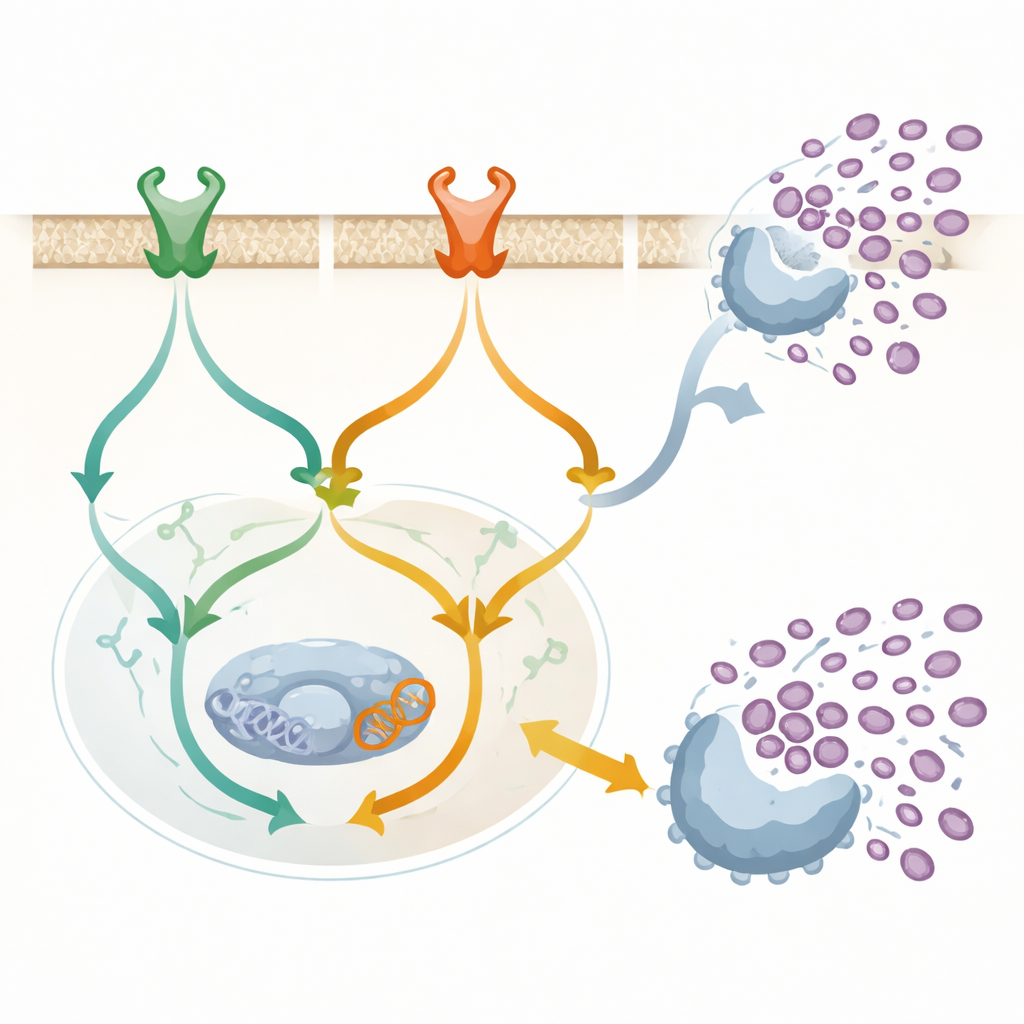
Dengue is now common across much of the tropics, and severe cases often involve a sharp drop in platelet counts, raising the risk of bruising, bleeding, and shock. Platelets are made in the bone marrow by large cells called megakaryocytes, which are guided by signals from the body. One key signal is a hormone called thrombopoietin, which docks on a receptor on these cells and triggers platelet production. Another key player is a control protein called GATA1, which helps switch on genes needed to make mature platelets. If anything in this chain works less efficiently, platelet numbers can fall dangerously low during dengue infection.
A drug that nudges the body to make more platelets
Eltrombopag is a tablet that activates the thrombopoietin receptor by binding to a region different from the body’s own hormone. In effect, it gives megakaryocytes an extra push to produce platelets. In an earlier clinical trial, the same research team showed that eltrombopag could safely speed platelet recovery in dengue patients. In the present work, they took advantage of that trial to explore why some participants responded quickly while others lagged behind, focusing on genetic changes in the thrombopoietin receptor gene (often called TPOR or MPL) and in GATA1.
Tracking genes and platelets day by day
The researchers enrolled 101 dengue patients from three hospitals in Dhaka. Two groups received eltrombopag at different daily doses for three days, while a third group received standard care without the drug. All patients were followed for eight days with repeated blood tests. The team then used Sanger sequencing, a precise DNA reading method, to scan all coding regions and nearby segments of the TPOR and GATA1 genes. They identified dozens of small one-letter changes in DNA, most of them rare. Next, they compared how platelet counts changed from day to day in patients who carried a given variant versus those who had the usual, or “wild type,” version of the gene.
Genetic twists that slow or speed recovery
Several patterns emerged. In patients who did not receive eltrombopag, certain variants in the thrombopoietin receptor gene were linked to slower natural recovery of platelets. One change, known as S129R in the receptor’s outer region, and a nearby change in a noncoding stretch of DNA, were both associated with lower platelet counts over many days. Patients who carried both of these variants had an especially delayed recovery. Yet when these same patients were treated with eltrombopag, their platelet counts caught up to those of patients without the variants, suggesting the drug can overcome a built-in disadvantage. In contrast, another receptor variant called E36K appeared to blunt the benefit of eltrombopag: treated patients with this change showed much smaller rises in platelet counts, hinting that this particular alteration may interfere with how the drug and receptor work together.
Genes that help the body recover on its own
Not all genetic differences were harmful. A change in the GATA1 gene, which slightly alters the protein at position 129, was linked to faster natural recovery in patients who did not receive eltrombopag. These individuals tended to climb out of the danger zone sooner, suggesting that their platelets rebound more efficiently during dengue infection. When they did receive eltrombopag, however, their recovery looked similar to that of other patients, as if the drug leveled the playing field. Across all variants, formal statistical models that reduced the outcome to a simple “responder” or “non-responder” status did not find any single DNA change that alone could reliably predict success or failure of treatment.
What this means for future personalized care
For a non-specialist, the key takeaway is that tiny differences in genes involved in platelet production can influence how quickly dengue patients recover, both with and without medication. Some variants seem to make natural recovery slower, but eltrombopag can largely compensate. One rare variant may signal reduced benefit from the drug, while another in GATA1 appears to favor quicker recovery even without extra help. Although this study is too small to turn these findings into routine genetic tests, it points the way toward more personalized treatment—where, in the future, a simple DNA check could help doctors decide which patients are most likely to benefit from platelet-boosting drugs and who might recover well with supportive care alone.
Citation: Sayem, M., Rimon, R., Alam, S. et al. Genetic variability in thrombopoietin receptor and GATA1 influences response to eltrombopag in dengue-induced thrombocytopenia. Sci Rep 16, 7918 (2026). https://doi.org/10.1038/s41598-026-37871-7
Keywords: dengue thrombocytopenia, eltrombopag, pharmacogenetics, thrombopoietin receptor, GATA1